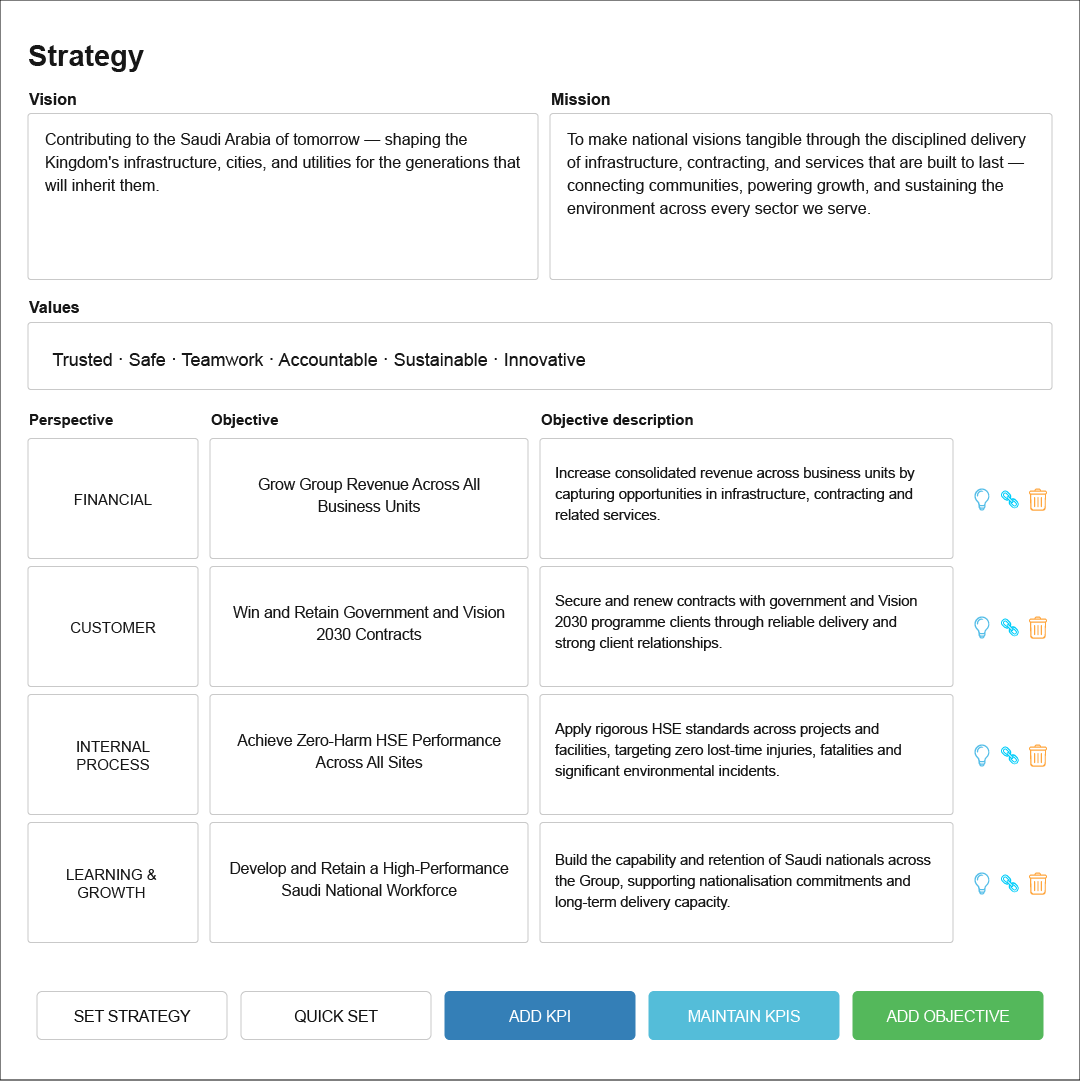
A well-designed strategic plan relies on establishing targets that are designed to stretch and push an organization forward in meeting its objectives. Setting targets allows organizations to:
Targets need to be realistic so that managers feel comfortable about trying to achieve them. In most cases, targets should be mutually agreed between the organization’s executives and the manager responsible for hitting the target. When setting effective targets, top management must strike a balance between setting the bar high enough to encourage greater performance, without prompting risky behavior and leaving holes that allow managers to play the system.
It is worth noting that targets could have disadvantages in terms of setting direction to employees. Employees could focus on what is expected and not necessarily on what needs to be done. Each department should consider the expertise behind the target-setting and how employees concerned will behave.
It’s also important to note that the relationships between targets are also crucial. Setting one target inappropriately can have an impact on other targets. Executives should aim to set targets in such a way that each individual KPI is optimized to result in the best overall outcome for the organization.
One common place to start, when setting a target, is to look at past performance and current baselines. Past trends can be extended for modest improvement. In addition, corporate objectives can give the organization clues as to what targets should be included in its strategic plan. Benchmarking leading practices is another good source of targets.
In summary, the following criteria should be considered when setting targets:
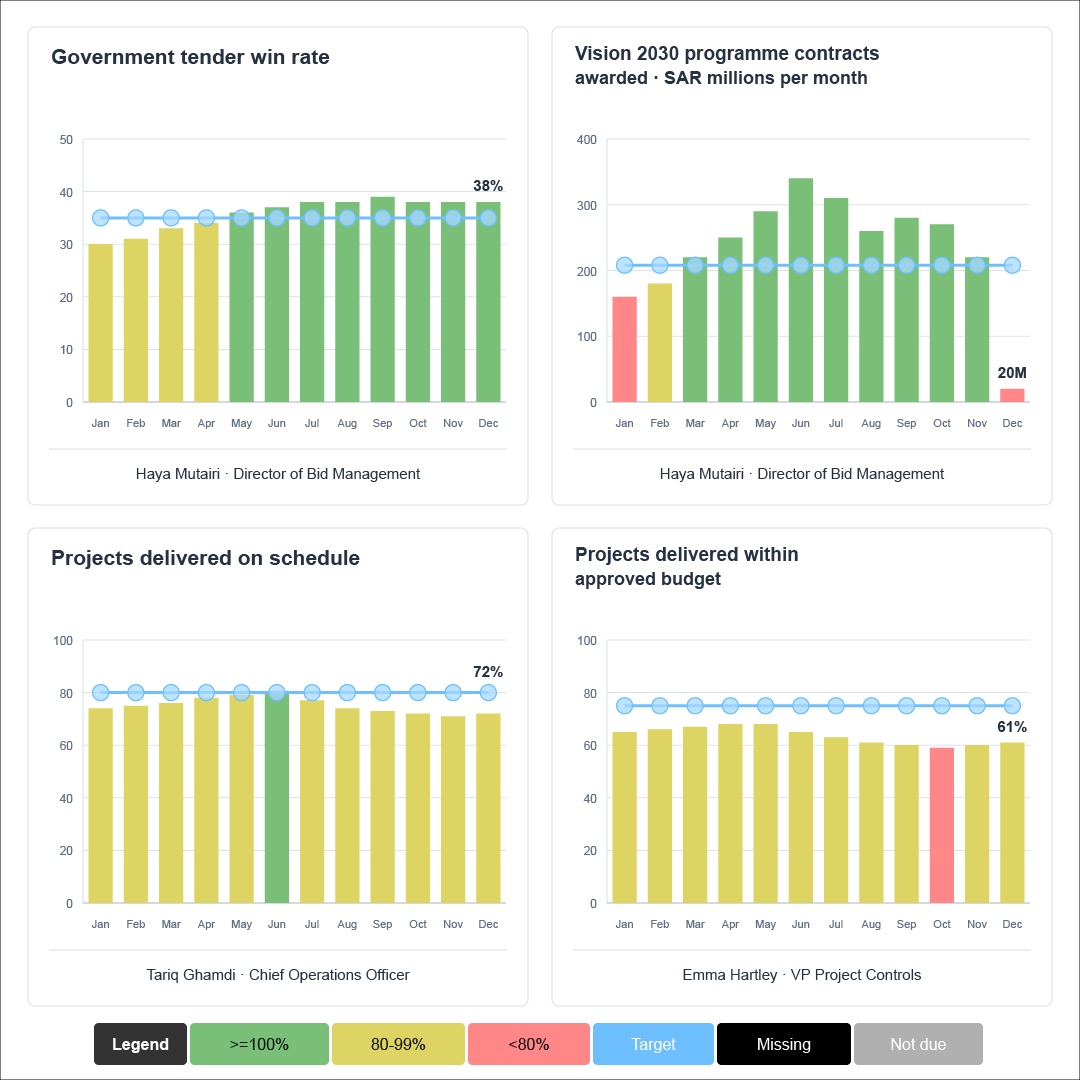
Once KPIs and their respective targets have been set and agreed, it is important, over the ensuing weeks and months, to monitor performance against them. In order to do this, it is necessary to have well-studied and carefully set ranges for targets if an organization’s strategic plan is to be successful. The above figure shows some universal target ranges that could be used by any business.
When calculating the percentages to monitor the KPI status, the following formulas can be used:
A. For KPIs where an increase is preferable: actual results/ target = percentage. For example: US$8m actual revenues/ US$5m target revenues = 160% (Green).
B. For KPIs where a decrease is preferable: target/actual results = percentage. For example: 5 customer complaints/8 actual complaints = 63% (Red).
In a 30-minute online demo, we’ll show you: