Driving Performance Consistency Across a Dual-Brand Grocery Network
A leading Saudi grocery retailer running two complementary brands, one premium and one mainstream, through hypermarkets, supermarkets, small express stores and online grocery platforms.
In this scenario, the retailer is growing on several fronts at once: new stores, new express formats and a fast-growing online business served by dark stores. Each brand targets different customers, and demand spikes sharply in Ramadan and the pilgrimage seasons. Leadership needs every store, format and channel measured in a way that reflects the corporate strategy, not sales alone. If your organisation runs several retail brands or formats, this challenge may feel familiar.
THE CHALLENGE
Two Brands, Many Formats, One Sales Number
The premium and mainstream brands need different performance measures, and new formats such as express stores add more variety, but the current reporting treats them all the same way. Store managers are judged mainly on sales, without the efficiency, waste reduction and customer retention measures that corporate strategy treats as equally important.
Online grocery growth is run as a separate digital initiative, disconnected from in-store performance and from a strategy that calls for the channels to work together. Stores capture fresh produce waste data, but it is not combined or analysed across the network, so the supply chain and merchandising patterns behind shrinkage stay hidden.
Ramadan and the pilgrimage seasons require temporary changes to store targets, staffing and supply chain priorities, but the adjustments are manual and inconsistent between locations. Procurement evaluates suppliers separately from store-level availability, which hides the link between delivery reliability and what customers find on the shelf.
The underlying problem is the lack of one framework connecting corporate strategy to every brand, format, channel and supplier.
THE SOLUTION
One Strategy, Measured the Right Way for Each Brand
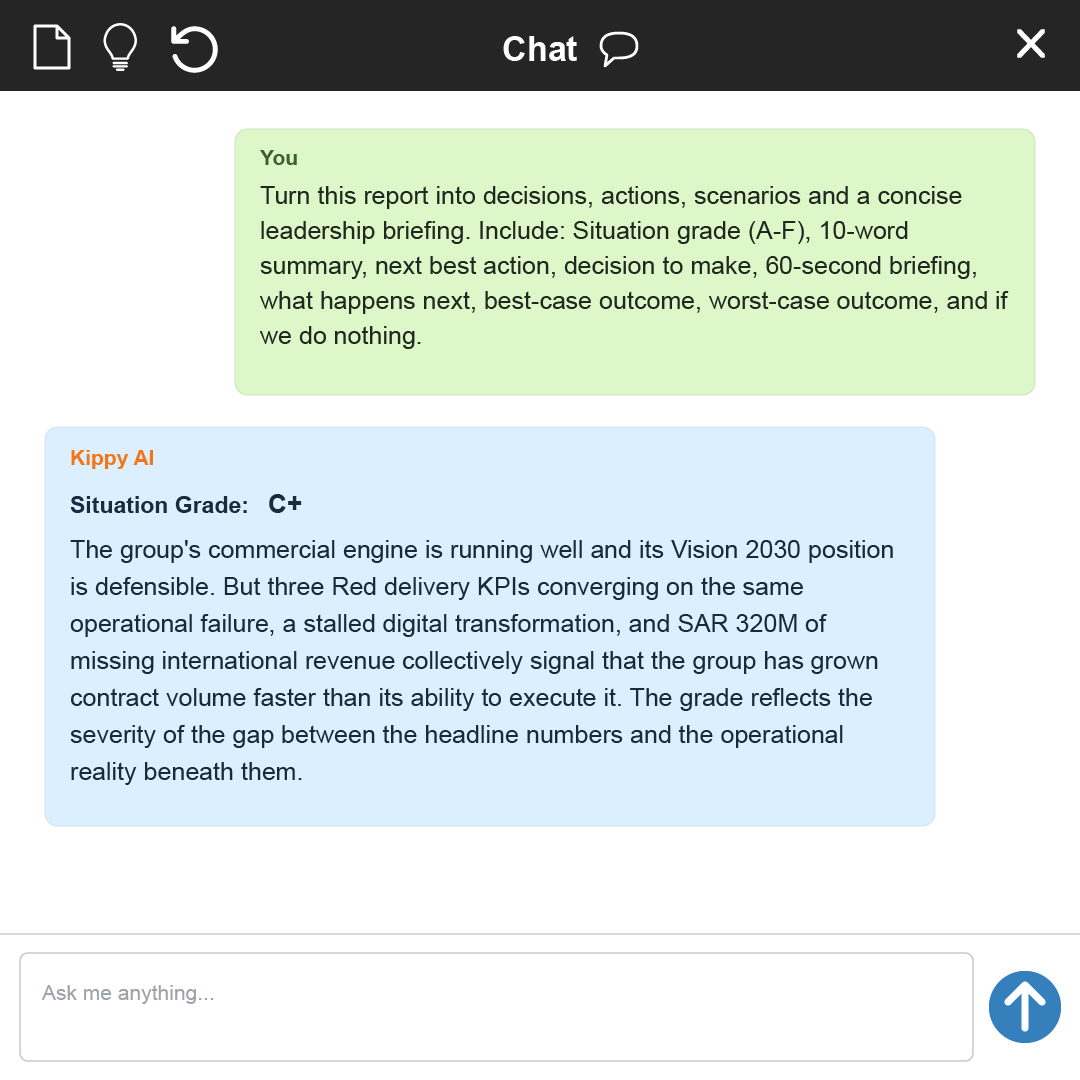
The retailer needs more than a better sales report. It needs measures that fit each brand and format, a balanced view of store performance, and online, supply chain and seasonal work connected to the same strategy.
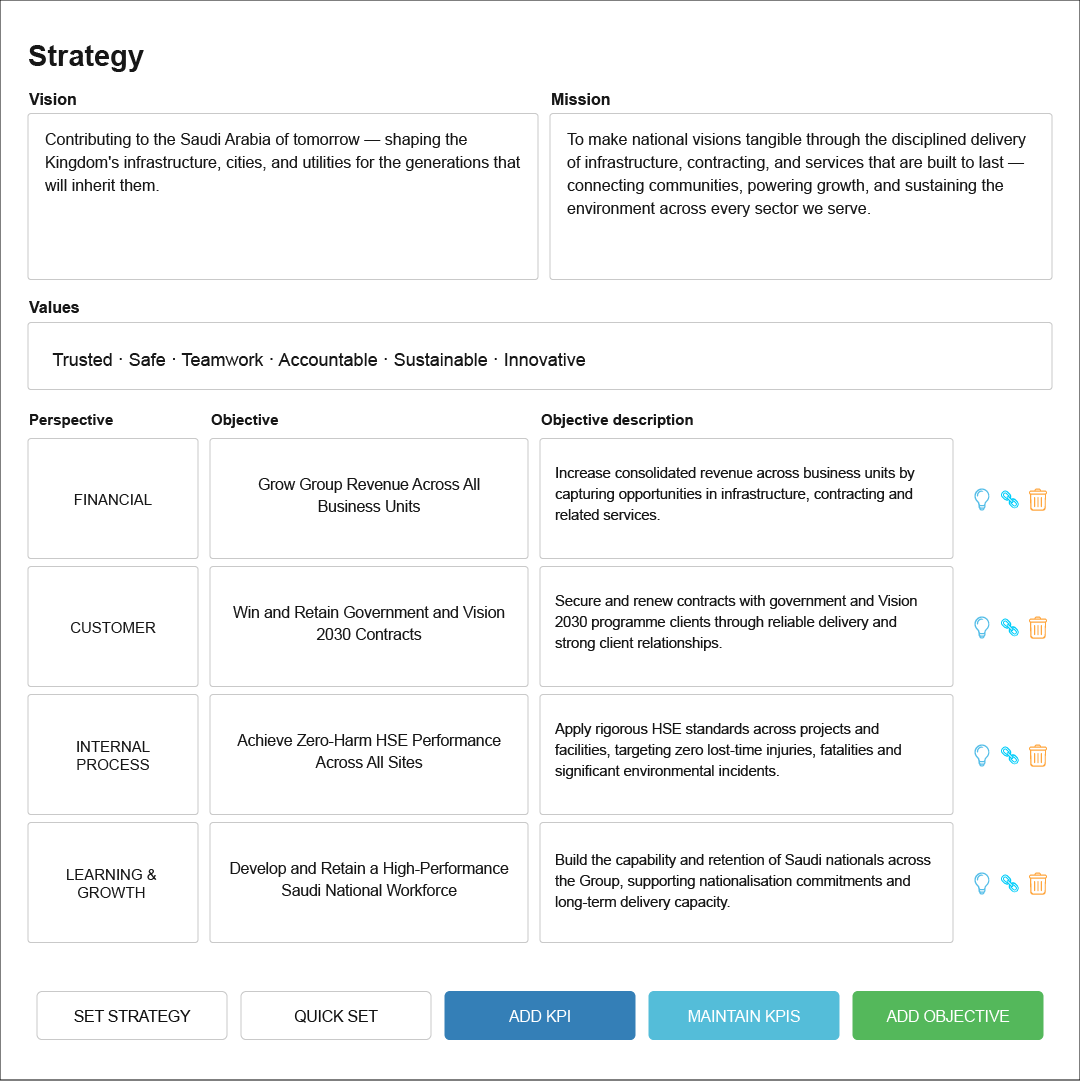
- Measures that fit each brand.Each brand has its own strategic framework and KPIs, with shared measures that keep them comparable at corporate level.
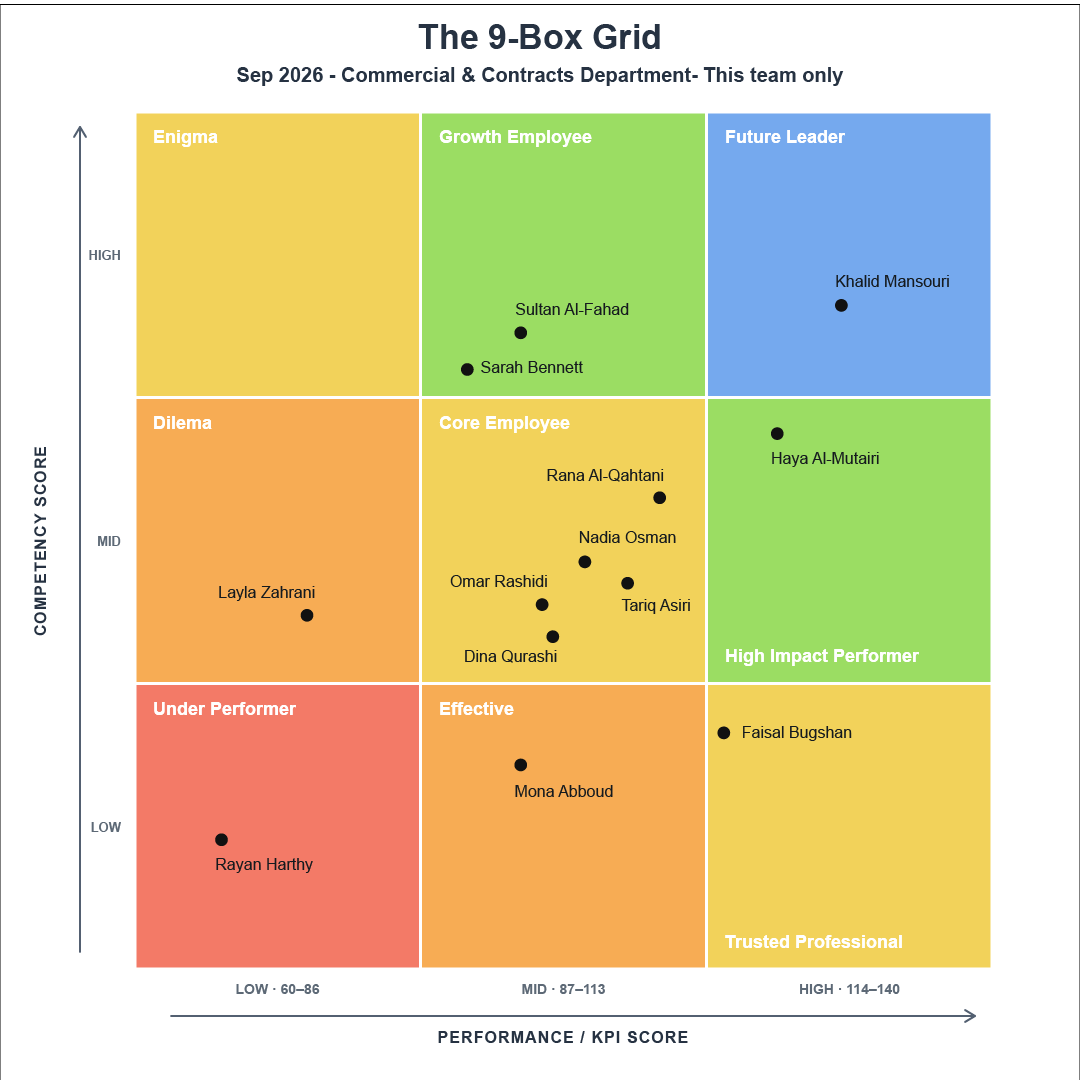
- A balanced view of store managers. Assessments cover revenue, efficiency, waste reduction and customer retention, in line with corporate priorities.
- Online and stores in one picture. Online grocery KPIs sit in the same strategic framework as in-store performance.
- Waste patterns across the network. Store waste data is combined and analysed network-wide to find the merchandising and supply chain factors behind shrinkage.
- Consistent seasonal preparation. Targets for Ramadan and the pilgrimage seasons are adjusted through one structured process across every store.
- Suppliers linked to the shelf. Supplier delivery performance is connected to store-level availability KPIs.
THE RESULTS
Every Store Measured Against the Whole Strategy
With Kippy in place, each brand runs on its own strategic framework, while corporate leadership reviews them all through a common lens. This setup enables:
-
Differentiated brands, comparable results.
Each brand can pursue its own positioning while the board still compares performance across them.
-
More than sales.
Store manager reviews reflect efficiency, waste and customer retention, so sustainable performance is rewarded.
-
Online growth that supports stores.
Leadership can track how well channels work together and where online and in-store can reinforce each other.
-
Systematic shrinkage reduction.
Network-wide waste analysis turns waste from a store-by-store issue into a problem the whole business can tackle.
-
Readiness for peak seasons.
A standard process prepares every store for the periods that bring a large share of annual revenue.
-
Improvements customers can see.
Linking suppliers to shelf availability helps procurement and operations fix the issues that matter most to shoppers.
SUMMARY
Two Brands, One Direction
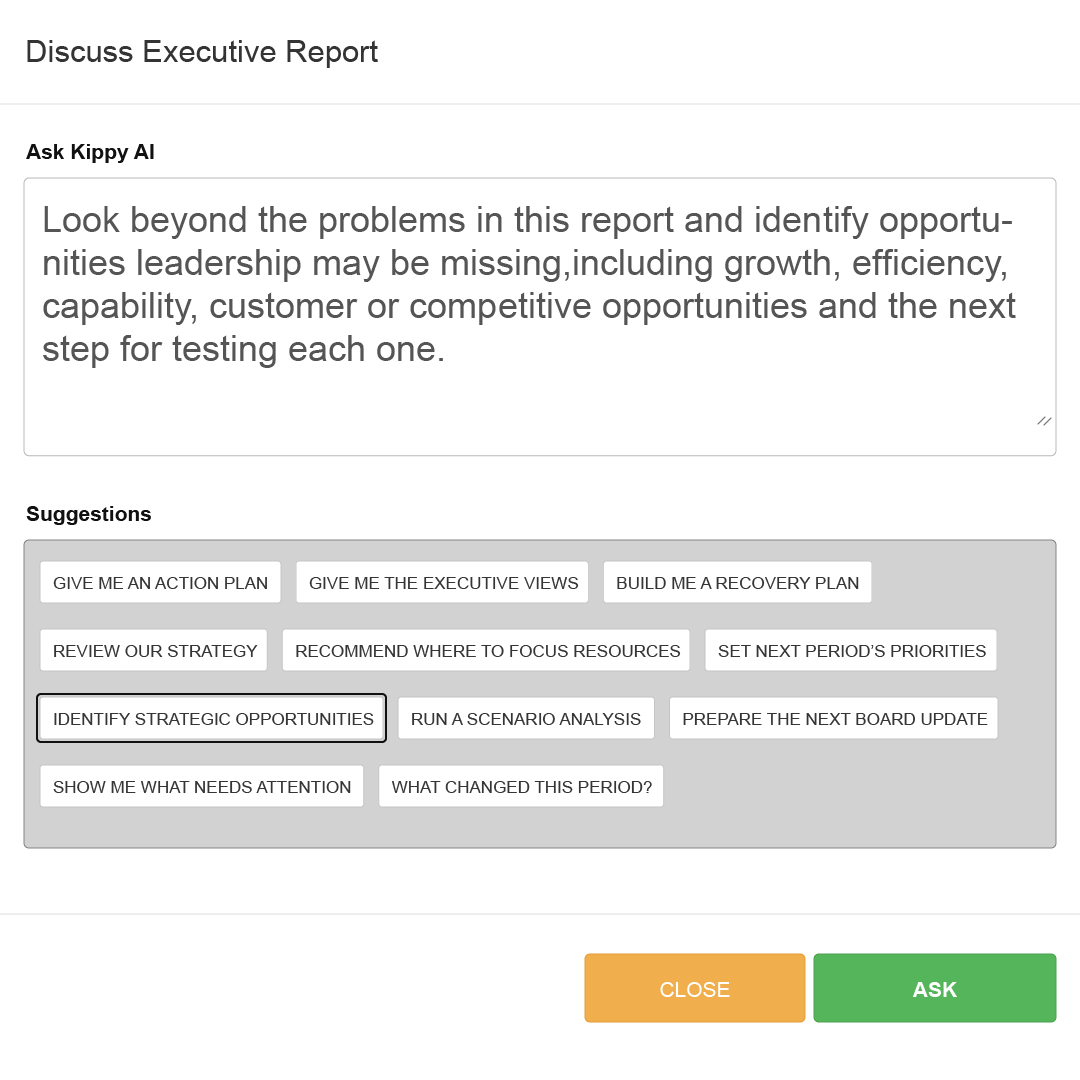
For a grocery retailer running two brands across several store formats and online, Kippy provides one framework linking corporate strategy to every brand, store, channel and supplier. Stores are judged on more than sales, peak seasons are planned consistently, and online growth strengthens the store network rather than running alongside it.
See How Kippy Would Work Across Your Business
In a 30-minute online demo, we’ll show you:
- See your company’s objectives and KPIs in Kippy.
- Discuss your requirements and how Kippy can fit them.
- Review your options for setup, integrations and rollout.