
BALANCED SCORECARD
See the Trade-Offs Behind On-Target Results
Review customer and financial outcomes alongside the process and people measures that drive them. Use your own scorecard perspectives, KPI weights and thresholds.
Best Practices
-
Measure success across every perspective
-
Connect outcomes to their drivers
-
Track results and early warning signs
-
Check whether initiatives improve results
-
Agree actions and owners at every review
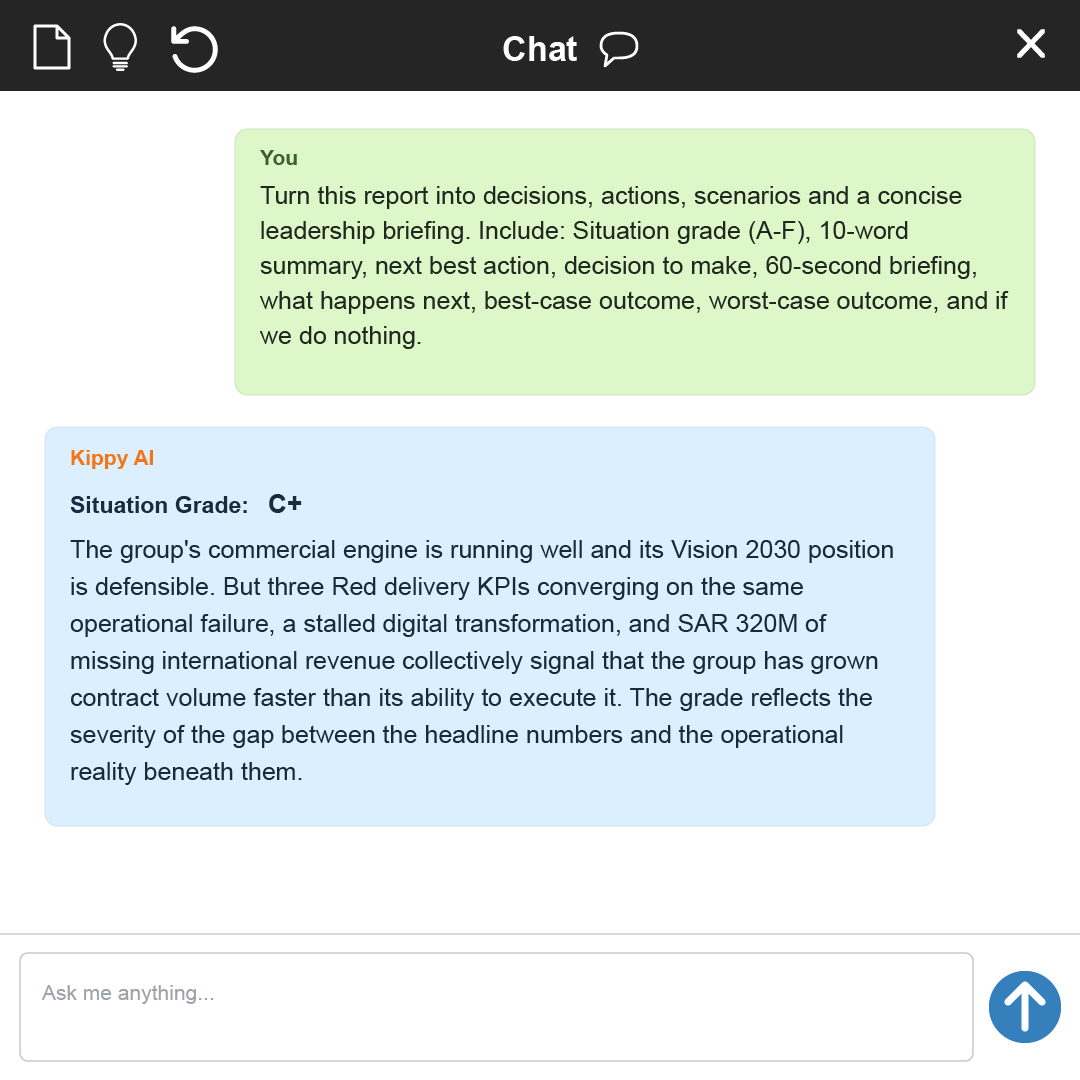
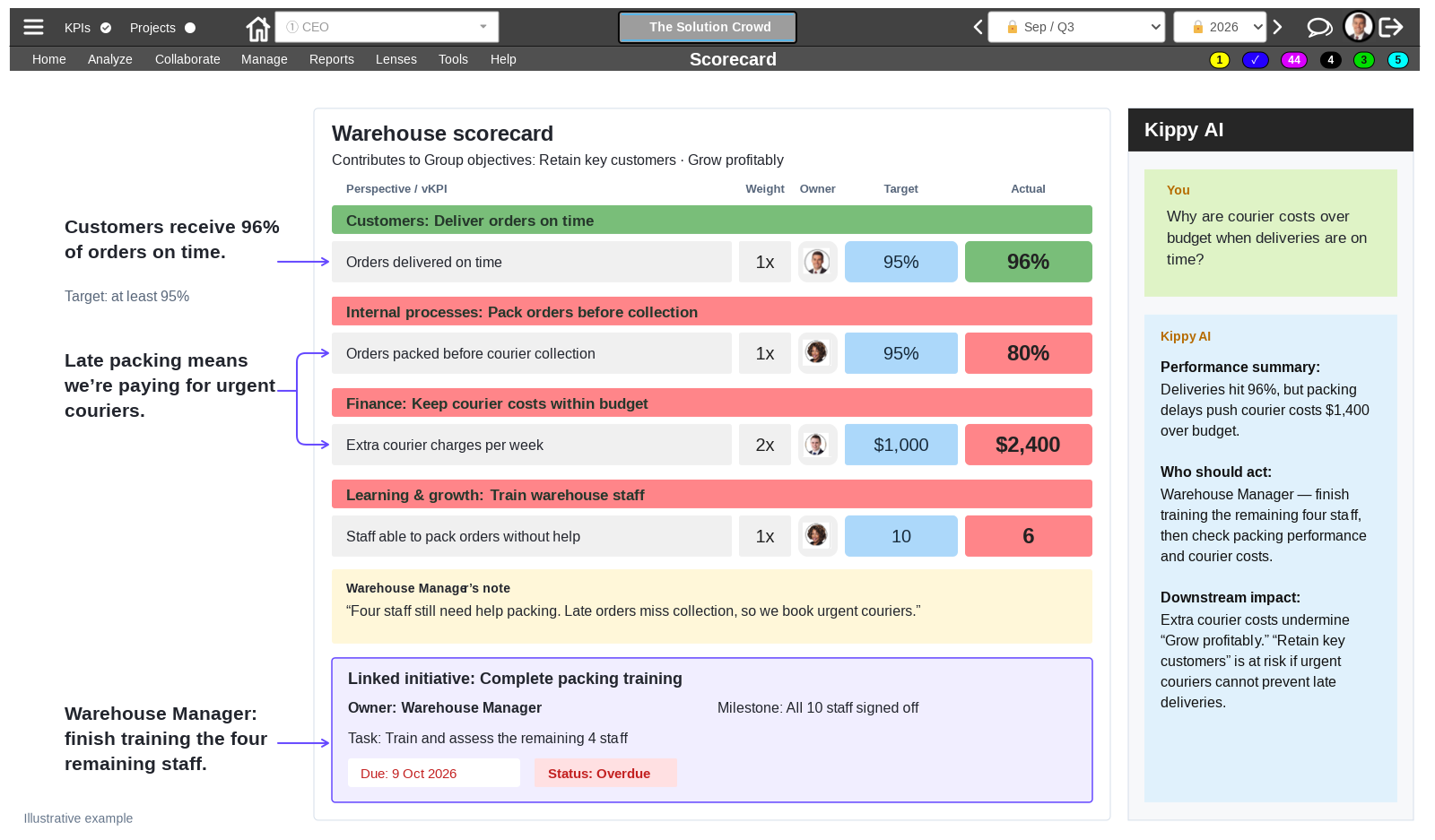
Deliveries are on time. What still needs fixing?
See delivery results alongside packing delays, staff training and courier costs.
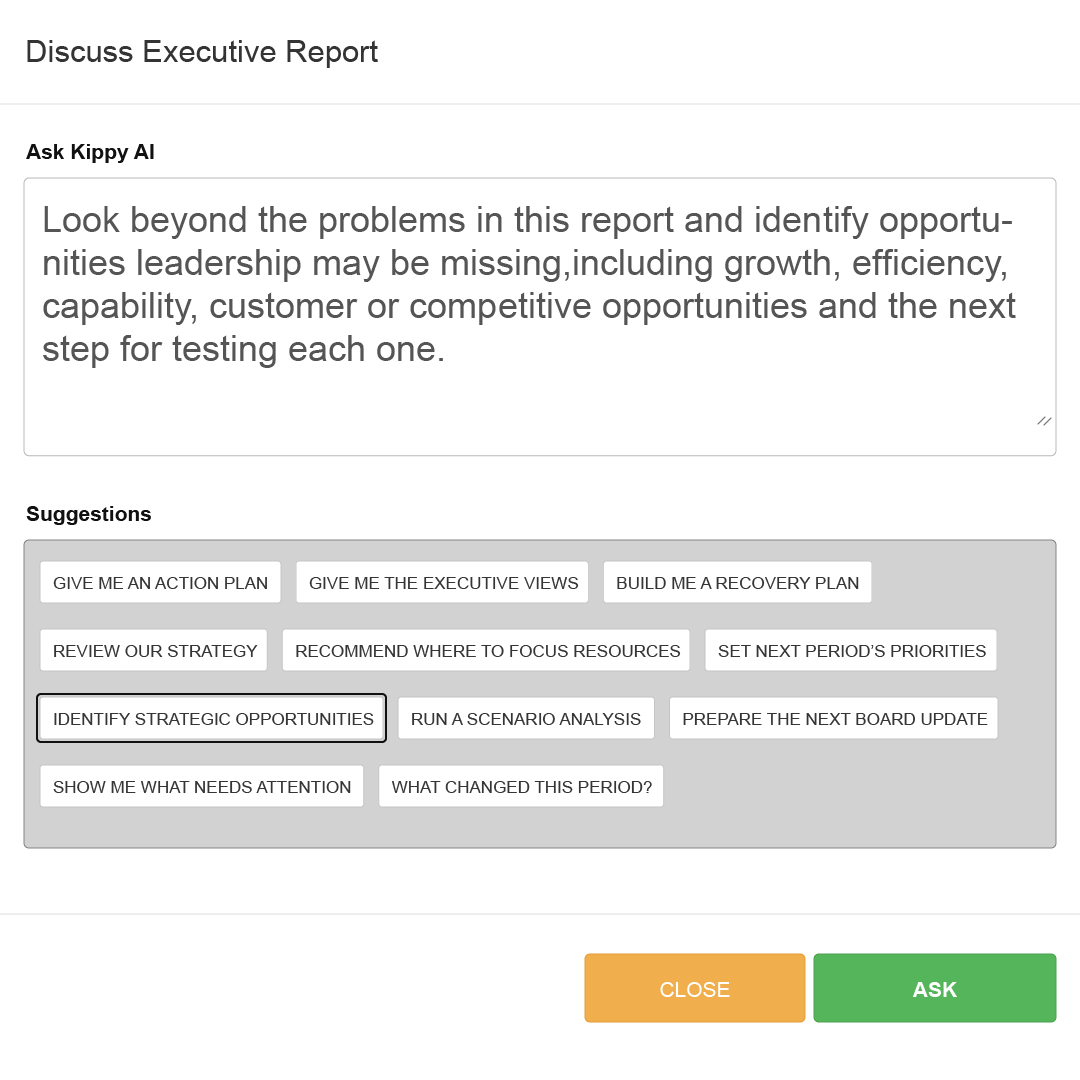
Ask Kippy AI what needs attention and who should act.
96% of orders arrive on time, while extra courier charges are $1,400 over the weekly target. The warehouse manager’s note links the extra spend to missed packing cut-offs. The training to address them is overdue.
Top 5 Balanced Scorecard Principles
The design choices behind Kippy’s approach—and why they matter.
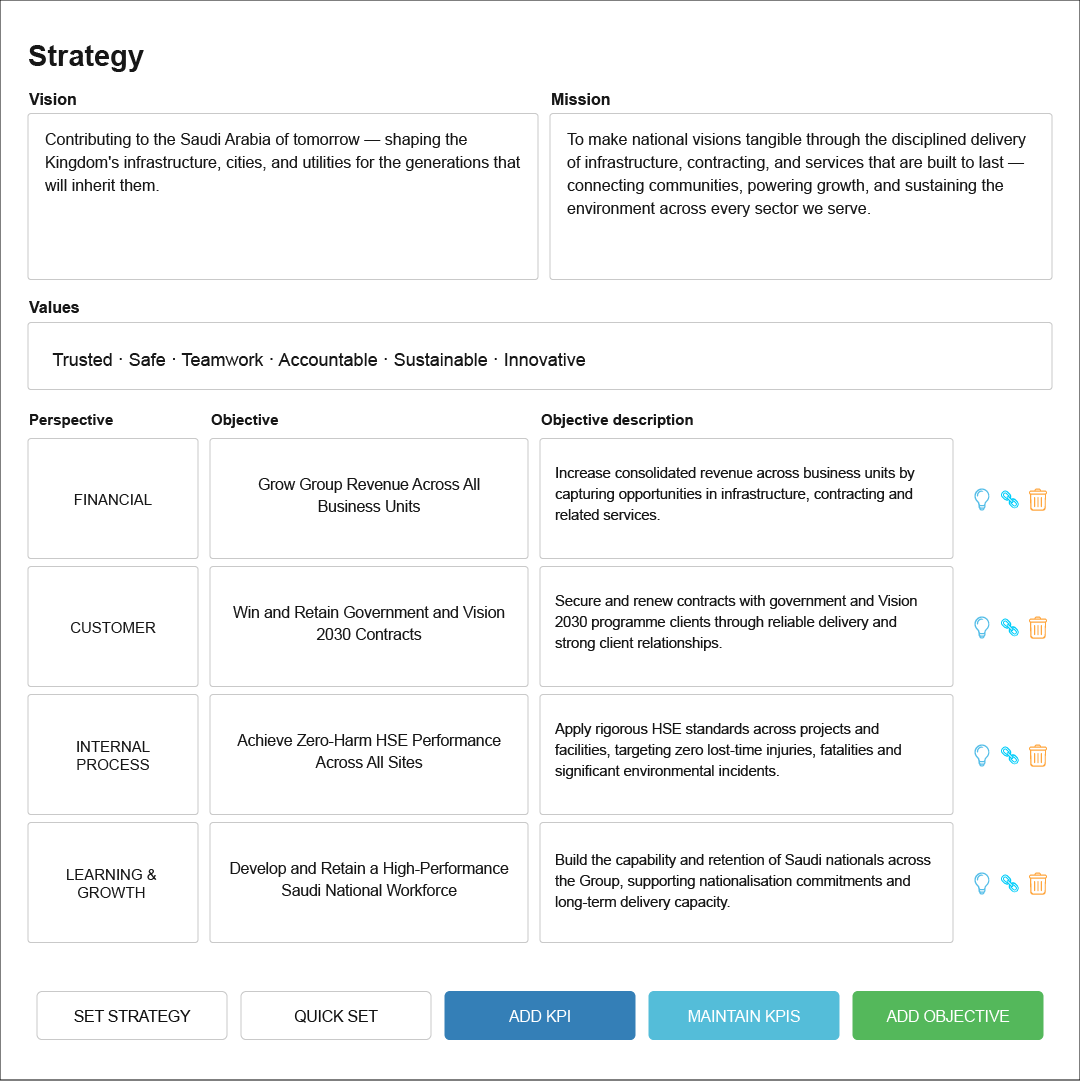
Structure objectives across balanced perspectives, aligning financial outcomes with customer needs, internal processes, and people capabilities.
Explore perspectives and strategic objectives →Map how objectives support each other, making links between performance drivers and strategic outcomes visible to validate scorecard logic.
Explore strategy maps →Define KPIs and targets per period, tracking results alongside projects progress to accurately evaluate performance across every objective.
Explore KPIs, targets and projects →Set weights, performance directions, and thresholds so scorecard results reflect priorities, ensuring consistent evaluation of metrics.
Explore weighting and scoring rules →Use BSC at corporate and team levels, with objectives and measures relevant to each scope while retaining a shared strategic framework.
Explore corporate and team BSC →Unified Corporate Strategy
Localized Team Execution
How do you balance top-level vision with departmental accountability?
… the overarching corporate vision, strategic themes across the four BSC perspectives, and primary organizational KPIs.
… their specific cascading objectives, localized targets, and the operational initiatives required to drive them.
… the cause-and-effect impact of departmental performance on overarching corporate goals, adjusting strategy as needed.
CUSTOMER SUCCESS STORY
How GRI Tires achieved cross-border alignment
Kippy saved each branch’s management team four days of consolidation per month, freeing up a combined 20 working days per month across five locations for performance review and operational follow-up. This gave managers more time to investigate underperformance, resolve cross-team bottlenecks and support employees in meeting agreed targets.
As the system owner for our global group, I needed corporate and divisional objectives to remain aligned across five locations. We implemented Kippy for 1,200 employees and established clear alignment between corporate objectives, divisional objectives and KRIs. This gave us a consistent basis for managing performance across the group.
See your high-level strategy come to life in Kippy
Explore more on how BSC principles work in Kippy
Explore how each principle works through a connected manufacturing example, from local objectives to performance review.
Balance financial outcomes with performance drivers Align financial goals with customer needs, processes, and people capabilities.
- Read operating margin alongside delivery reliability, schedule adherence and competency coverage.
- Compare movement across the four scorecard perspectives.
- Identify where a strong financial result may conceal pressure on future performance.
Make strategic relationships explicit Map how objectives connect to validate your strategy and performance drivers.
- Follow the strategy map from workforce capability to production and delivery objectives.
- Examine the links leadership expects to hold.
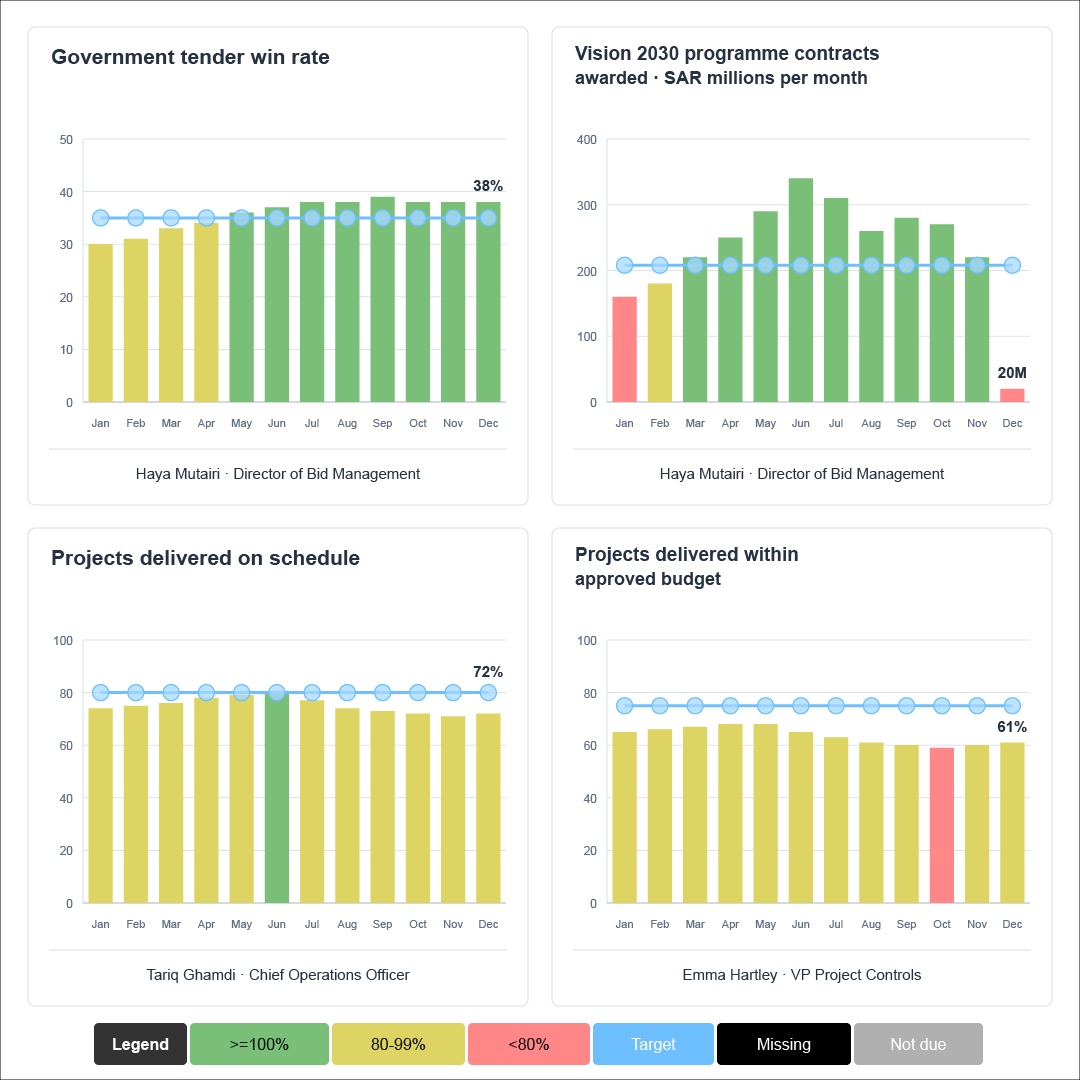
- Compare results across perspectives to test the assumptions behind the strategy.
Measure progress against each objective Track KPIs, targets, and project results to evaluate performance accurately.
- Review the KPIs supporting the Group profitability objective.
- Compare operating margin and return on capital employed against their targets.
- Identify which measure explains the shortfall and frame the review question.
Apply deliberate weighting and scoring rules Set weights, directions, and thresholds to ensure consistent metric evaluation.
- See how much each KPI contributes to the objective score.
- Review its scoring direction and performance thresholds.
- Check whether the overall rating gives sufficient weight to the results leadership values.
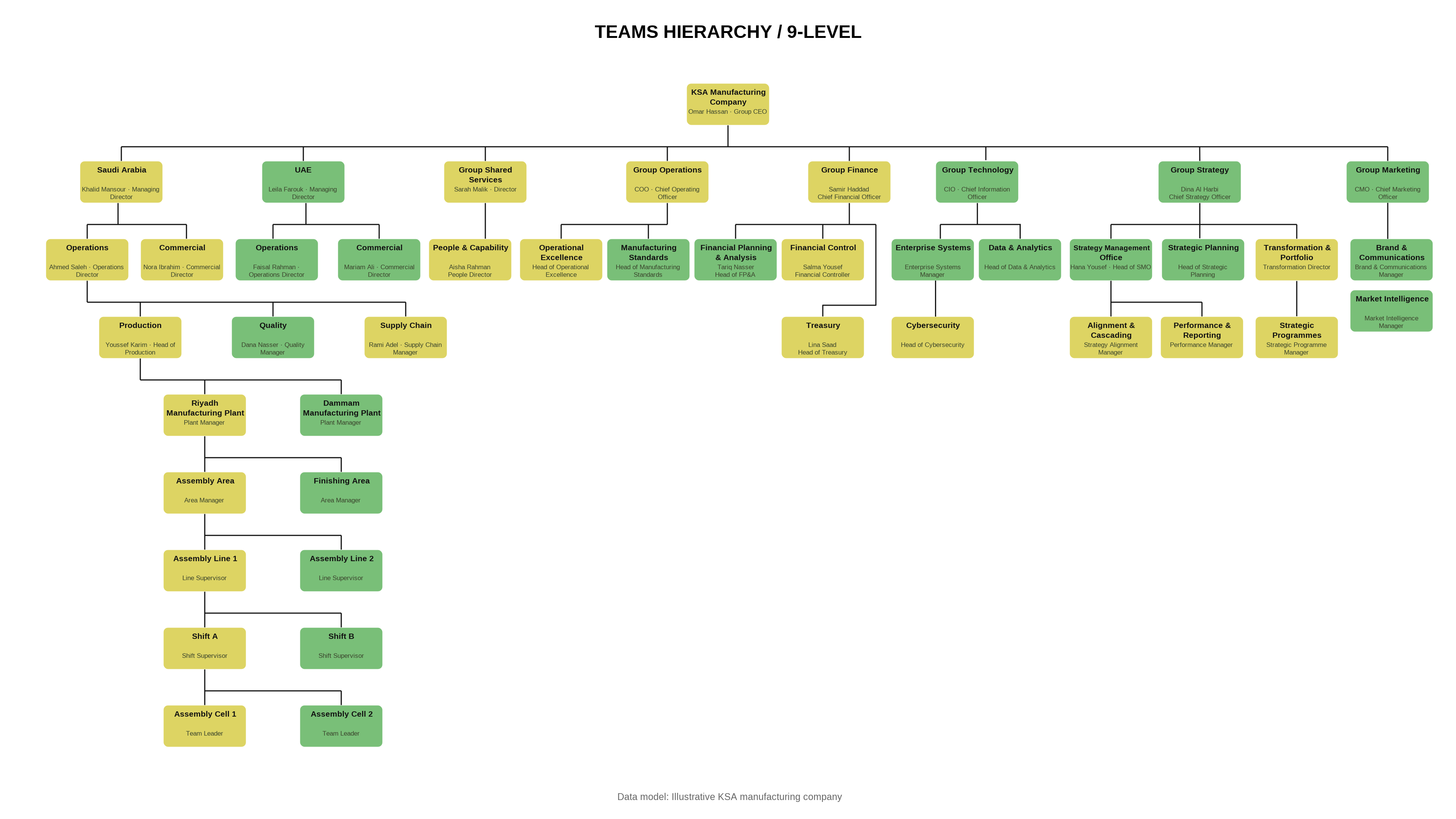
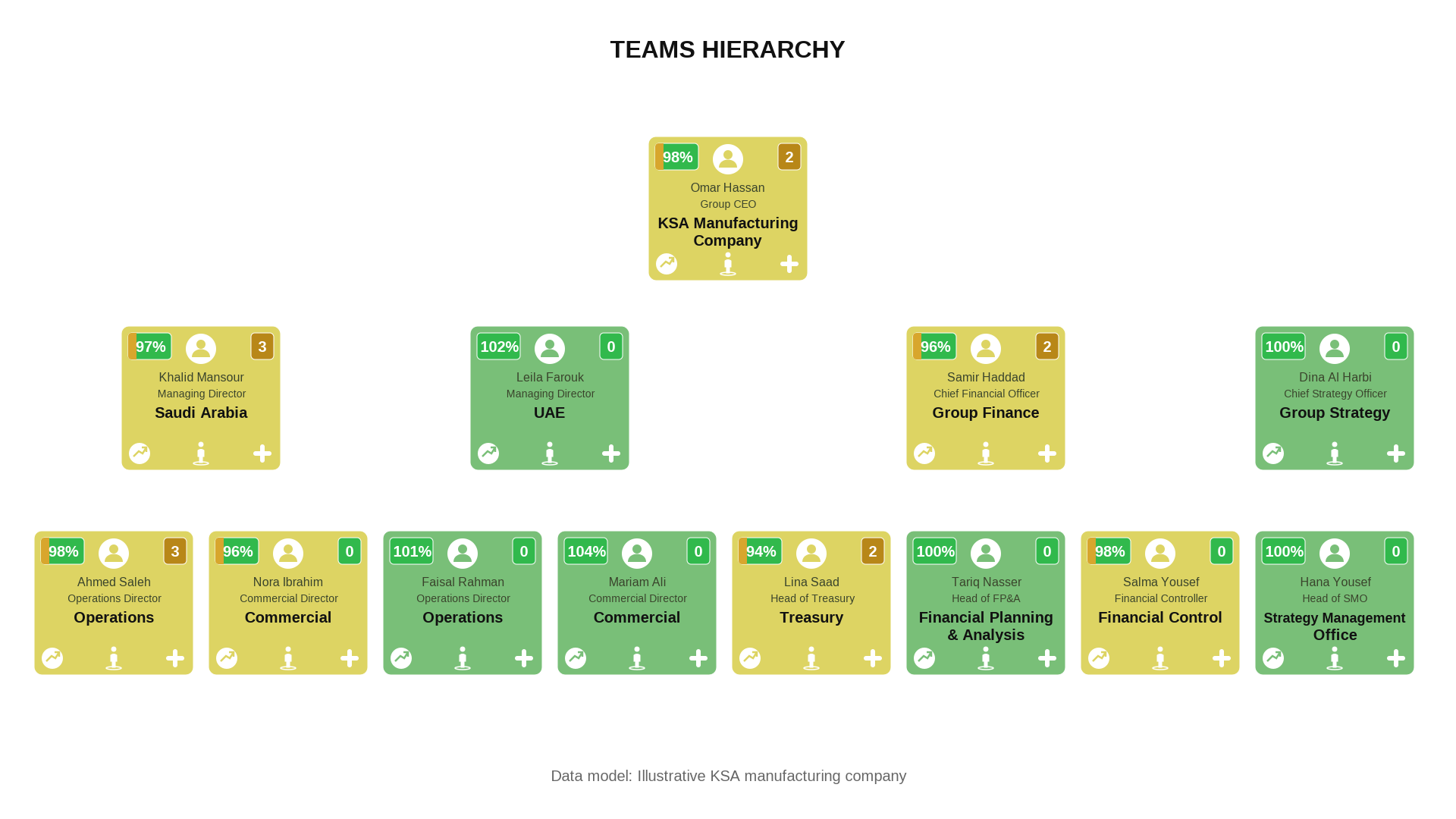
Apply the Balanced Scorecard from executives to teams Cascade corporate strategy directly to departments for complete alignment.
- Follow a Group objective into the plant scorecard.
- Compare the plant’s measures with the outcome executives review.
- See whether local targets give plant leaders a credible contribution to Group performance.
Frequently Asked Question
Can we keep our existing Balanced Scorecard methodology?
Yes, Kippy can reflect the perspectives, objectives, KPIs and reporting cycle you already use, including a framework developed with your strategy consultants. You can use your own perspective names and structure, without being restricted to the traditional four, so adopting Kippy does not require you to redesign your Balanced Scorecard or discard methodology already agreed with leadership.
Can we score different KPIs fairly and simply?
Yes, KPI scoring can reflect whether higher, lower or an acceptable range means better performance, using your own red, amber and green thresholds and score limits. Measures that should not be added across periods can use the latest result or year-to-date average, while simple 1×/2×/3× weighting lets you emphasise priority objectives and KPIs, with more advanced weighting available when needed.
Can we reduce manual scorecard updates?
Yes, actuals can come from connected business systems or be calculated from other KPIs, shared business measures and cross-team data, reducing repeated submissions and spreadsheet calculations. Manual updates remain available where needed, allowing you to automate suitable parts of the scorecard as source data and integrations become ready, so managers can spend more time reviewing performance and agreeing action.
Can we lock results after management sign-off?
Yes, submission windows and change freezes let you lock targets and actuals for a closed reporting period, with authorised exceptions when corrections are necessary. These controls sit within a management cycle of submission, review, approval and action, supported by audit records, giving leadership a traceable account of reported performance and subsequent changes.
Can our scorecard evolve without losing its history?
Yes, you can update objectives, KPIs and organisational structures for the next year while retaining previous scorecard structures, results and audit records. This gives you room to refine the methodology or reflect a reorganisation without overwriting what was measured and reported before, with historical results preserved in the context of the scorecard that applied at the time.
Can Kippy manage performance using our own rules?
Yes, Kippy supports your own perspectives, scoring rules and red, amber and green thresholds, including KPIs where higher, lower or an acceptable range means better performance. Non-cumulative measures can use the latest result or year-to-date average; simple 1×/2×/3× weighting reflects the importance of objectives and KPIs, while calculated KPIs reuse other KPIs and business measures to reduce manual entry. Beyond displaying a dashboard, Kippy carries your methodology through target setting, submissions, reviews, approvals and follow-up actions, supporting the full performance management cycle.
TRUSTED BY HUNDREDS OF ORGANISATIONS ALL OVER THE WORLD

“Cascading and alignment across 14 business units, with onboarding completed in one month.”
Dr. Yahya Shakweh
Strategy Director, Al-Ayuni

“Visibility and accountability to every level of our performance management.”
Paul Poungpetch
General Manager, Thaiwattana Metalsheet

“The reporting tools helped me to analyze data efficiently, saving me countless hours of manual work.”
Pinky Lama
VP, Planate Management Group

“It helps project managers identify and fix project deviations early.”
Eyad Zamel
Consulting PMO Manager, Deloitte

Kippy gives leaders a comprehensive view of organisational performance.
Abdulrazak Tello
Director, PwC

Kippy offers a customisable platform for strengthening governance and supporting data-driven decisions.
Dr Ahmad Fayez
Manager, Palladium
- Canada
- United States
- Mexico
- Chile
- Brazil
- United Kingdom
- Netherlands
- Finland
- Italy
- Türkiye
- Ghana
- Zimbabwe
- Saudi Arabia
- Oman
- United Arab Emirates
- India
- Thailand
- Malaysia
- Philippines
See How Kippy Would Work Across Your Business
In a 30-minute online demo, we’ll show you:
- See your company’s objectives and KPIs in Kippy.
- Discuss your requirements and how Kippy can fit them.
- Review your options for setup, integrations and rollout.