Governing Rapid Growth Across a Fintech Organisation
A fast-growing Saudi fintech that began as an online payment gateway. It now offers businesses an all-in-one platform covering payments, recurring billing, payouts, spend management and analytics, serving merchants and partners across several Arab countries.
In this scenario, the company has grown from a single payment gateway into a multi-product platform, adding new teams, products and markets in quick succession. Leadership needs every product, function and new hire working towards the same priorities, while the market and regulations keep moving. If your company is scaling fast across products and markets, this challenge may feel familiar.
THE CHALLENGE
More Products, Teams and Markets, Less Clarity
New teams are being created faster than governance can keep up, so accountabilities for new roles are not always clear. Product development across payments, billing, payouts and spend management runs on its own sprint cadence, separate from commercial targets. That makes it hard to tell whether engineering investment is winning and keeping merchants.
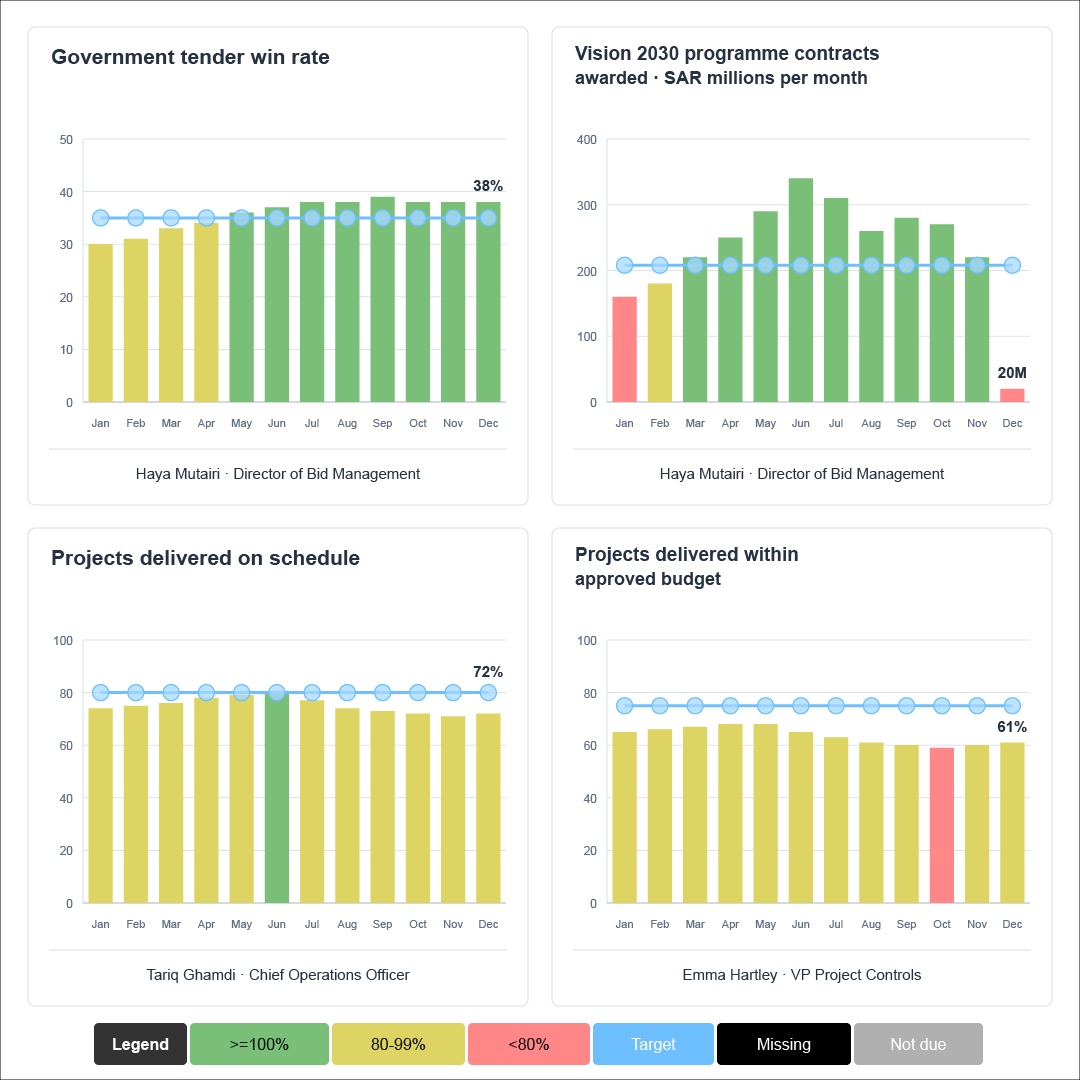
Leadership lacks one view of operational performance across payment processing, merchant onboarding, fraud prevention, compliance and customer support. The health of key merchant relationships is tracked informally by account managers, with no structured way to flag at-risk accounts before they leave.
Strategy is planned once a year, while competition and regulation in Saudi payments change far more often. When people move roles, knowledge about critical merchant accounts depends on informal handover conversations.
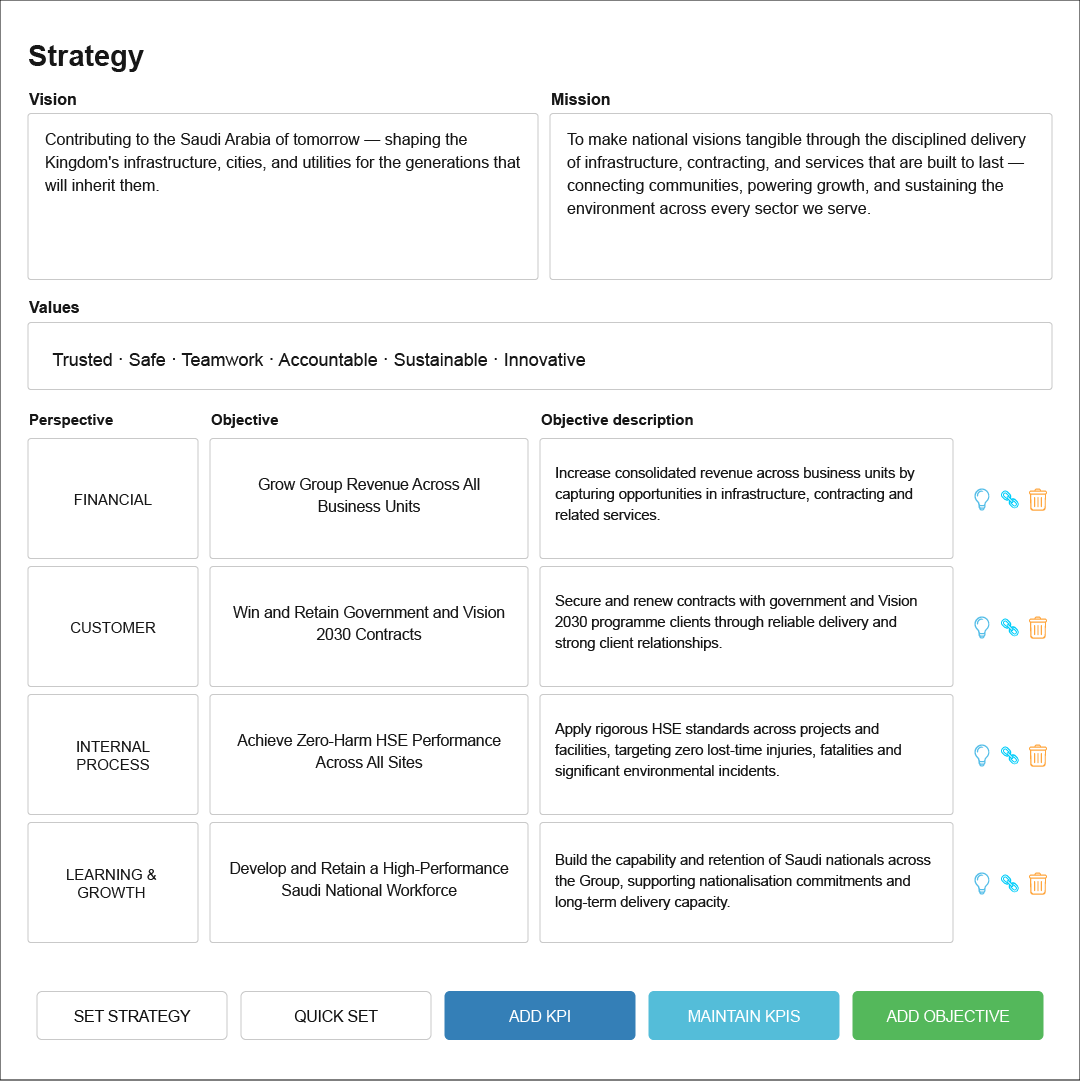
The underlying problem is the lack of one framework that scales with the company, connecting strategy to products, functions, merchants and people.
THE SOLUTION
A Performance Framework That Grows with the Company
The company needs more than more dashboards. It needs a structure that gives every new team clear accountabilities and connects product, commercial and operational work to the same priorities. Kippy does that in six ways:
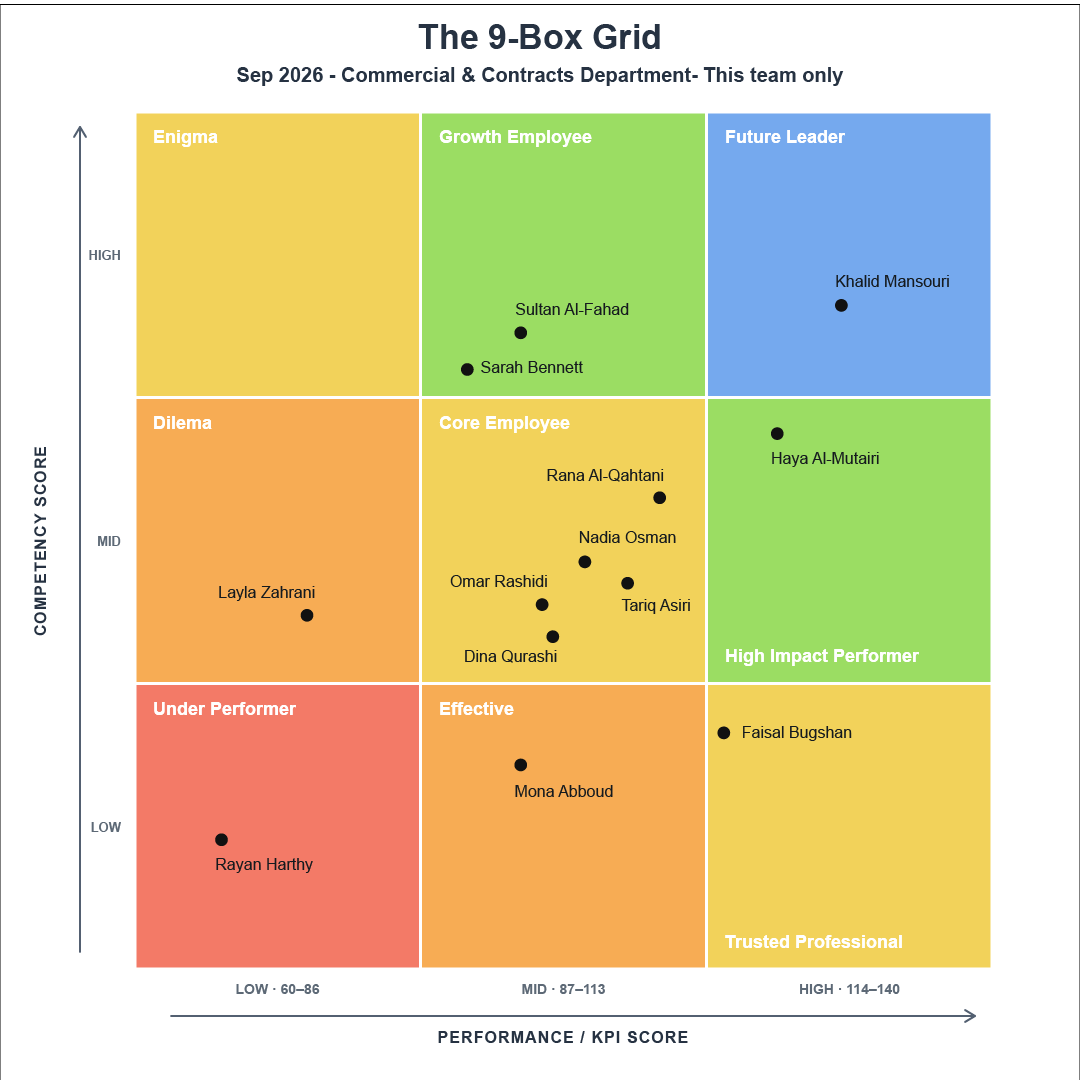
- Ownership. KPI ownership hierarchies scale with the organisation, so every new team and role has defined accountabilities from day one.
- Actuals and Check-ins. Product milestone reporting runs on the same cadence as commercial KPI check-ins, giving engineering and sales a shared rhythm.
- Reminders and Escalations. Early-warning alerts fire when merchant health indicators drop below set thresholds, starting a structured intervention.
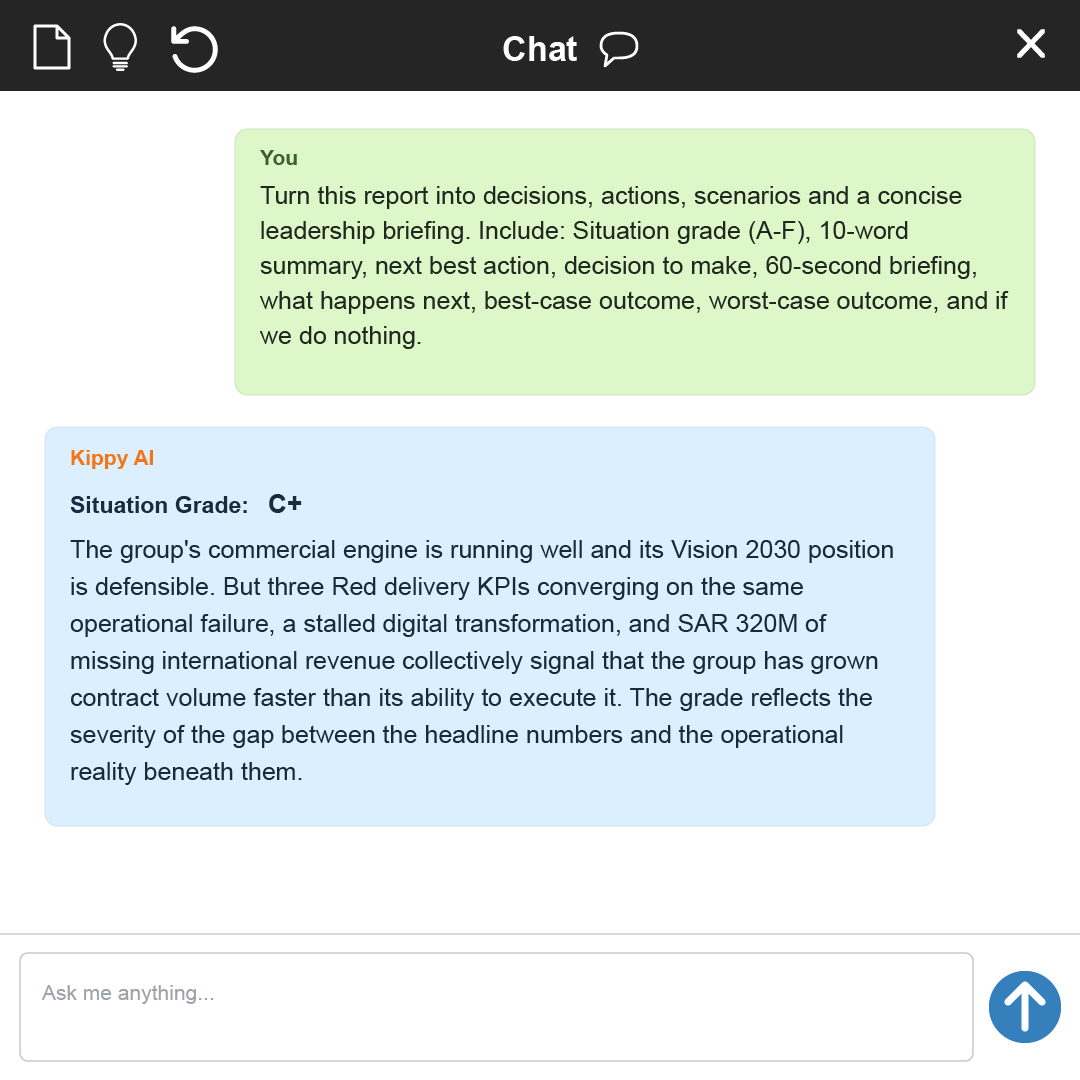
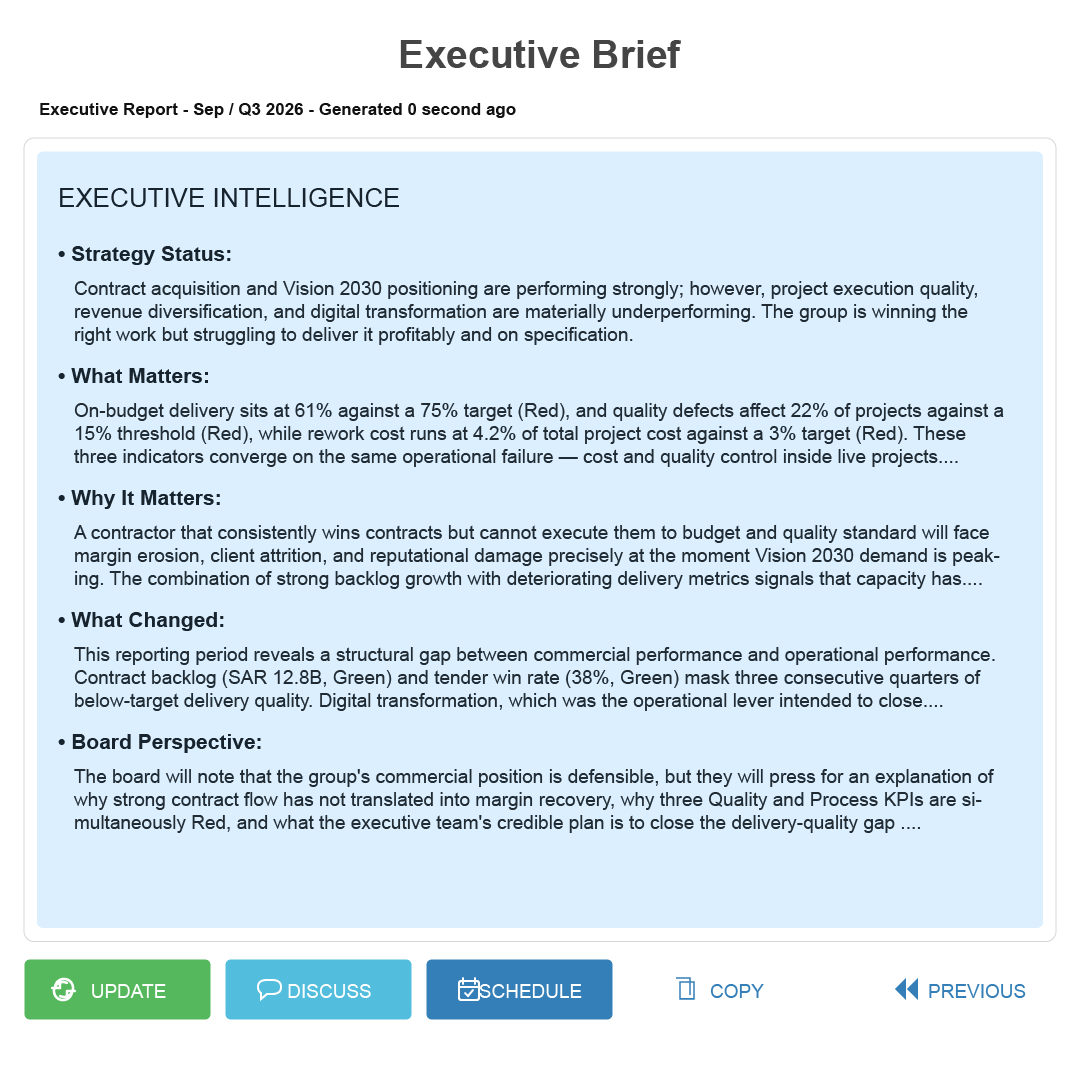
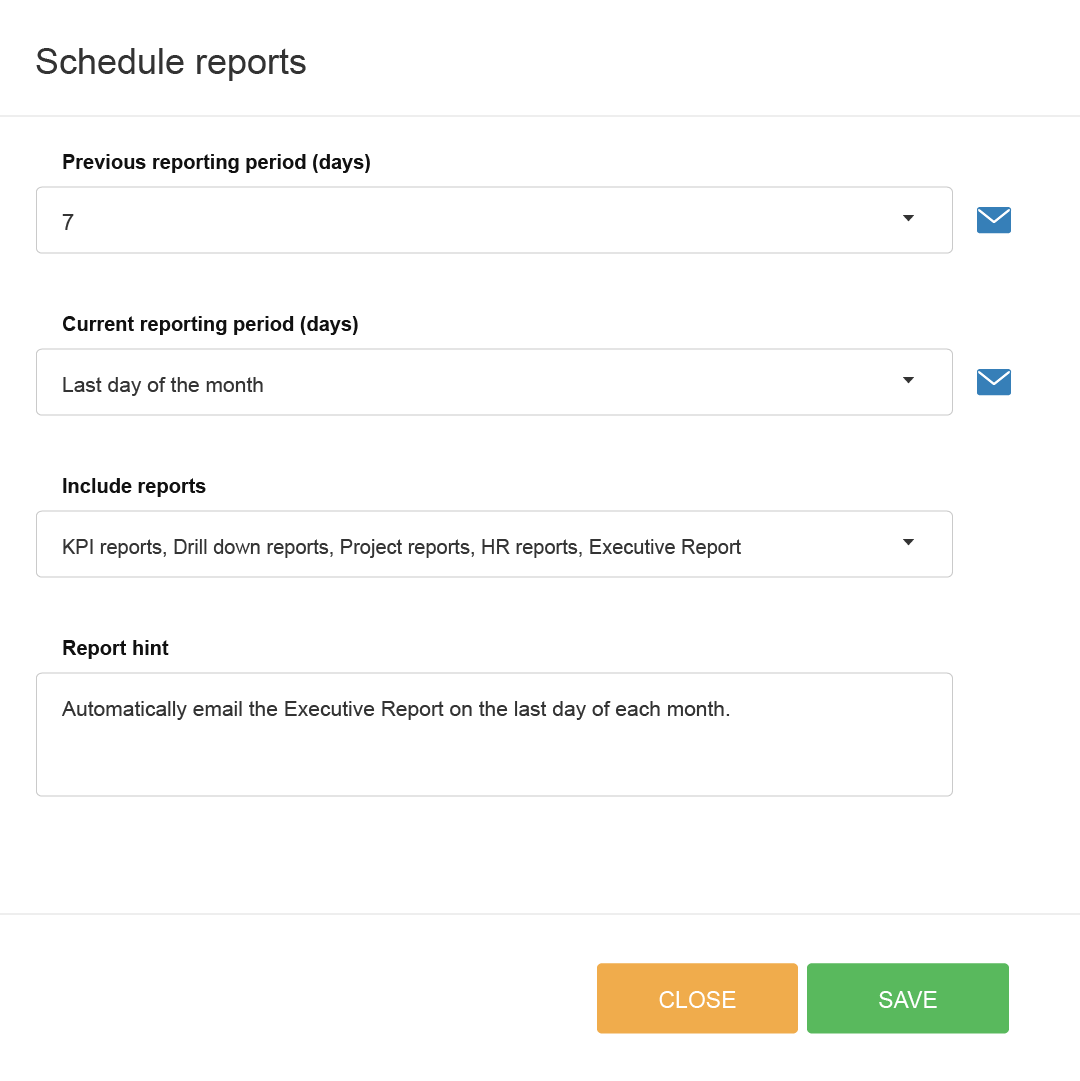
- Reports. One operational performance report draws from every business function, replacing the separate dashboards each department keeps.
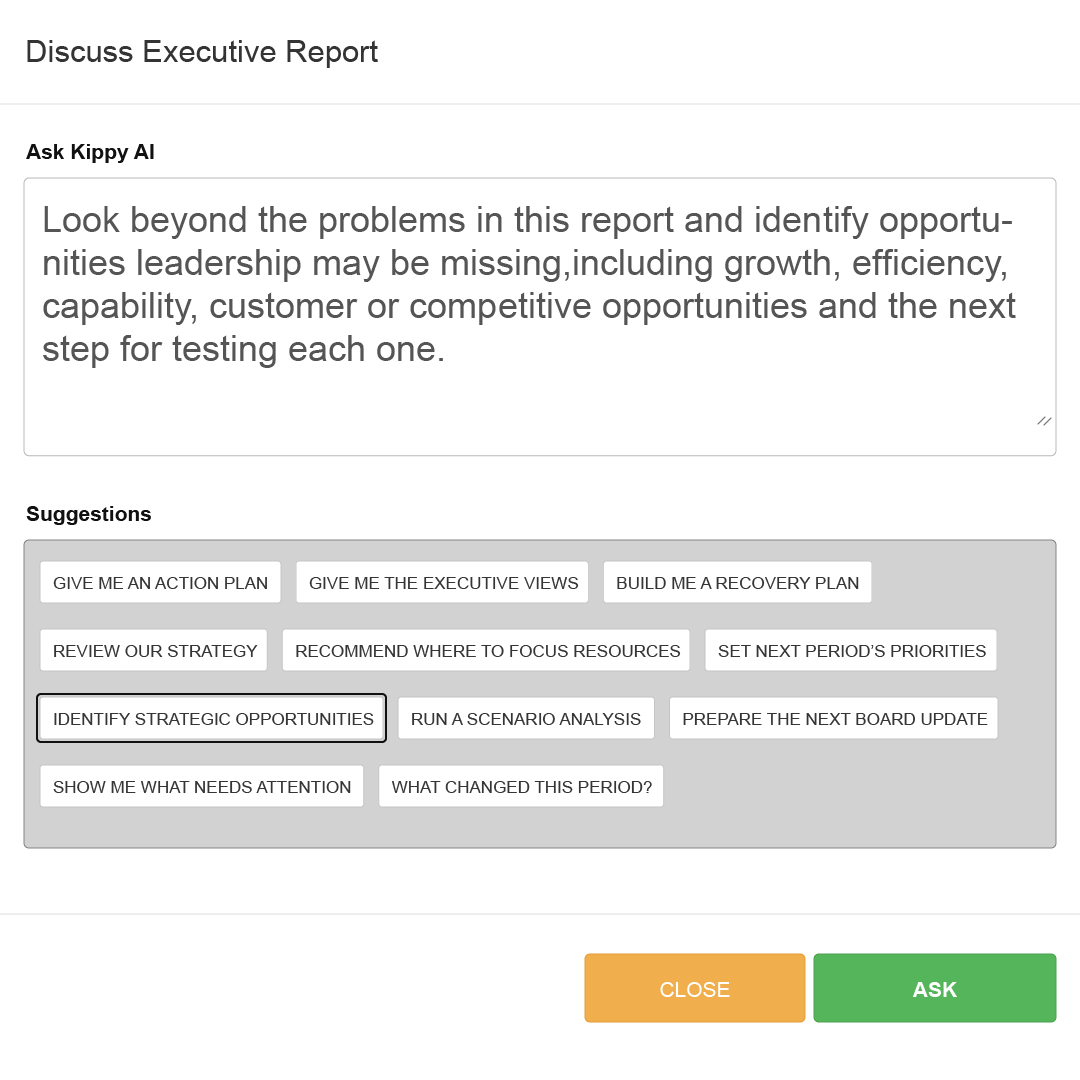
- Objectives and OKRs. Rolling quarterly OKR cycles let leadership adjust strategic emphasis without waiting for the annual plan.
- Audit and Lifecycle. Structured handover records capture merchant relationships and operating procedures whenever someone changes role.
THE RESULTS
Growth Without Losing Focus
With Kippy in place, leadership sees payment processing, onboarding, fraud, compliance and support in one leadership-ready report, and strategy is reviewed every quarter. This setup enables:
-
Accountability from day one.
Every new role gets KPI ownership as part of onboarding, visible in the organisation's performance structure.
-
Engineering linked to revenue.
Product milestones and commercial KPIs share one reporting cycle, so leadership can trace releases to merchant acquisition and retention.
-
Earlier warning on merchant churn.
Alerts trigger automatically when engagement or transaction volumes fall, while there is still time to act.
-
Faster strategic response.
Quarterly OKR reviews shorten the gap between a market or regulatory shift and the company's response.
-
Continuity through role changes.
Handover records keep merchant context, relationship history and open commitments searchable for whoever takes over.
"Growth changes the shape of the organisation almost every month. What we needed was a way to make sure our priorities, ownership and performance measures changed with it, without creating another layer of reporting. Having everything connected gives leadership a clearer view of where the business is moving and where we need to intervene."
John Doe
THE IMPACT
A Governance Model Built for Change
The value of the framework is not simply that leadership can see more metrics in one place. It gives a fast-growing organisation a consistent way to absorb change without rebuilding its governance every time a new product, team or market is added. New responsibilities can sit within the same performance structure as established functions, while product, commercial and operational priorities continue to be reviewed against the same strategic objectives.
That becomes increasingly important as the organisation expands across products and markets. Merchant health, product delivery, compliance and commercial performance can be reviewed as connected parts of the business rather than separate departmental concerns. Quarterly strategy reviews create room to adjust priorities as conditions change, while structured ownership and handover records preserve context when people and responsibilities move. For a fintech scaling at speed, the result is a governance model designed to expand with the organisation rather than slow it down.
See How Kippy Would Work Across Your Business
In a 30-minute online demo, we’ll show you:
- See your company’s objectives and KPIs in Kippy.
- Discuss your requirements and how Kippy can fit them.
- Review your options for setup, integrations and rollout.