
Every Site on the Same Cadence: How Hermes Infraestructura Standardised Oversight Across Its Infrastructure Portfolio About Hermes Infraestructura
A Mexico City-based infrastructure developer and part of Grupo Hermes, with more than 50 years of experience in the construction, operation and maintenance of infrastructure. Its portfolio spans roads, tunnels, bridges, railways, dams, water treatment and desalination plants, airports and buildings across Mexico and Latin America, delivered by distributed project teams.
Hermes Infraestructura runs large civil engineering and construction programmes in several countries at once. Each project team had developed its own way of reporting, reviewing and following up. Headquarters needed one consistent view of delivery across every site, with risks, actions and lessons learned connected to the same performance framework. If your organisation manages projects across dispersed locations, this challenge may feel familiar.
THE CHALLENGE
Local Reporting, Distant Oversight
Project teams in different countries used their own local reporting standards, so headquarters struggled to compare performance consistently. Programme oversight relied on periodic site visits and emailed status updates, leaving gaps between what was reported and what was happening on the ground.
Risk registers were kept in standalone documents, separate from the project scorecards used for leadership reporting. Action items raised in progress reviews had no common accountability framework, so follow-through varied from team to team. Governance cycles also differed by country and project phase, with no standard review rhythm headquarters could rely on.
Lessons learned from completed projects were written up in post-completion reports, but were not fed back into planning for active projects in any structured way.
The underlying problem was the lack of one framework connecting every site, risk and action to the same performance measures and review cycle.
THE SOLUTION
One Framework for Every Project Site
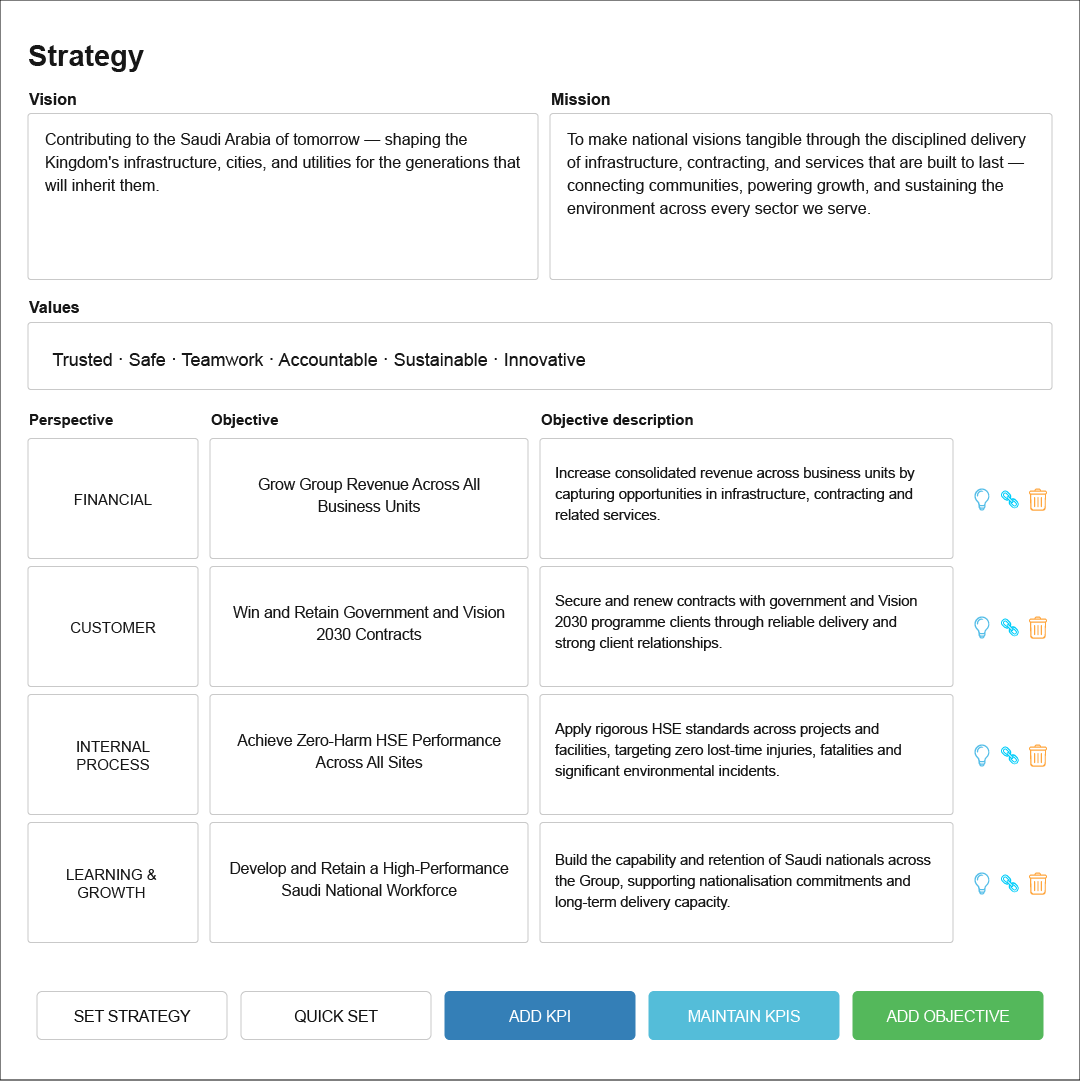
Hermes Infraestructura needed more than a shared reporting template. It needed one structure linking every project, risk and action to common measures, with a review rhythm headquarters could depend on. Kippy was set up to do that in six ways:
- Organisation.The multi-country structure was mapped into a single hierarchy, allowing like-for-like comparison across geographies.
- KPI Check-ins.Every project site reports on the same cadence through structured submissions, replacing ad hoc email updates.
- Projects and Programmes.Risk registers now sit inside the performance framework, with each risk linked to the relevant KPIs and milestones.
- Tasks and Actions.Action items have named owners, deadlines and escalation paths that headquarters can see.
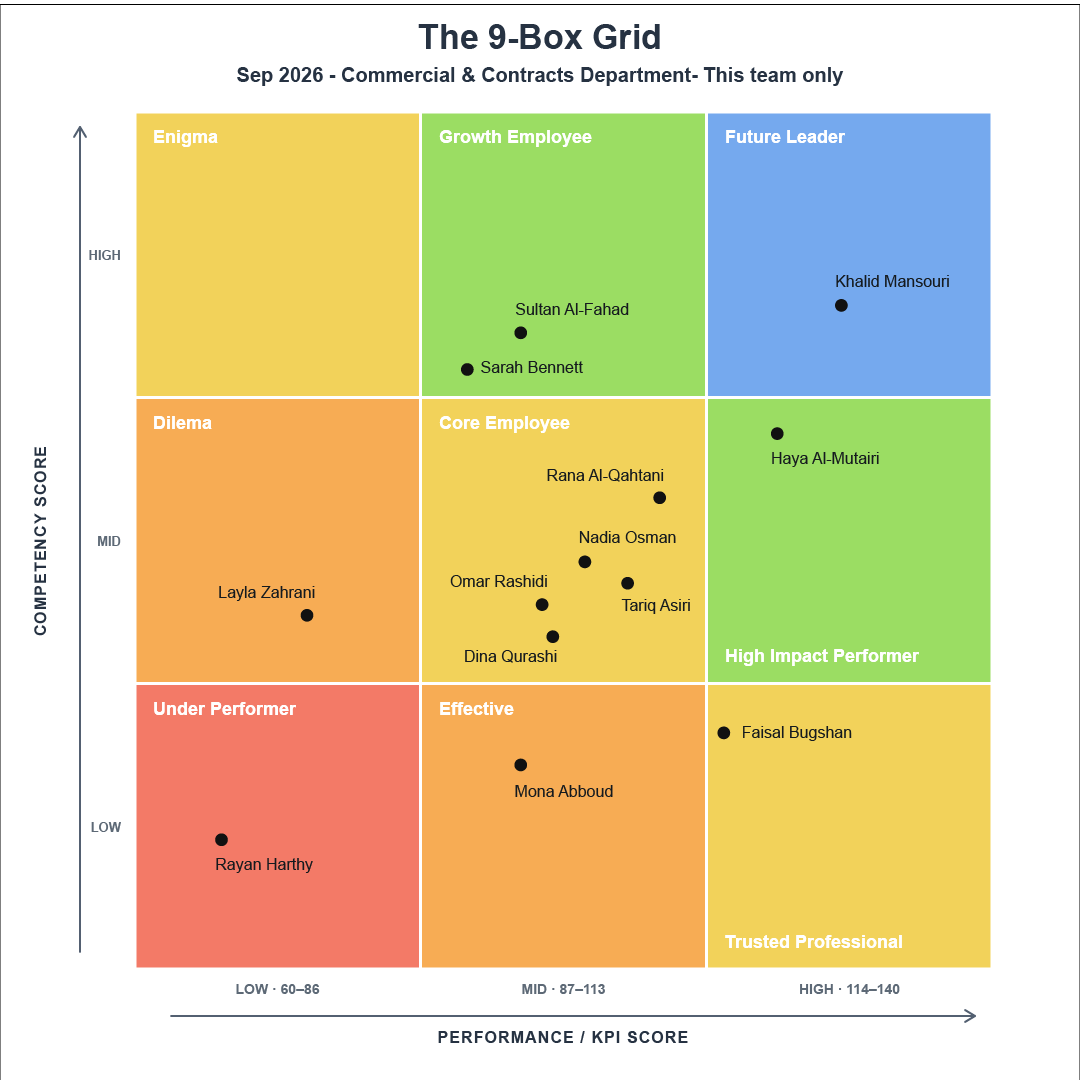
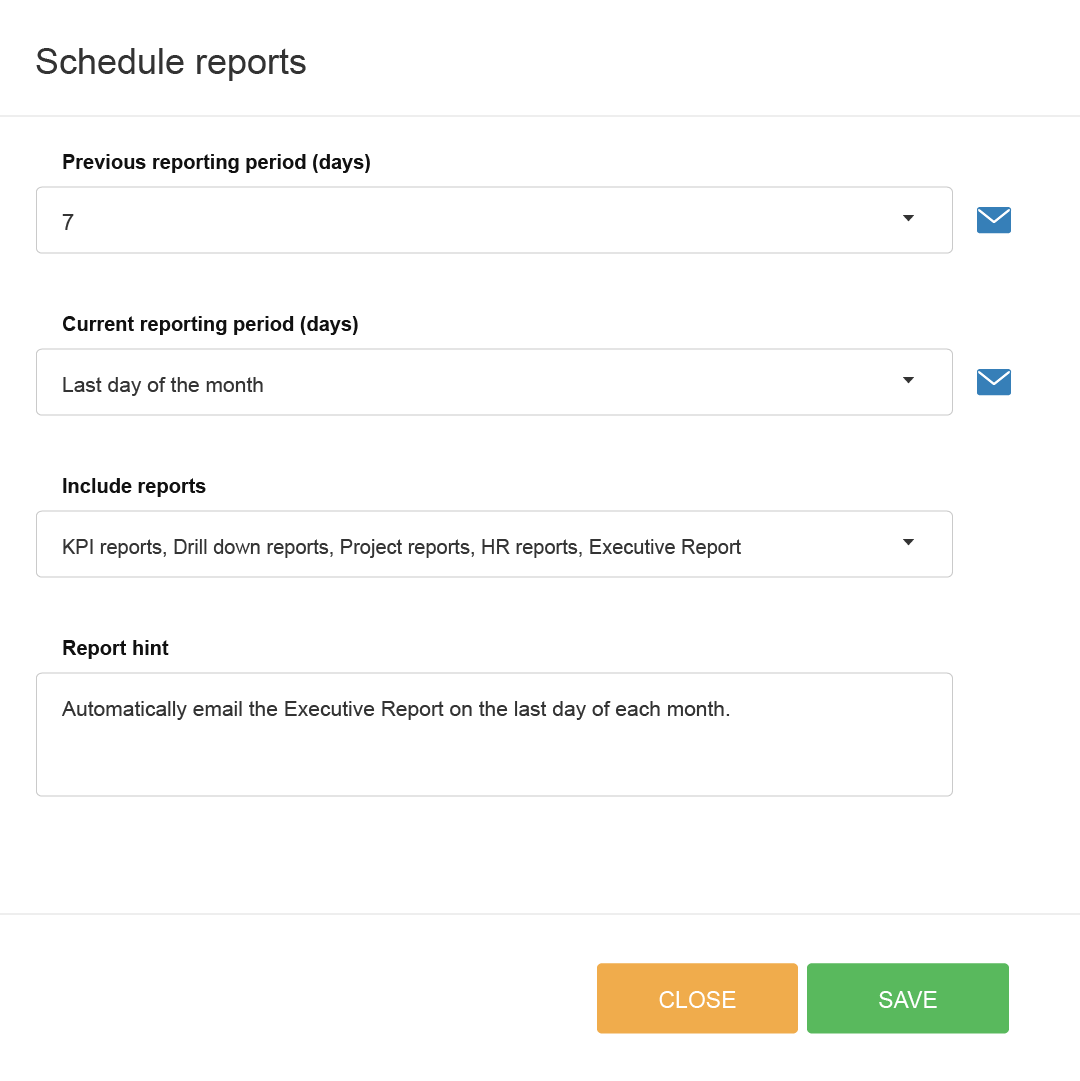
- Reviews and Approvals.Governance review cycles follow one standard across all countries, with cadences set by project phase.
- Review and History.Lessons learned are captured in a structured way, linked to KPI outcomes and searchable when new projects are set up.
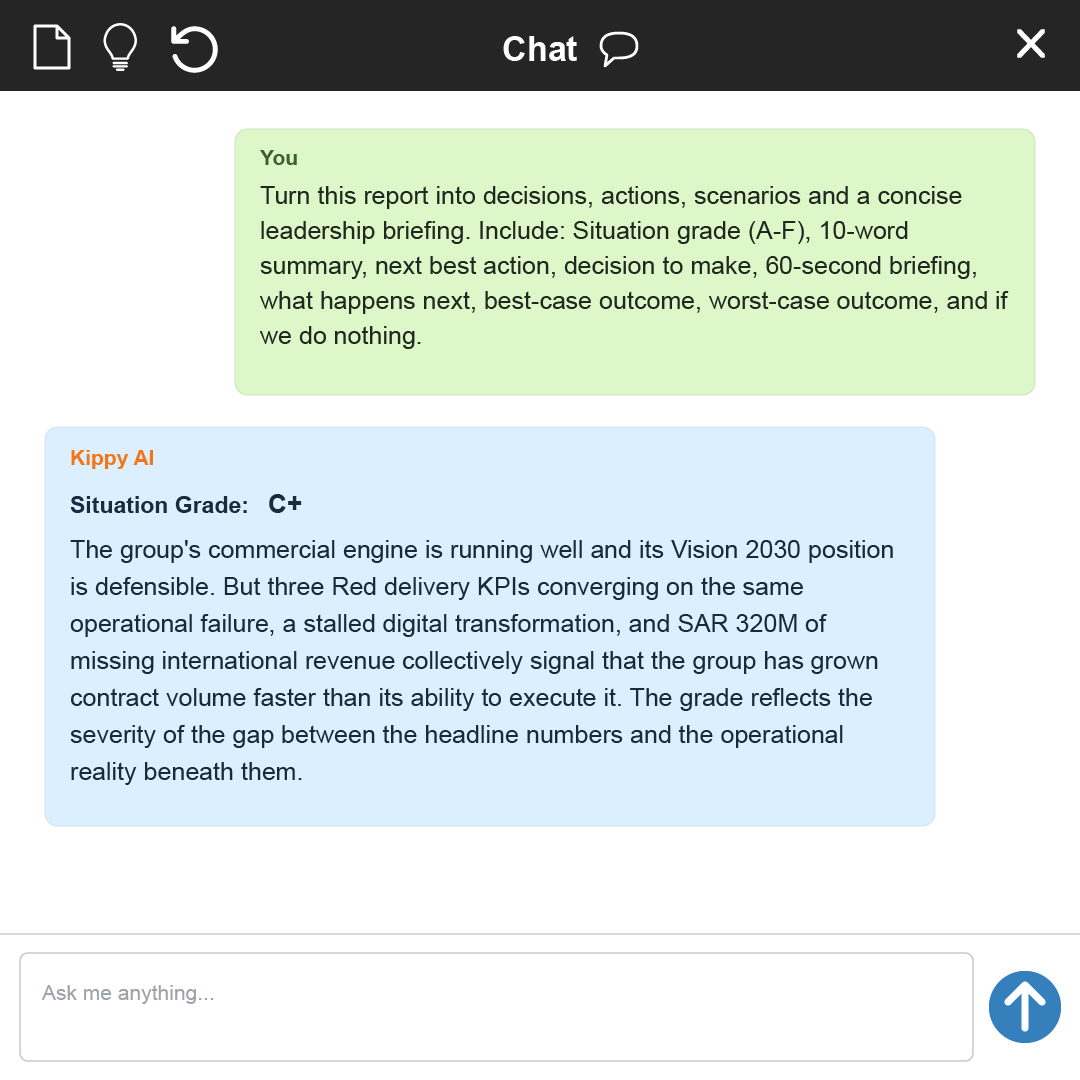
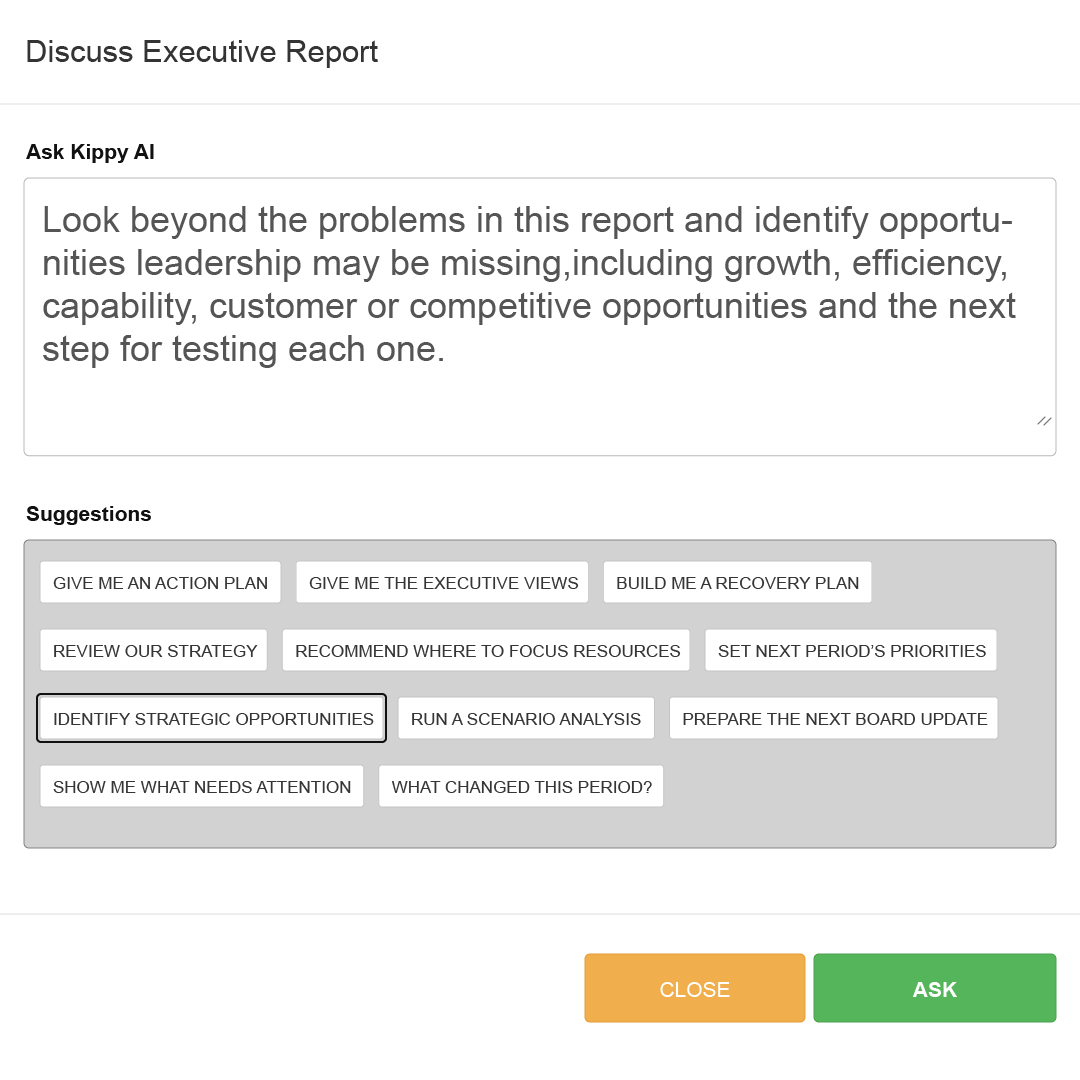
With Kippy, Hermes Infraestructura can bring project delivery into a common management rhythm without flattening the differences between countries or project phases. Risks are connected to the KPIs and milestones they can affect, actions remain visible until they are resolved, and governance reviews follow a defined cadence. Headquarters can therefore move beyond collecting updates and focus on understanding where projects stand, what requires attention and what needs to happen next.
"A project should not only leave behind an asset. It should leave behind knowledge that makes the next project better."
John Doe
THE RESULTS
One Dashboard for Every Country
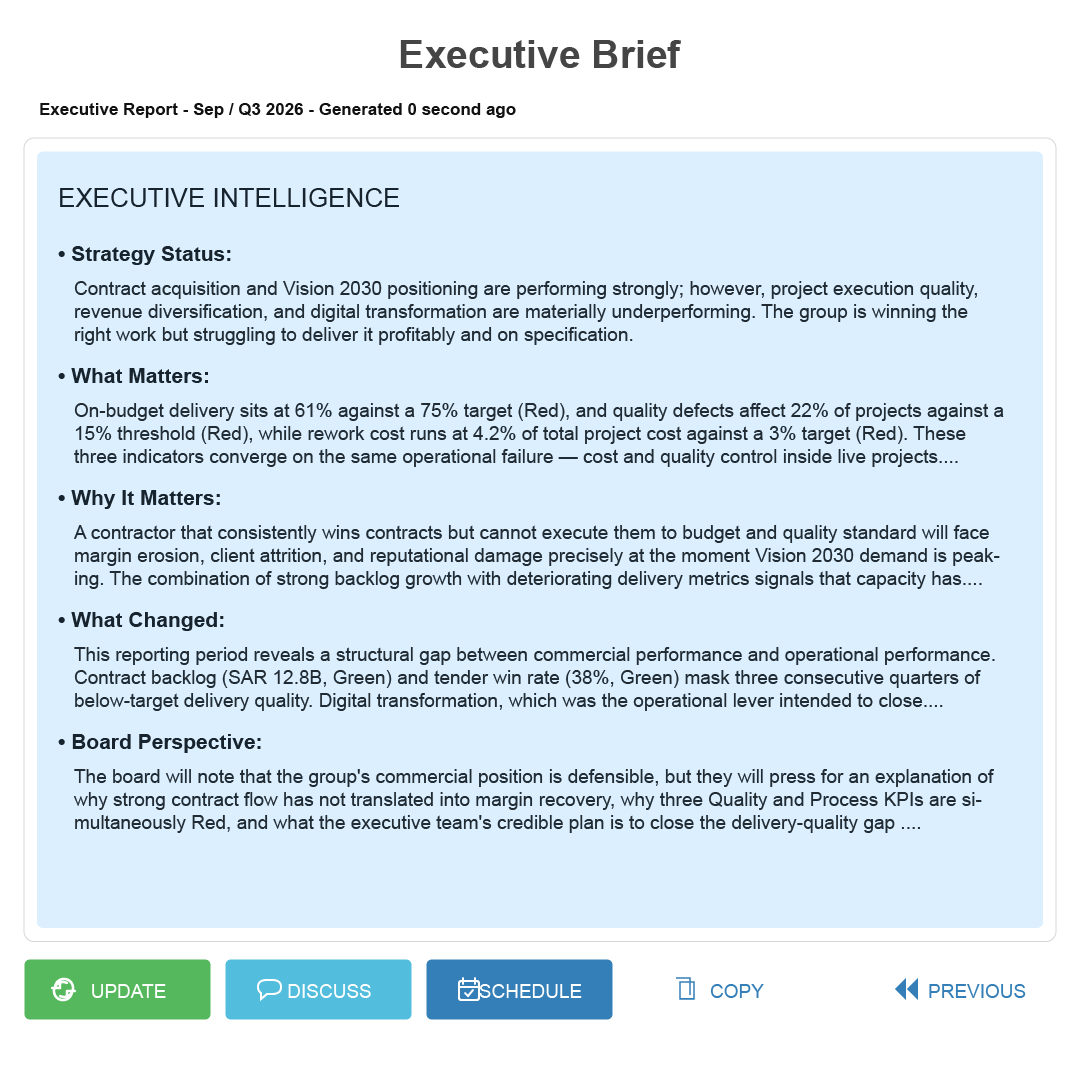
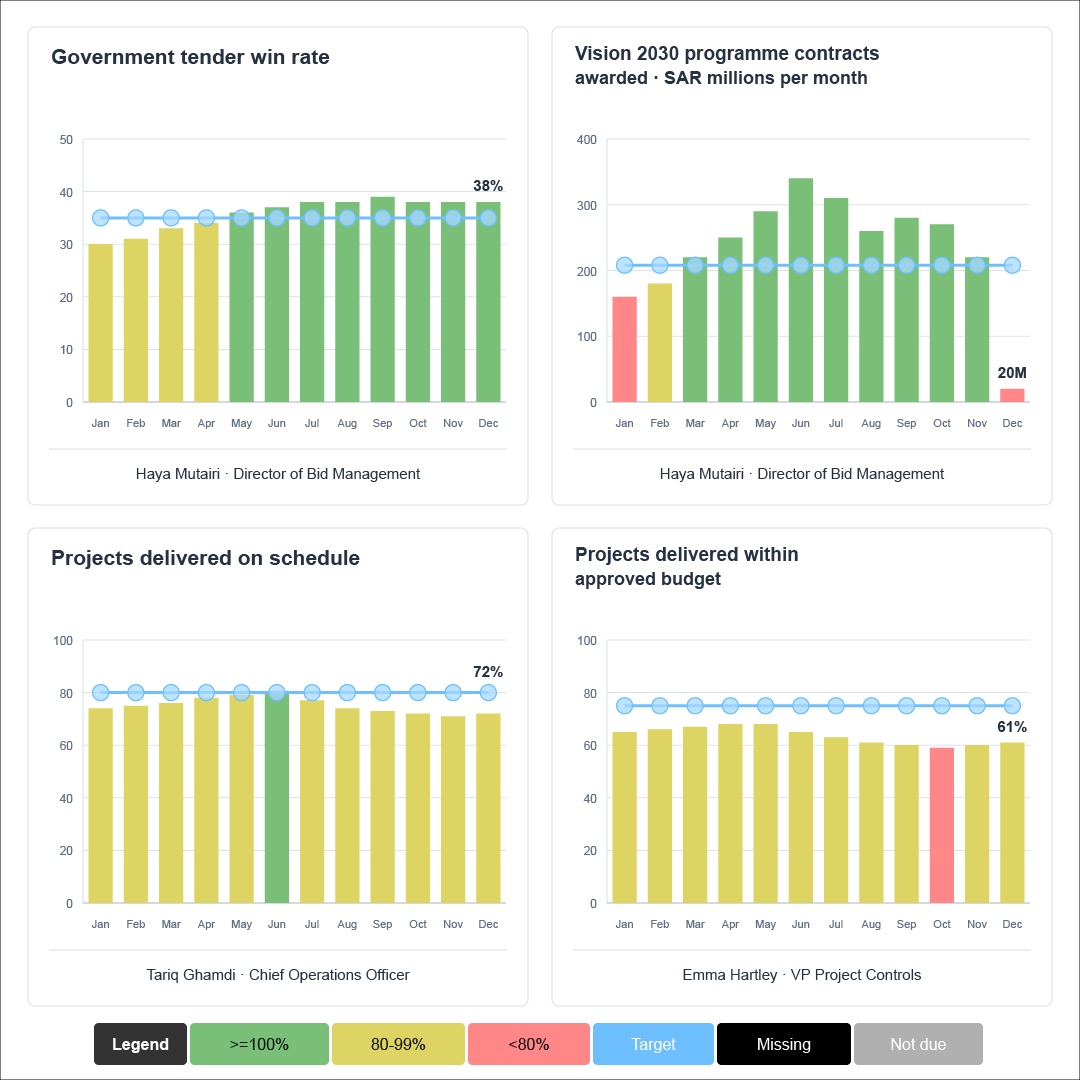
Headquarters now has a consolidated multi-country dashboard that updates with each reporting cycle, replacing compiled slide decks. Key results include:
-
Common reporting everywhere.
All project sites report against the same KPI definitions, on the same weekly and monthly cadence, whatever their location.
-
Risk in routine reviews.
Risks appear alongside project performance in one view, so leadership can assess risk exposure during regular performance reviews.
-
Measurable follow-through.
Action item completion rates across distributed teams can now be measured, with escalation triggers for overdue items.
-
Lighter governance preparation.
Review meetings follow a standard agenda and approval workflow, reducing preparation work for country-level project directors.
-
Lessons that inform planning.
Lessons learned are tagged to KPI categories, so teams can retrieve them when planning similar programmes.
"Together, these changes let headquarters take an active role in governing performance rather than simply receiving updates, and give internal teams and external stakeholders a predictable review rhythm."
John Doe
THE IMPACT
From Compiled Reports to Live Oversight
The value of standardisation extends beyond giving headquarters a clearer dashboard. With every site working to the same reporting cadence and performance definitions, Hermes Infraestructura can now compare projects across countries without first reconciling different reporting methods. A risk raised at one site can be reviewed alongside its performance measures, while actions from the same review remain visible until they are closed. The governance framework travels with the project, rather than depending on how each local team chooses to report.
That consistency also changes how experience moves through the portfolio. Lessons from completed programmes are no longer confined to post-project documentation; they become part of the performance history that teams can reference when planning similar work. For an infrastructure developer managing complex programmes across Mexico and Latin America, this creates a common operating rhythm across otherwise dispersed teams, giving headquarters a more dependable basis for oversight while giving project teams clearer expectations for reporting, review and follow-through.
See How Kippy Would Work Across Your Business
In a 30-minute online demo, we’ll show you:
- See your company’s objectives and KPIs in Kippy.
- Discuss your requirements and how Kippy can fit them.
- Review your options for setup, integrations and rollout.