
STRATEGY CASCADING
Turn Group Priorities into Clear Commitments Across Your Businesses
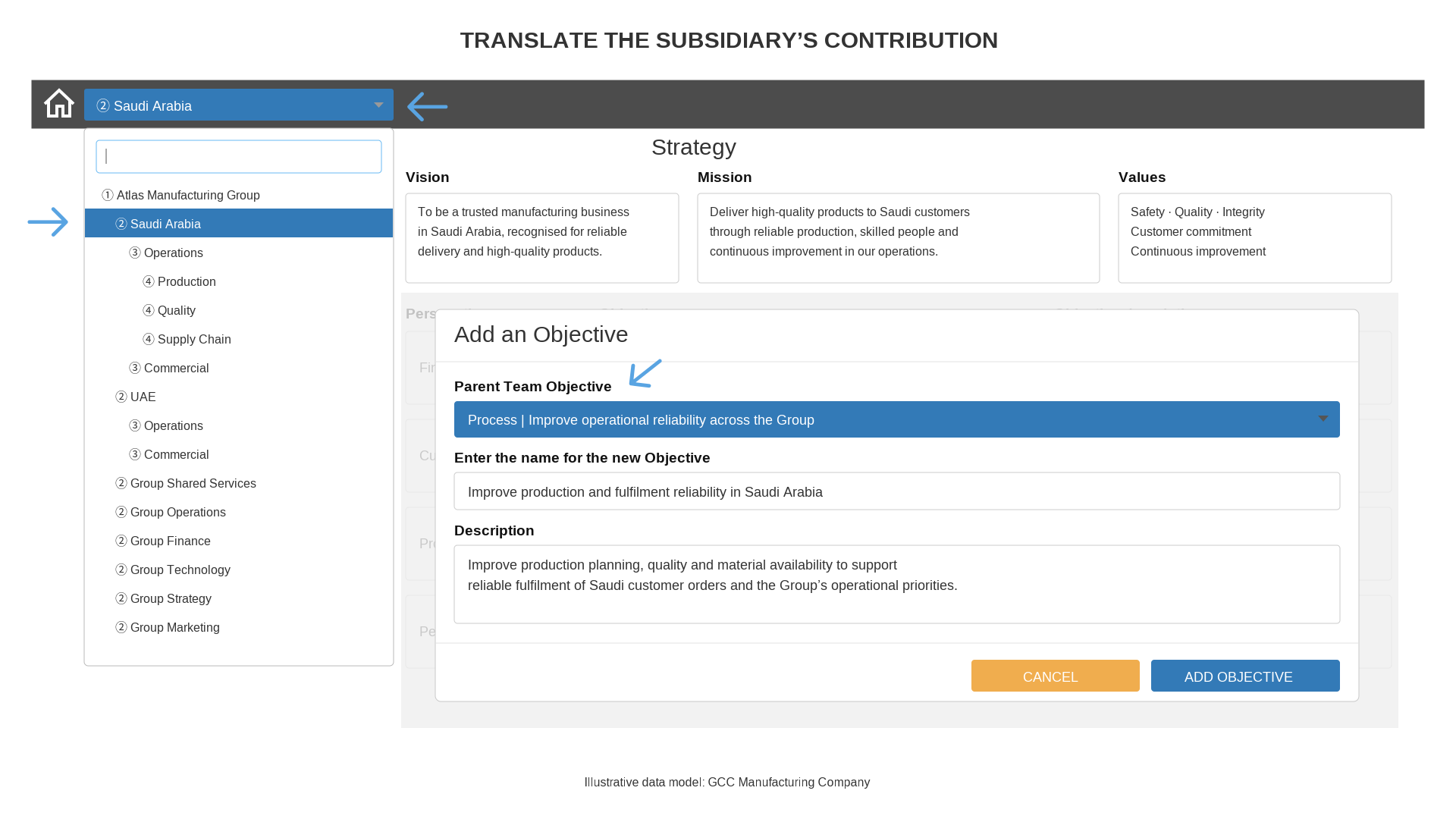
Each business can set objectives and KPIs that fit its responsibilities. Kippy shows how those objectives support Group priorities and where supporting objectives or KPIs are missing, so you can follow up with the right teams.
-
Give each objective one primary parent.
-
Adapt objectives and KPIs to each business.
-
Cascade through the hierarchy; link across reporting lines.
-
Connect KPIs and initiatives at the same objective.
-
Make the Group view explainable.
How Is Each Business Supporting the Group's Cash Priority?
Follow one Group priority through local plans and identify where support needs clarification.
Strategy Coverage shows that two of three businesses have a linked objective for Group cash flow. Confirm Property’s contribution and agree a KPI for faster invoicing with Manufacturing.
- 1Different local contributionsStock and collections both support Group cash flow.
- 2More than one contributionManufacturing addresses both stock and billing.
KPI counts include supporting objectives. Coverage describes recorded objective links.
- 3Agree the missing contributionConfirm Property's role and link an appropriate local objective.
- 4Agree a measure for progressThe billing objective has no KPI. Agree a suitable measure.
- 5Check team coverageOnly half of the Level 3+ teams have a recorded supporting objective.
Agree the missing contribution, a suitable measure and where the cascade needs to go next.
Top 5 Cascading Principles
The design choices behind Kippy’s approach—and why they matter.
Makes teams accountable for outcomes they can influence.
Explore local objectives and KPIs →The hierarchy establishes accountability. Strategy Links capture cross-functional contributions and dependencies.
Explore hierarchy and Strategy Links →Named KPI owners, agreed reporting frequencies and appropriate aggregation make results easier to interpret and act on.
Explore Group performance review →Creates a traceable route from local contribution to Group priority.
Explore primary parent objectives →Brings the intended outcome, evidence of progress and delivery work together.
Explore KPIs and initiatives →Common Group Rules
Local Business Choices
What must be consistent, and what does each business decide?
strategic priorities, how contributions connect, and reporting expectations.
the objectives, measures, targets and initiatives relevant to its responsibilities.
how those contributions support Group priorities and where follow-up is needed.
CUSTOMER SUCCESS STORY
A clearer view of performance across subsidiaries in Al Jomaih
Kippy established one corporate performance framework across Al Jomaih’s six portfolio sectors, connecting subsidiary plans and strategic initiatives to Group priorities. With 100% of participating subsidiaries reporting against agreed definitions and deadlines, the board gained a consistent basis for allocating capital, reviewing succession readiness and holding initiative owners accountable.
“As a large organisation with thousands of employees, we valued the support Kippy provided throughout adoption and integration. Standardising our strategy and KPIs across organisational levels gave us a shared basis for decisions that had previously been fragmented. This helped us coordinate priorities and achieve significant efficiencies in how we allocate budgets and resources.”
Explore more on how cascading principles work in Kippy
Explore how each principle works through a connected manufacturing example, from local objectives to performance review.
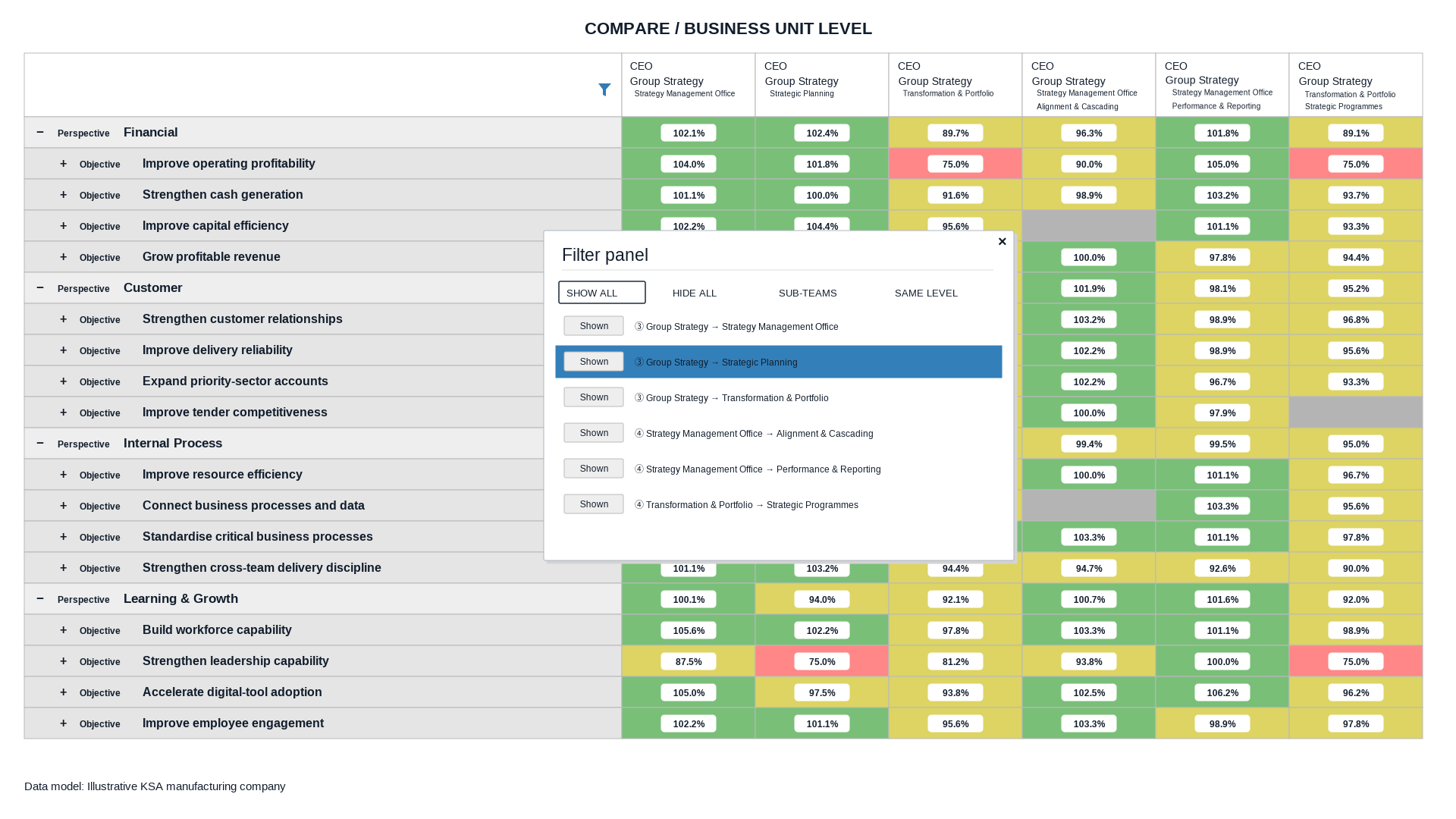
Give controlled local flexibility Makes teams accountable for outcomes they can influence.
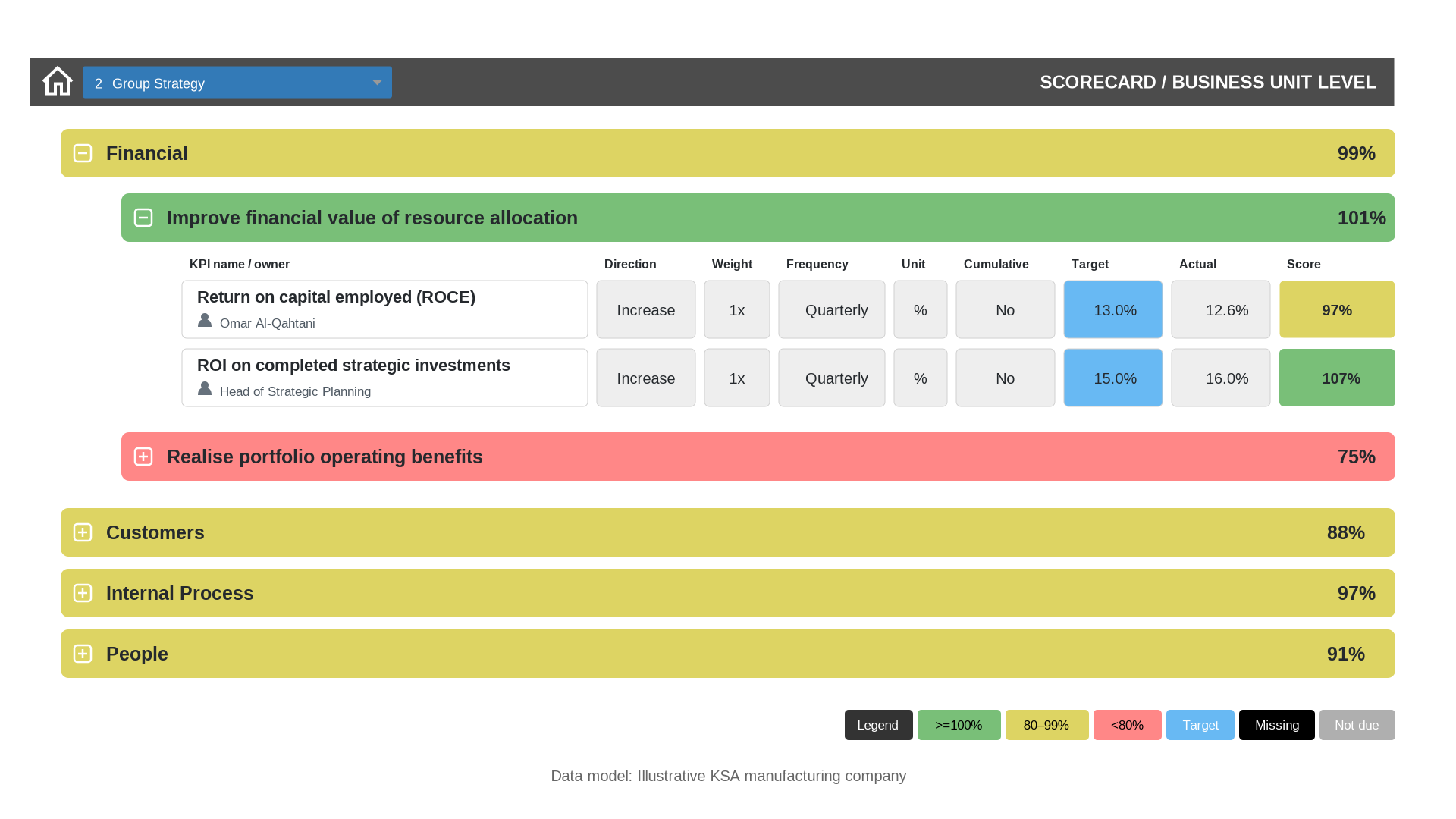
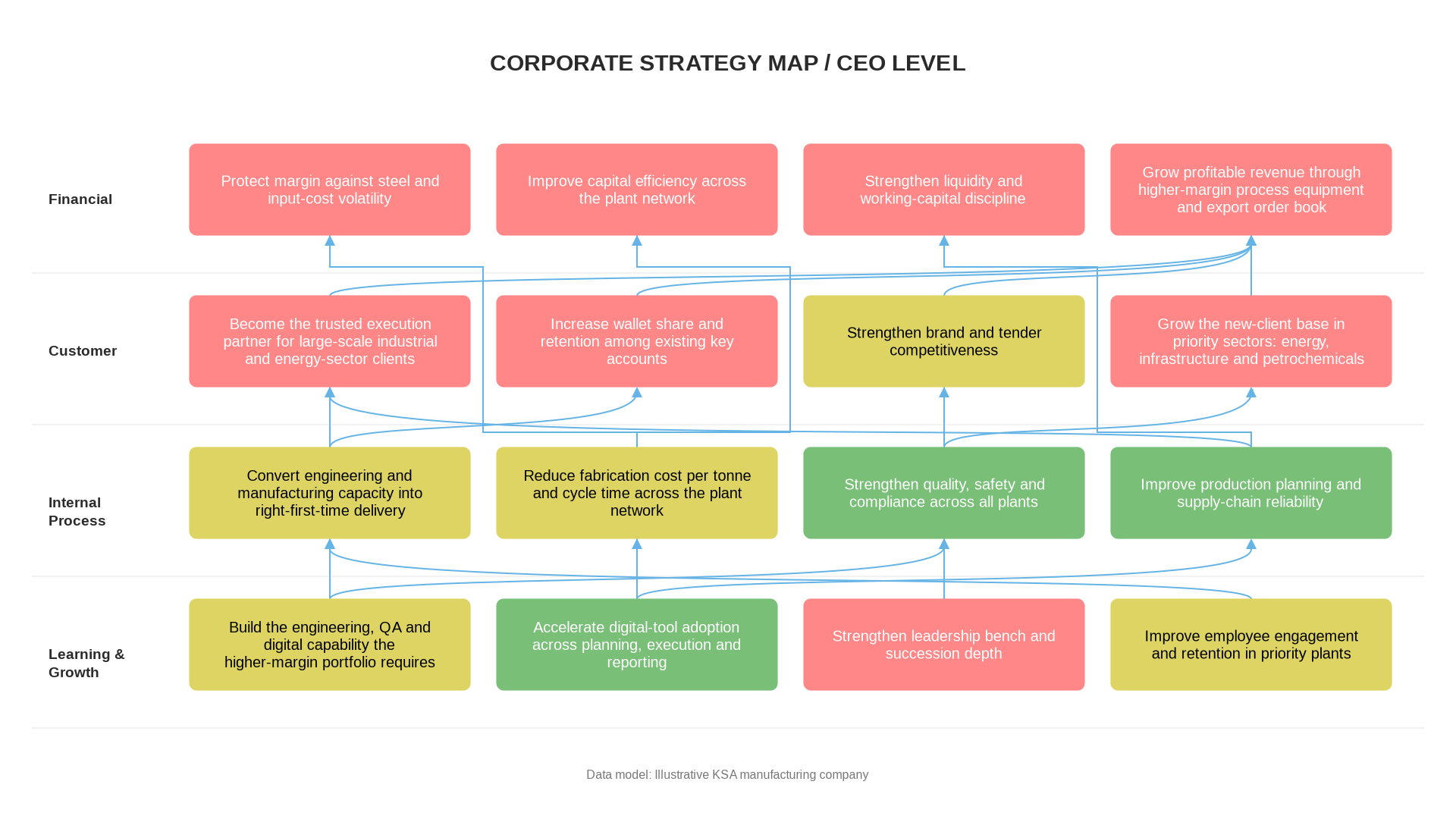
- Start with the Group outcome each plant must support.
- Compare the local objectives and KPIs chosen by plant leaders.
- Judge whether each plant owns a contribution it can reasonably influence.
Show where delivery depends on other teams. The hierarchy establishes accountability. Strategy Links capture cross-functional contributions and dependencies.
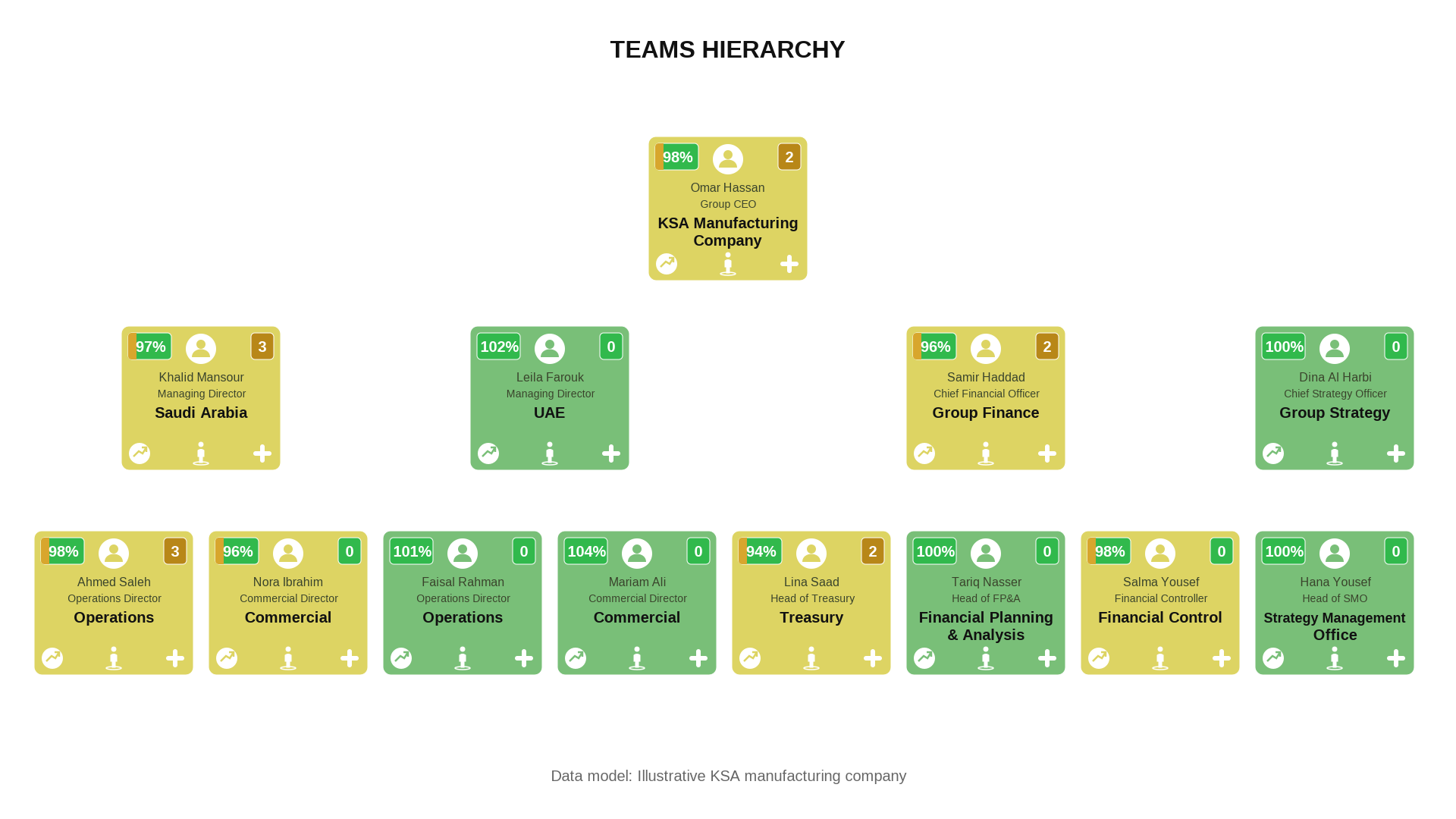
- Use Strategy Links to see which functions support a delivery objective.
- Read what each contributing team has committed to provide.
- Identify dependencies that need agreement between directors before delivery slips.
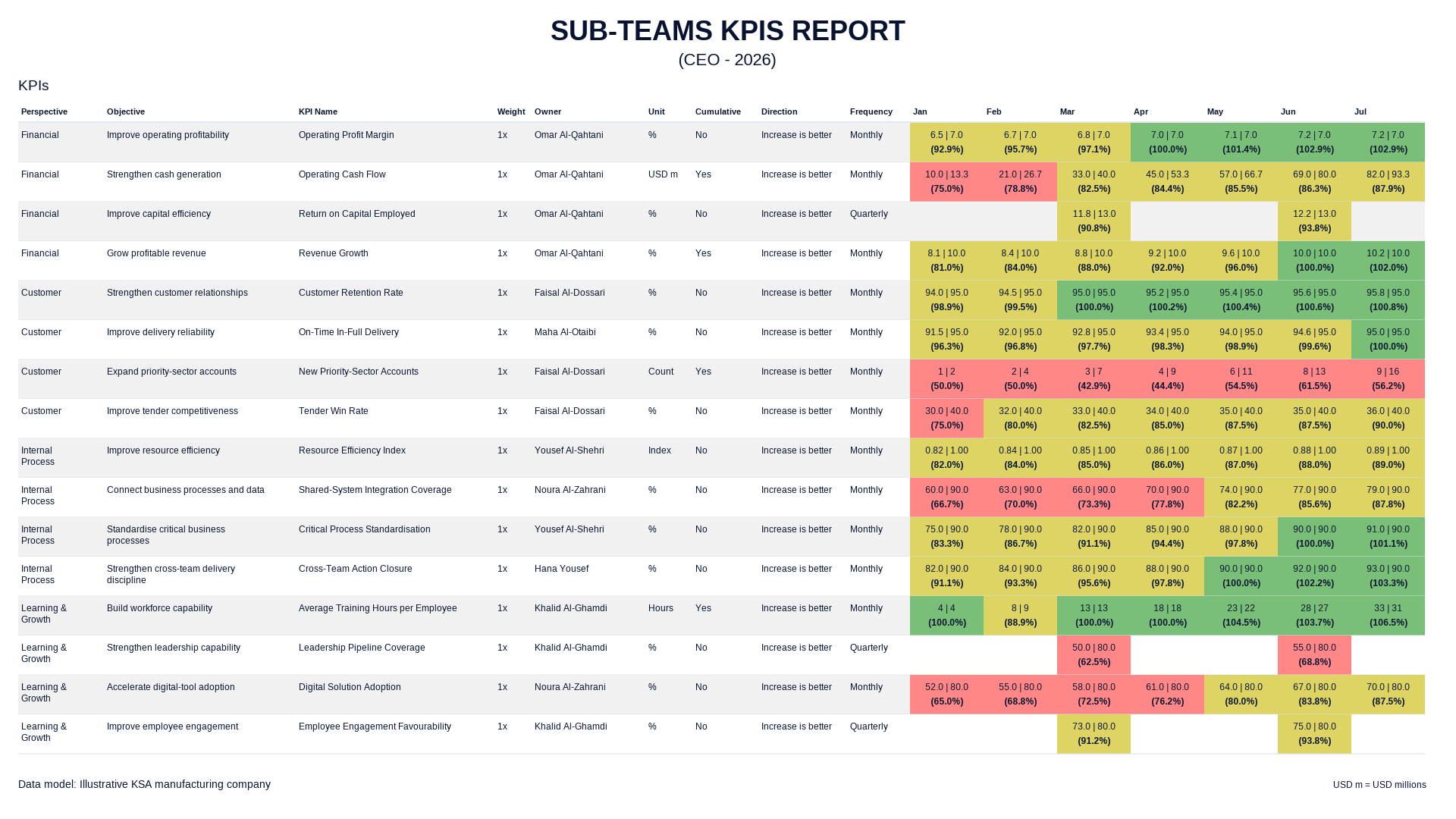
See what sits behind each Group result. Named KPI owners, agreed reporting frequencies and appropriate aggregation make results easier to interpret and act on.
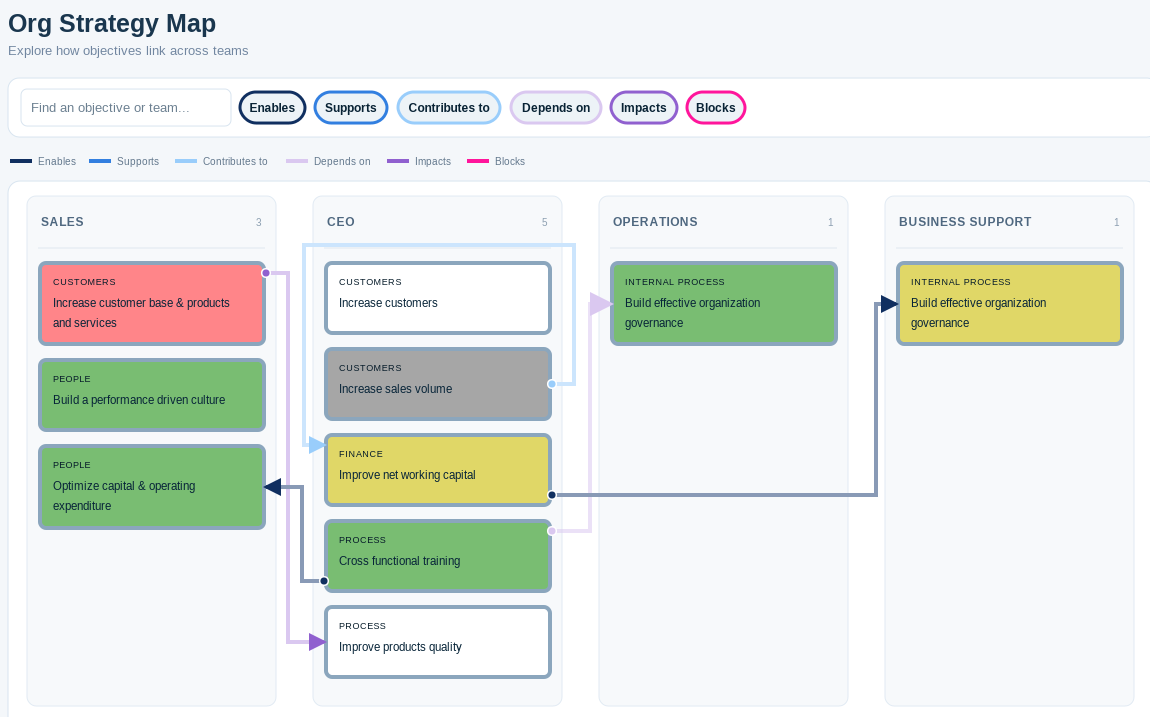
- Trace the Group result to the figures each plant reported.
- Check the reporting periods, owners and aggregation rule.
- Identify which contributions explain the figure leadership will see at its review.
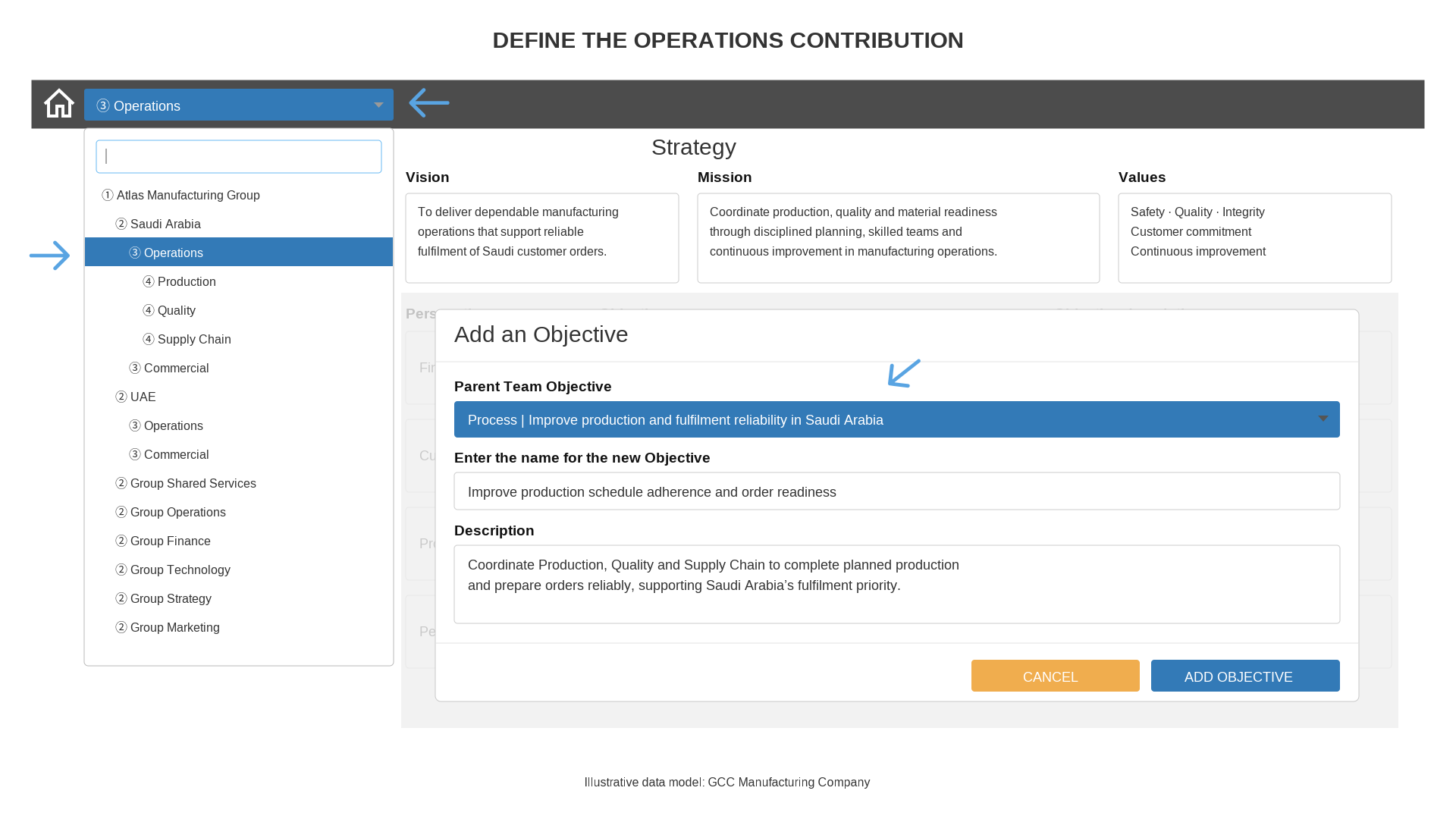
Trace each local objective back to a Group priority. Creates a traceable route from local contribution to Group priority.
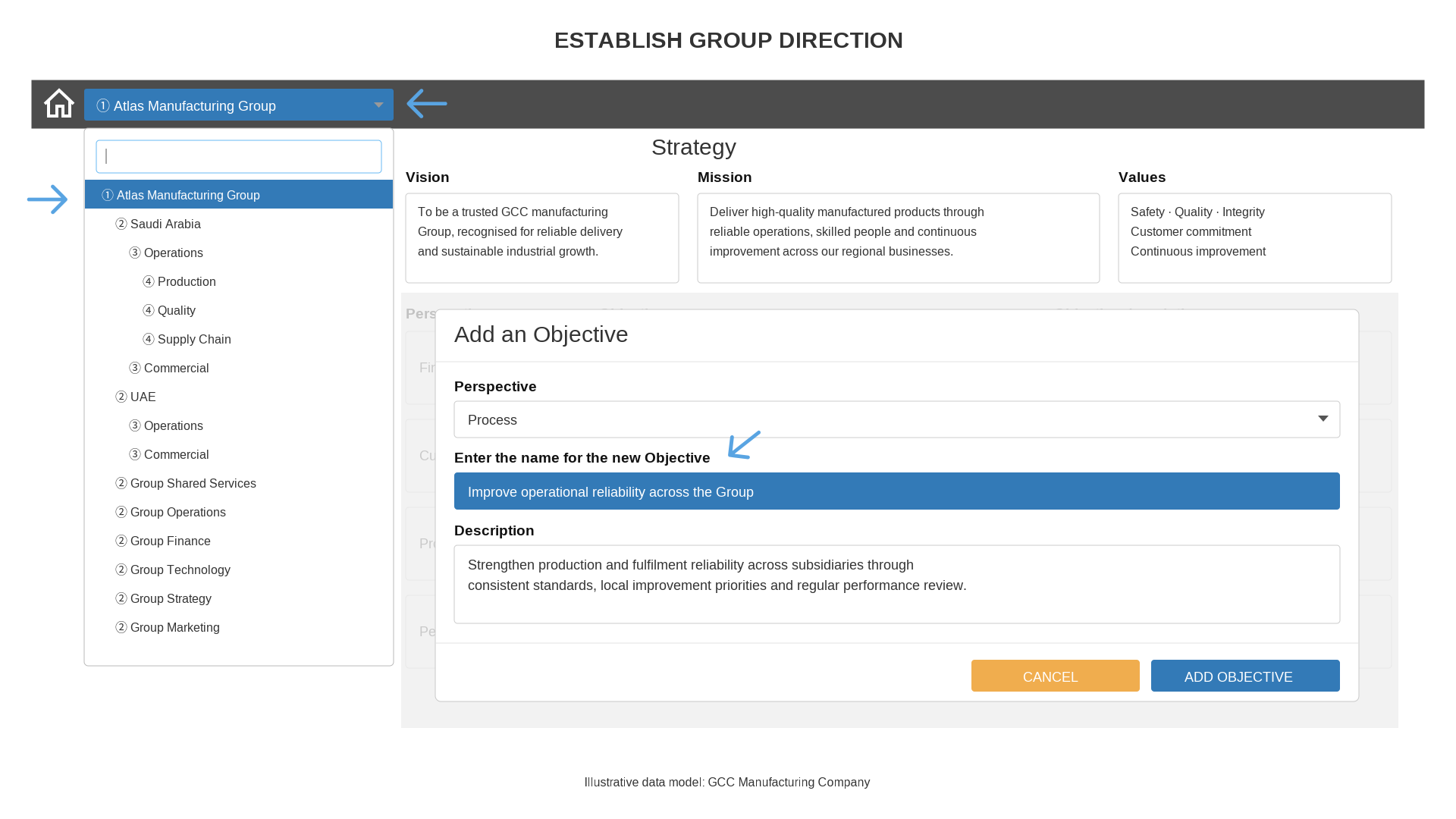
- Follow a plant objective through its successive parent objectives.
- See which Group priority the local commitment supports.
- Use that connection to judge whether the work still serves the agreed strategy.
Review results and project delivery by objective. Brings the intended outcome, evidence of progress and delivery work together.
- Read the objective’s KPI trend alongside its project milestones.
- See whether delivery reliability improves as work progresses.
- Decide which question needs executive attention: project execution or the choice of initiative.
Frequently Asked Questions
Can we reuse our strategy and adapt it later?
Yes, you can start with your existing Group strategy, subsidiary scorecards and KPIs, including work developed with your consultants, and connect them within Kippy. Teams, objectives and measures can evolve by reporting year while previous performance and audit history are retained, allowing you to reflect new priorities or organisational structures and continue reviewing earlier results in their original context.
How quickly can we have a working cascade?
Kippy includes a guided 20-day setup programme, with an initial scope agreed around your Group priorities, participating businesses and available information. You can establish the Group framework and introduce selected businesses first, then extend the cascade as others are ready, with the timetable reflecting data readiness, required integrations and the time business leaders need to agree their contributions.
Can Group KPIs update automatically from subsidiary results?
Yes, Group KPIs can be calculated automatically from subsidiary and team results, using totals, averages or weighted calculations appropriate to each measure. Actuals can also come from existing ERP, finance or BI systems through agreed integrations, reducing repeated data entry and manual consolidation while keeping the underlying business results available to explain what is driving the Group figure.
Can we scale the cascade slowly without overwhelming everyone?
Yes, Kippy retains the full organisational hierarchy while letting executives and managers focus on the level of detail relevant to their responsibilities. You can cascade objectives to the businesses, functions and teams that own delivery, with individuals accountable for relevant KPIs and milestones, so a useful Group cascade does not require a separate strategic scorecard for every employee.
Can teams collaborate across businesses with controlled access?
Yes, people can be given access to additional teams where their responsibilities cross business or functional boundaries, while retaining their place in the primary organisational hierarchy. This supports shared delivery and Group oversight without automatically opening every subsidiary’s targets and results to everyone, with roles and team access determining which information each person can see.
TRUSTED BY HUNDREDS OF ORGANISATIONS ALL OVER THE WORLD

“Cascading and alignment across 14 business units, with onboarding completed in one month.”
Dr. Yahya Shakweh

Strategy Director, Al-Ayuni

“Visibility and accountability to every level of our performance management.”
Paul Poungpetch
General Manager, Thaiwattana Metalsheet

“The reporting tools helped me to analyze data efficiently, saving me countless hours of manual work.”
Pinky Lama
VP, Planate Management Group

“It helps project managers identify and fix project deviations early.”
Eyad Zamel
Consulting PMO Manager, Deloitte

Kippy gives leaders a comprehensive view of organisational performance.

Abdulrazak Tello
Director, PwC

Kippy offers a customisable platform for strengthening governance and supporting data-driven decisions.
Dr Ahmad Fayez
Manager, Palladium
- Canada
- United States
- Mexico
- Chile
- Brazil
- United Kingdom
- Netherlands
- Finland
- Italy
- Türkiye
- Ghana
- Zimbabwe
- Saudi Arabia
- Oman
- United Arab Emirates
- India
- Thailand
- Malaysia
- Philippines
See How Kippy Would Work Across Your Business
In a 30-minute online demo, we’ll show you:
- See your company’s objectives and KPIs in Kippy.
- Discuss your requirements and how Kippy can fit them.
- Review your options for setup, integrations and rollout.