Connecting Corporate Strategy to Front-Line Banking Operations
A leading Saudi Islamic bank offering Shariah-compliant retail, corporate and investment banking through a nationwide branch network and digital channels. The bank is rolling out a new corporate strategy aligned with Saudi Vision 2030, the Kingdom’s national transformation programme. Most new customers now join digitally, and branches are being consolidated as their role shifts from transactions to advice and sales.
In this scenario, the bank’s board has approved a new corporate strategy. Delivering it depends on every branch, product team and support function pulling in the same direction, while the branch network changes shape, digital channels grow and SAMA reporting continues. If your bank is launching a new strategy across a changing branch network, this challenge may feel familiar.
THE CHALLENGE
A New Strategy, a Changing Network
Board-approved strategy targets are not systematically translated into branch objectives, so daily operations can drift from what the strategy intends. Branch comparisons rely on spreadsheet league tables updated monthly. They show which branches are behind, but not why, which makes decisions about the changing network harder.
The digital transformation programme is tracked separately from core banking KPIs, so its effect on overall performance is hard to judge. Regulatory reporting to SAMA means compiling data by hand from several internal systems each quarter, which takes up significant back-office time.
People and product work face the same gap. As branch roles move towards advice and sales, development plans for relationship managers have no measurable link to growth targets for key customer segments. Product launches need risk, compliance, operations and marketing to work together, but there is no single way to track the tasks that depend on each other.
The underlying problem is the lack of one framework connecting the new strategy to branches, programmes, people and regulatory reporting.
THE SOLUTION
One Framework from Boardroom to Branch
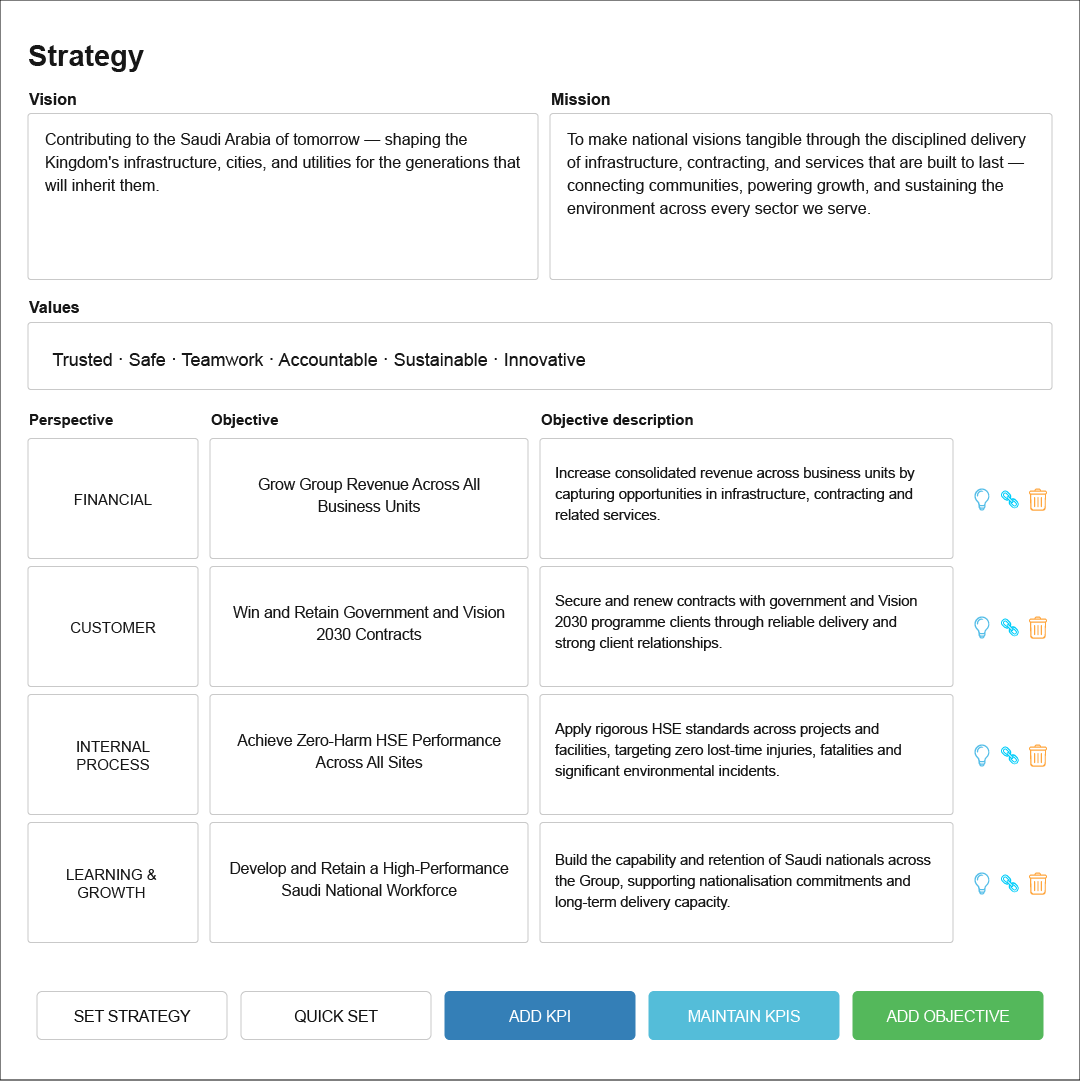
The bank needs more than better dashboards. It needs to cascade the new strategy to every branch and bring programmes, people and regulatory reporting into the same framework. Kippy does that in six ways:
- Objectives and OKRs. Board-approved targets cascade through regional clusters to individual branch plans, each with measurable key results.
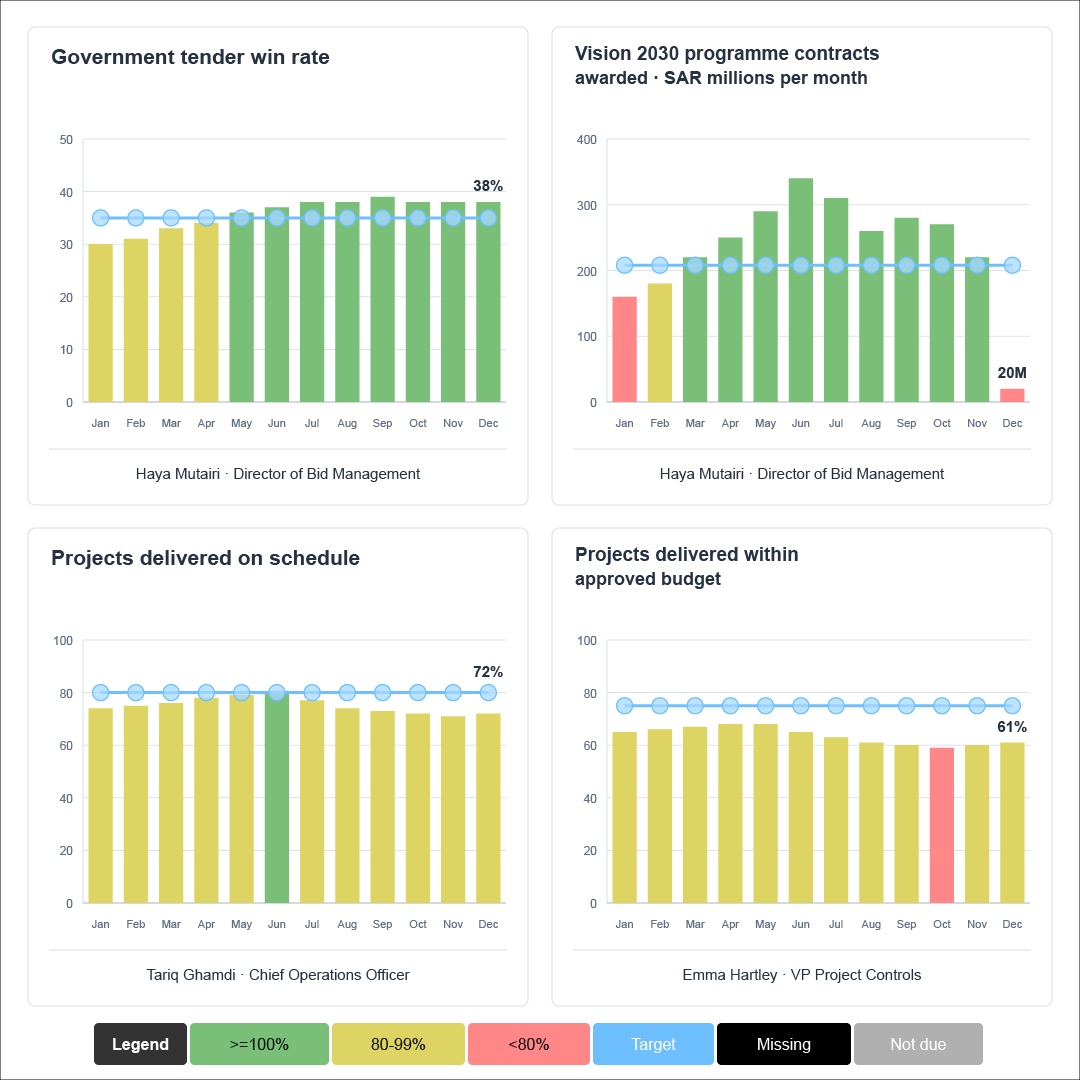
- Scorecards and Dashboards. Dynamic branch comparisons replace spreadsheet league tables, with drill-down to individual KPIs.
- Programmes. Digital transformation milestones sit in the same framework as core banking KPIs, so their impact can be measured against shared objectives.
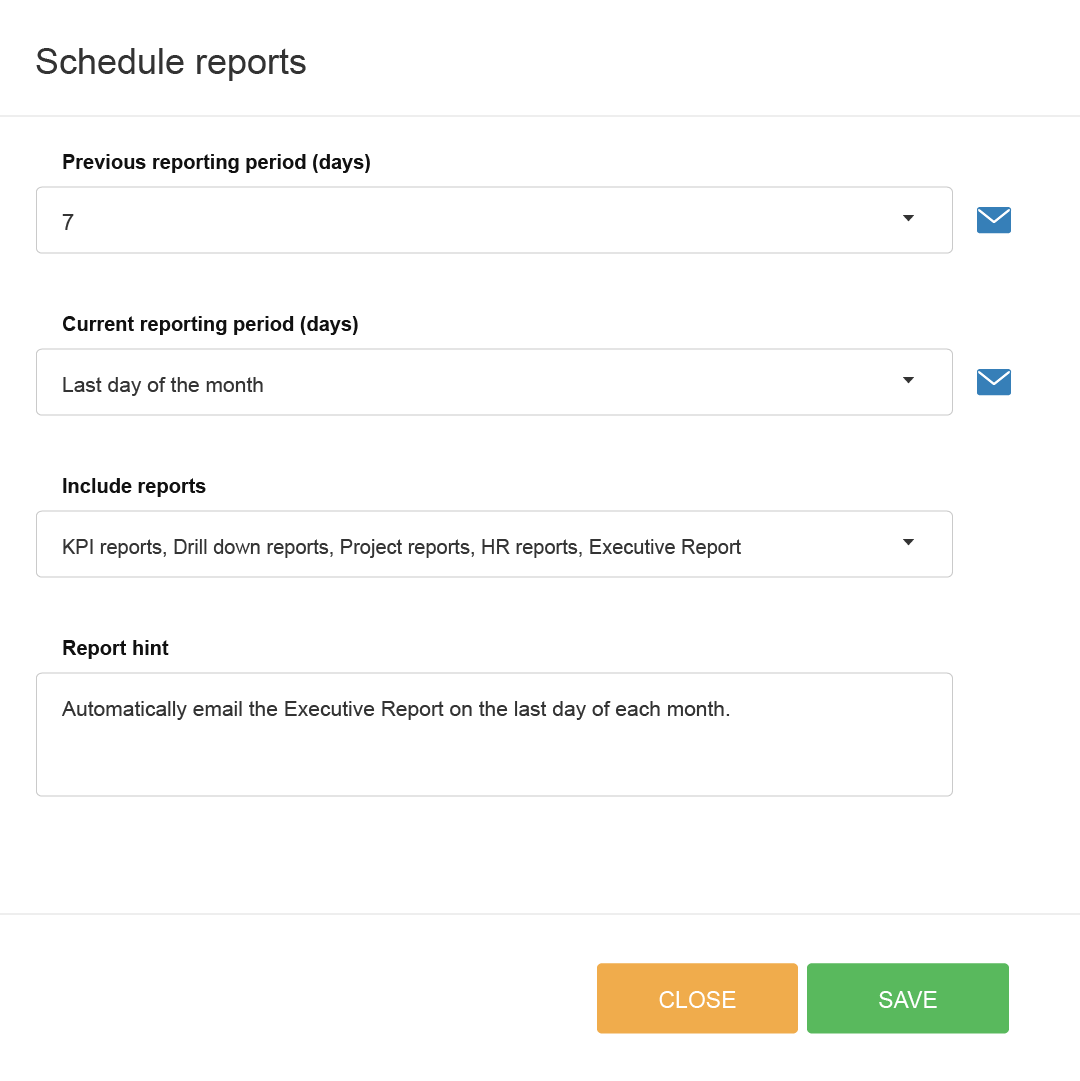
- Scheduled Reporting.Regulatory data packs are assembled automatically from standardised KPI submissions across departments.
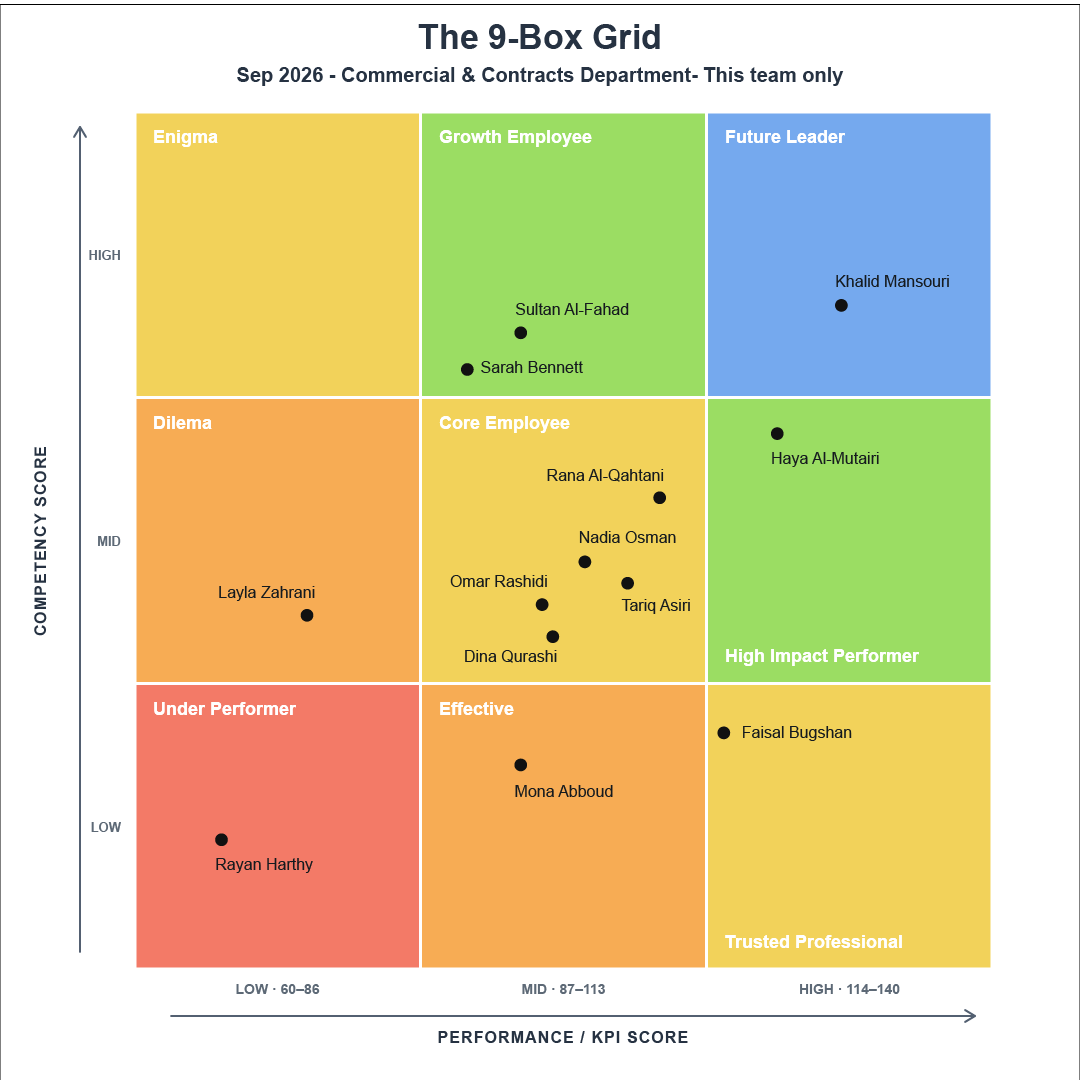
- Talent and Ratings. Relationship manager development plans are linked to growth targets for each customer segment.
- Task Management. Cross-departmental initiatives such as product launches are tracked with mapped dependencies, visible deadlines and automatic status updates.
"The strategy only becomes real when our branches and teams can see exactly what they are responsible for delivering. We needed a way to connect that line from the boardroom to the branch, while giving leadership a current view of whether the strategy was actually moving."
John Doe
THE RESULTS
Every Branch Linked to the New Strategy
With Kippy in place, branch objectives come directly from the board-approved strategy through a documented cascade, and each branch can see its contribution to regional and national targets. This setup enables:
-
Better-informed network decisions.
Branch comparisons update in real time with drill-down to KPI trends, so regional directors can act on underperformance early and base consolidation decisions on comparable data.
-
Less manual regulatory work.
Regulatory data packs draw on KPI submissions already in the platform, freeing back-office time for analysis instead of data gathering.
-
Digital progress reviewed alongside core banking.
Transformation milestones are discussed in the same leadership meeting and scorecard as core banking performance.
-
Development linked to growth.
Relationship manager objectives connect to customer segment targets, so performance conversations cover both individual and business outcomes.
-
Smoother product launches.
Cross-departmental launch tasks sit in one shared framework, with automatic escalation for overdue dependencies.
The documented line from board strategy to branch plans also gives the bank a clear, auditable basis for governance conversations with the regulator.
THE IMPACT
One Governance Framework for a Changing Banking Model
The broader impact is that strategy remains connected as the bank’s operating model changes. As branches shift from transaction processing towards advice and sales, the measures used to manage them can evolve without breaking the connection to the bank’s wider objectives. Digital channels can grow alongside the branch network while remaining visible within the same strategic framework.
That gives leadership a common basis for managing change across channels, products and functions. Network decisions can draw on comparable branch performance, transformation programmes can be reviewed as part of overall strategic delivery, and relationship manager development can be connected to the customer segments and growth priorities the bank is pursuing.
For an Islamic bank implementing a new strategy under ongoing regulatory obligations, the benefit is not another layer of reporting. It is a governance structure that keeps objectives, execution and accountability connected as the organisation changes.
As the strategy develops, Kippy could extend that framework further across new strategic initiatives, product programmes and branch-network changes, maintaining a documented line between board priorities and the teams responsible for delivering them.
See How Kippy Would Work Across Your Business
In a 30-minute online demo, we’ll show you:
- See your company’s objectives and KPIs in Kippy.
- Discuss your requirements and how Kippy can fit them.
- Review your options for setup, integrations and rollout.