Governing Clinical and Commercial Performance Across a Hospital Network
A leading private healthcare group in the Gulf, operating hospitals, medical centres and pharmacies across several GCC countries. The group is expanding steadily, opening new hospitals each year, and holds international accreditation across its facilities.
In this scenario, the group runs a growing network of hospitals, with several new ones still ramping up to full capacity. Leadership needs to judge every facility on clinical quality, patient experience and financial performance together, using the same definitions everywhere. If your organisation runs multiple hospitals or clinics, this challenge may feel familiar.
THE CHALLENGE
Clinical and Commercial Performance in Separate Conversations
Clinical quality indicators and financial metrics are governed by different departments in separate systems, so leadership has no complete view of how each hospital is performing. Each hospital also interprets group-wide KPIs in its own way, which makes comparisons between facilities unreliable.
Patient satisfaction results are analysed in isolation from operational KPIs, so the link between how services are delivered and how patients experience them is missed. Preparing for accreditation reviews, such as Joint Commission International (JCI) and the Saudi Central Board for Accreditation of Healthcare Institutions (CBAHI), takes months of manual evidence gathering from clinical and administrative departments at every facility.
Physician reviews focus on caseload, without the quality, safety and patient experience indicators the group sees as strategic priorities. And with new hospitals opening and ramping up, planning relies on historical data from existing hospitals that is hard to extract, compare and model.
The underlying problem is the lack of one framework connecting group priorities to clinical, operational and financial performance in every facility.
THE SOLUTION
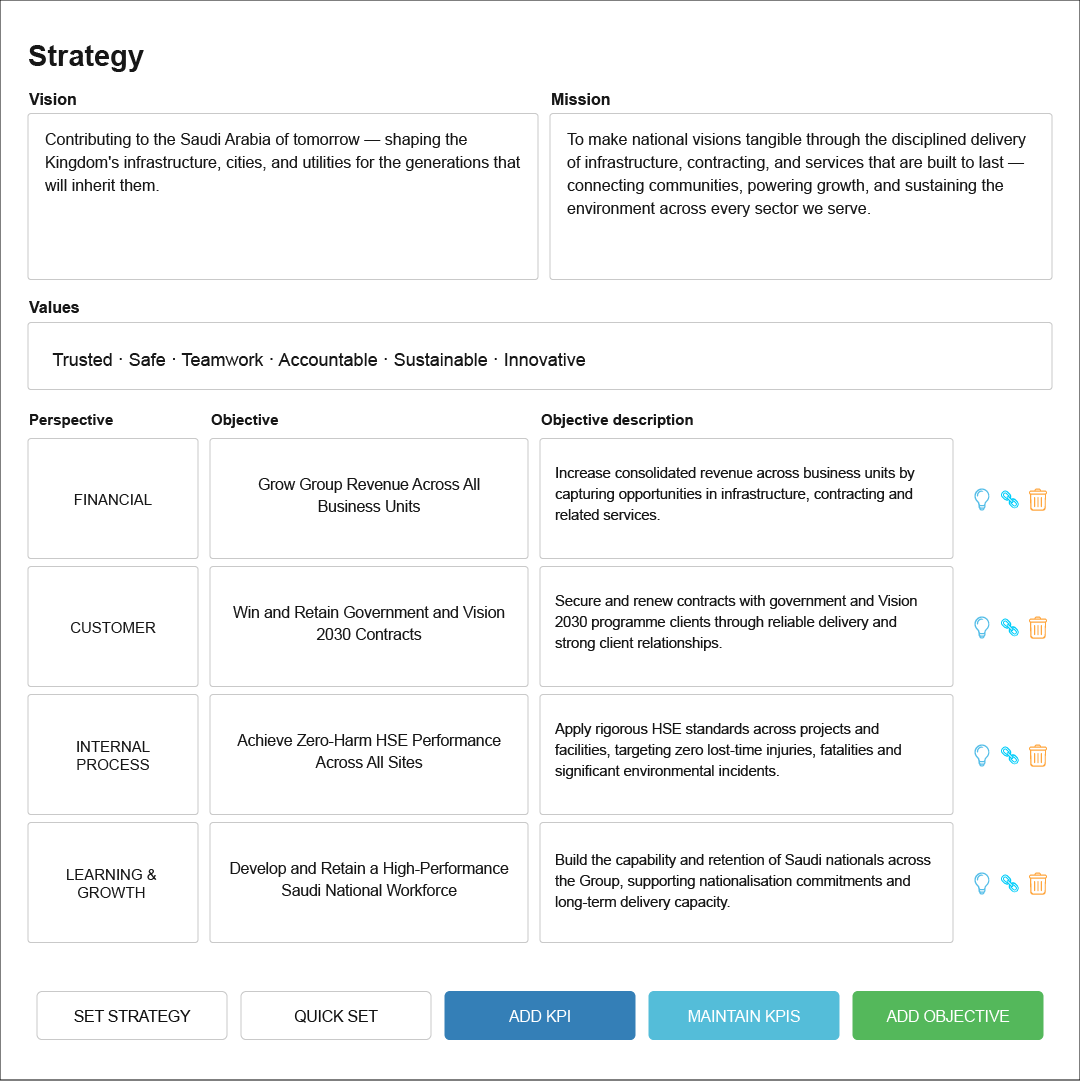
One Scorecard for Clinical, Operational and Financial Performance
The group needs more than another reporting system. It needs clinical, patient experience and financial performance defined the same way everywhere and reviewed together.
- One definition for every KPI. Clinical, patient experience and financial measures mean the same thing in every hospital, so facilities can be compared directly.
- One scorecard per hospital.Clinical, operational and financial results sit side by side, and patient satisfaction is linked to the operational measures that drive it.
- Less manual accreditation work.Evidence for JCI and CBAHI reviews is drawn from records already captured in daily operations.
- Fuller physician reviews. Feedback on quality, safety and patient experience sits alongside caseload figures.
- Evidence for expansion. Benchmarks across facilities help track new hospitals as they ramp up and plan the next ones.
The value is not simply having more KPIs in one place. It is having the same performance language applied across every hospital, so that a clinical indicator at one facility means the same thing at another and can be reviewed alongside the operational and financial factors shaping it. Leadership can then move from asking whether a hospital is performing well to understanding where performance is changing, what is driving that change, and where intervention may be needed.
The same framework also gives the group a more consistent operating model as it expands. New hospitals can be brought into the scorecard from the beginning, measured against established group benchmarks while their ramp-up is tracked over time. Rather than creating a separate reporting structure for every new facility, the group can extend the same framework as its network grows.
When every hospital reports clinical quality, patient experience and financial performance through the same framework, the board can finally discuss the business as one healthcare group. We can see where a hospital is performing well, where it needs attention, and how the different parts of performance connect.
THE RESULTS
Every Hospital Measured on the Same Terms
With Kippy in place, each hospital scorecard shows clinical quality, patient satisfaction, operational efficiency and financial performance in one view, updated on the same reporting cycle. This setup enables:
-
Reliable comparisons.
Every facility reports against identical KPI definitions, so leadership can compare hospitals when allocating resources or stepping in on performance.
-
Targeted patient experience improvements.
Changes in patient satisfaction can be traced to specific operational trends, pointing to the departments that shape the experience.
-
Lighter accreditation preparation.
Evidence for JCI and CBAHI reviews draws on data already captured in routine operations, shortening preparation time.
-
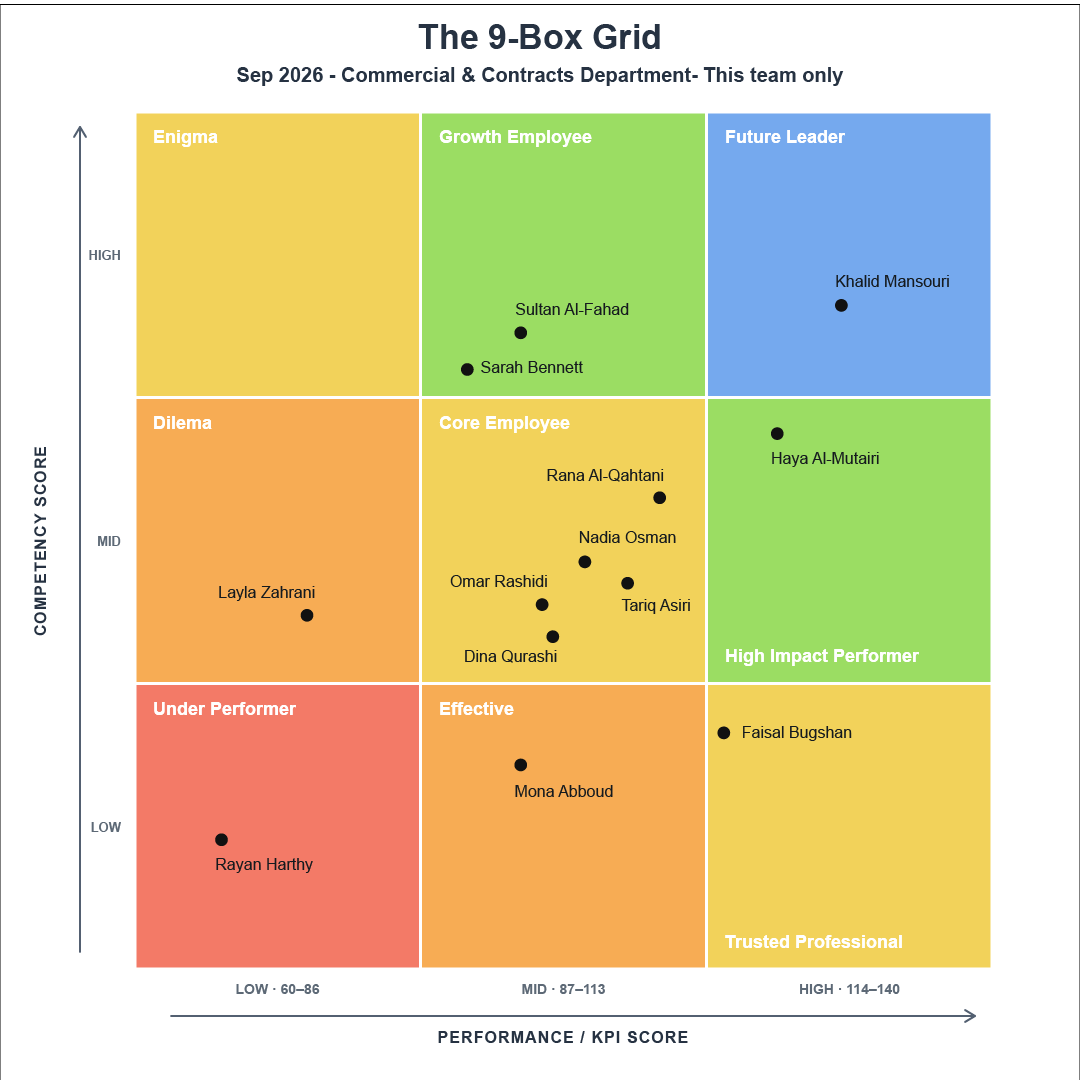
A fuller picture of physicians.
Reviews combine caseload data with structured feedback on quality and safety.
-
Evidence-based expansion.
Historical benchmarks across facilities inform projections for new hospitals and help track ramp-up.
The biggest change is that we no longer have to piece together the story of each hospital from separate clinical, operational and financial reports. The same scorecard gives us a consistent view across the network, while still showing us the operational details behind patient experience and performance.
THE IMPACT
A Common Performance Framework for a Growing Hospital Network
The broader change is consistency. As the group adds hospitals, leadership no longer needs to create a new way of interpreting performance for every facility. The same definitions, scorecards and review rhythm can extend from established hospitals to facilities still building their patient base and operational capacity.
That consistency also changes how expansion can be managed. Existing hospitals provide benchmarks for quality, efficiency, patient experience and financial performance, giving leadership a reference point for understanding whether a new facility is progressing as expected. Where performance falls behind, the same framework helps identify whether the issue sits in clinical quality, service delivery, patient experience or commercial performance.
For a growing healthcare network, that creates a common operating language across facilities without requiring every hospital to operate in exactly the same way. Local teams retain responsibility for their operations, while the group maintains one framework for understanding performance, setting priorities and reviewing progress.
As the network continues to expand, Kippy could extend the same scorecard structure to new facilities from the start, giving leadership a consistent basis for measuring ramp-up, comparing performance and aligning clinical and commercial priorities across the group.
See How Kippy Would Work Across Your Business
In a 30-minute online demo, we’ll show you:
- See your company’s objectives and KPIs in Kippy.
- Discuss your requirements and how Kippy can fit them.
- Review your options for setup, integrations and rollout.