One Performance Language: How Al Jomaih Holding Connected Subsidiary Performance to Group Priorities
A Saudi diversified holding company founded in 1936 as a small trading establishment in Shaqra, and now headquartered in Riyadh. Al Jomaih Holding invests across six sectors: Automotive and Equipment, Energy, Consumer Goods, Financial Services, Real Estate, and Investments and Joint Ventures. It operates through a portfolio of subsidiaries, each with its own leadership team.
Al Jomaih Holding’s board sets the direction for a portfolio that spans automotive distribution, energy, beverages, heavy equipment and financial investments. Each subsidiary had built its own way of managing and reporting performance. The board needed a common framework to compare subsidiaries, see how group priorities were being translated into plans, and govern the portfolio as a whole. If your group oversees subsidiaries in very different industries, this challenge may feel familiar.
THE CHALLENGE
Many Subsidiaries, No Common Scorecard
Each Al Jomaih subsidiary managed performance its own way. Subsidiary CEOs reported to the holding board in their own presentation formats, with different KPIs, calculation methods and reporting periods. Comparing an automotive business with an energy or beverage business on the same terms was difficult.
The board communicated group priorities through annual letters and board meetings, but had no way to track how each subsidiary turned that direction into operational plans. Capital allocation decisions relied on subsidiary business cases built on different assumptions and projection methods.
Two wider governance areas faced the same gap. Leadership succession across the portfolio depended on individual board members’ judgement rather than a structured assessment. Synergy opportunities in procurement, shared services and market access were discussed periodically, but not tracked against defined objectives or outcomes.
The issue was not a lack of capable subsidiaries or clear ambition. It was the lack of a shared framework for the board to see, compare and govern the portfolio as a whole.
THE SOLUTION
One Framework From Holding Board to Subsidiary
Al Jomaih Holding needed more than a reporting template. It needed to connect the holding company’s strategy to each subsidiary’s plans, and to give the board a consistent way to review them. Kippy was set up to do that in six ways:
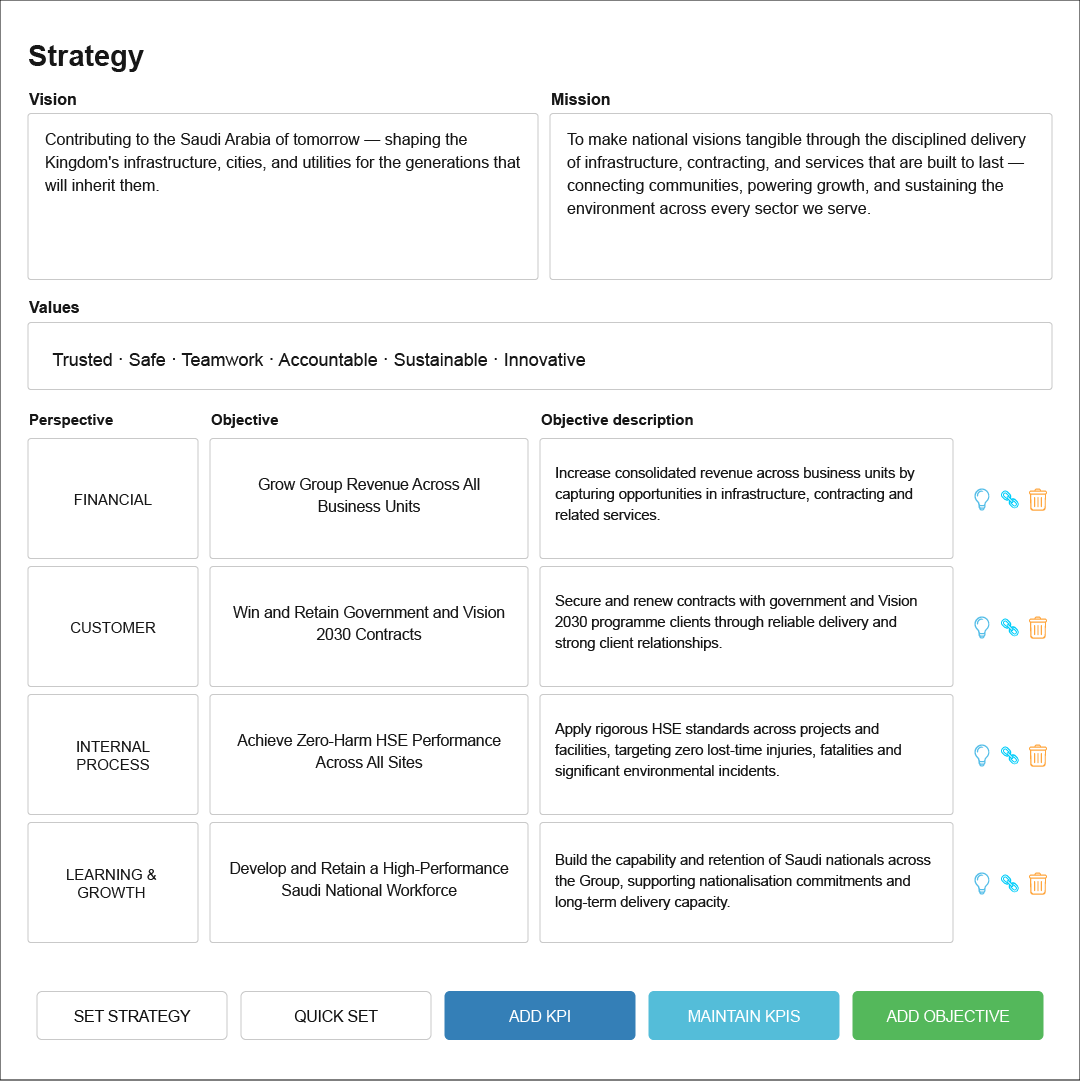
- Strategy. The holding company's portfolio strategy was modelled in Kippy, with each subsidiary's strategic plan nested within the group framework.
- Cascading. Holding-level priorities were linked to subsidiary operational plans, so the board can check how group direction is translated at each level.
- Scheduled Reporting. Subsidiary CEO reports moved to one format, with set KPI categories, calculation methods and submission deadlines.
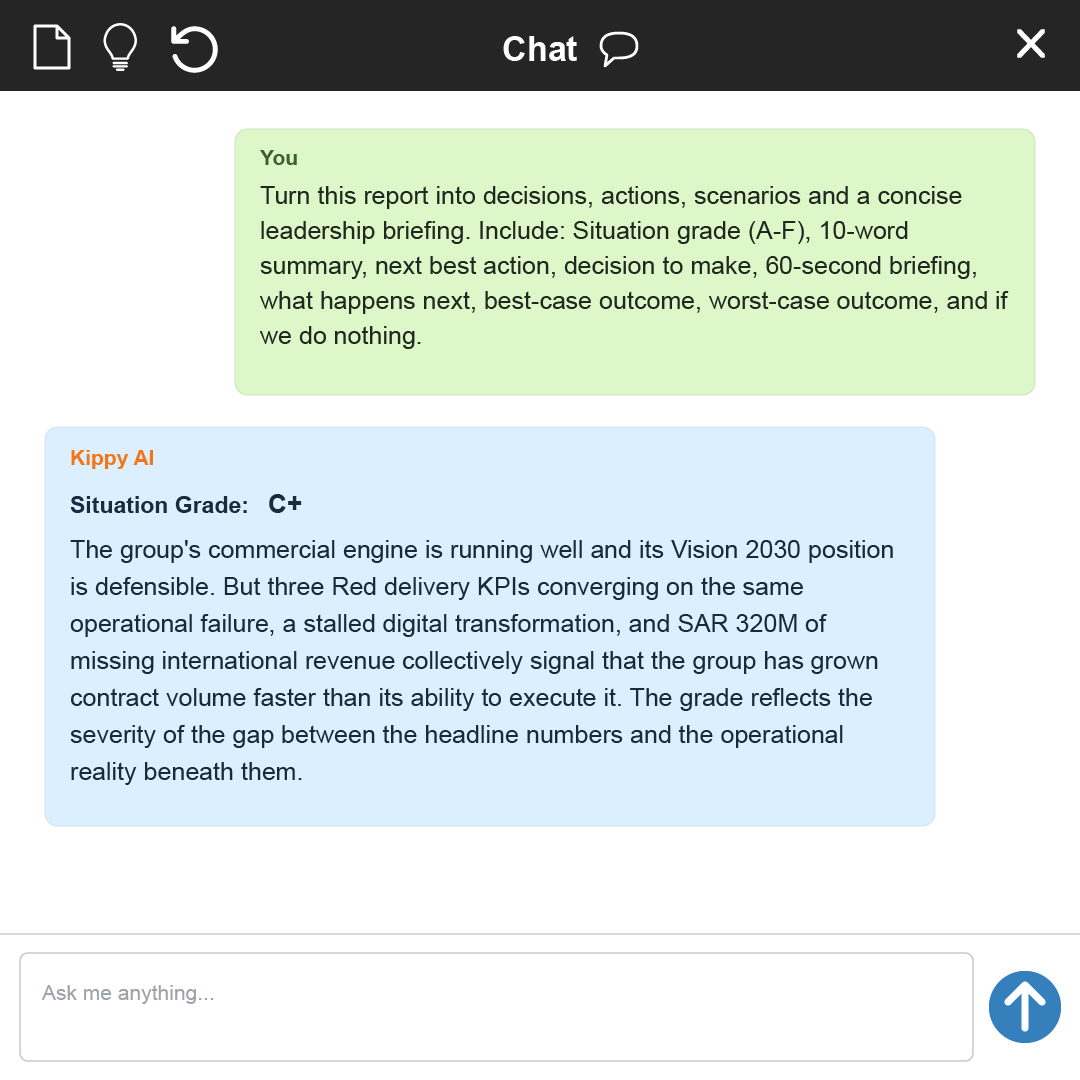
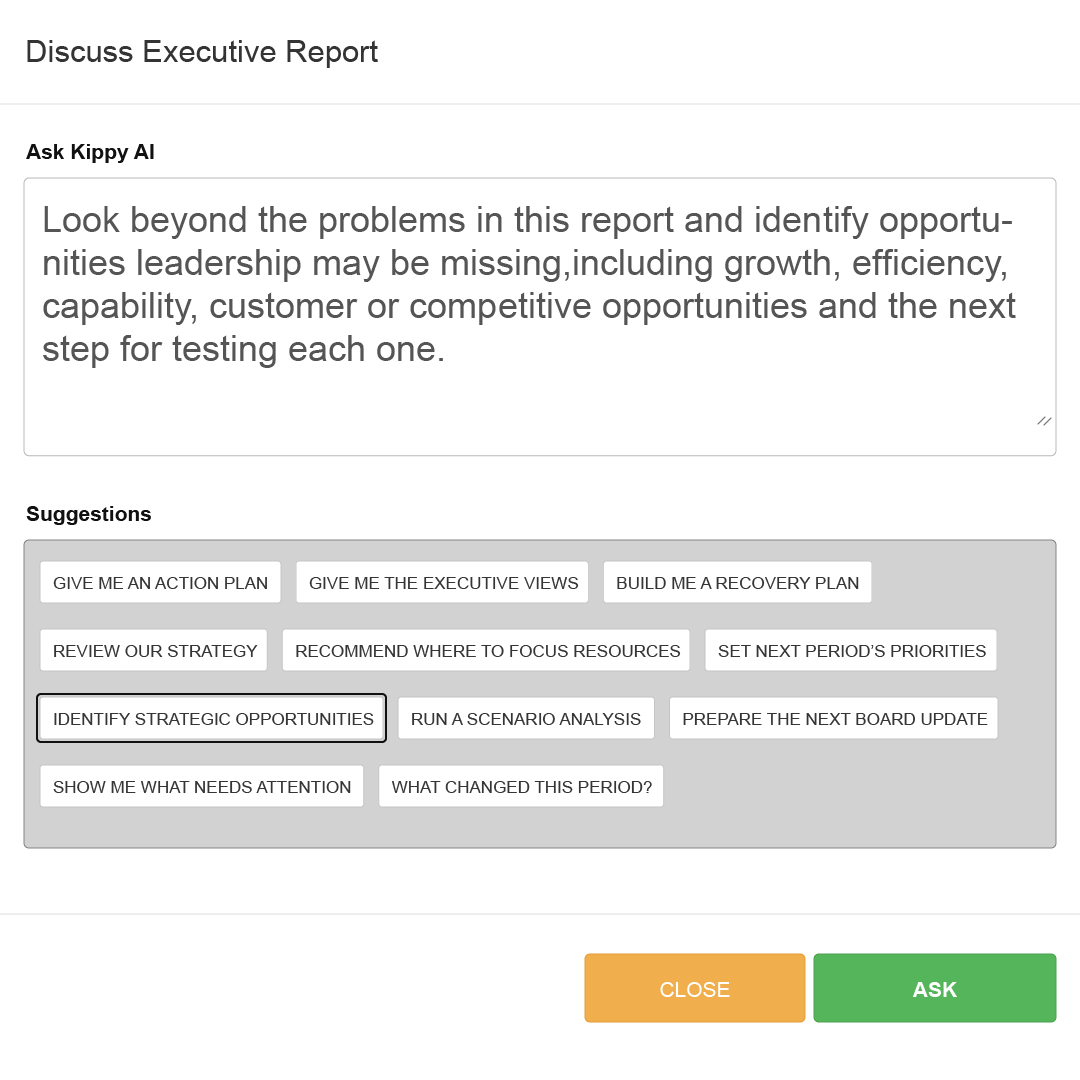
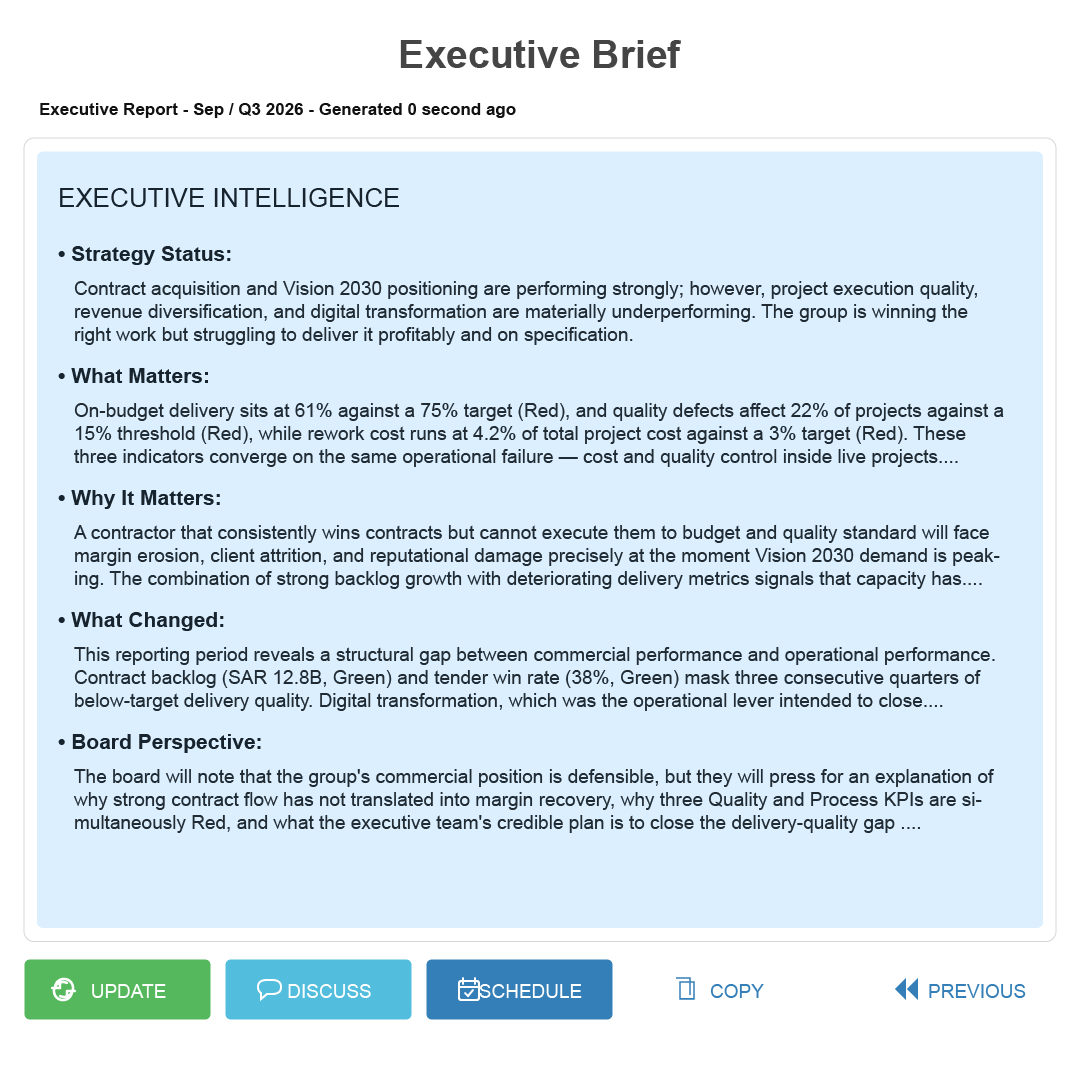
- Executive Intelligence. The board gained a portfolio-level view that places subsidiary performance alongside sector benchmarks and group-wide trends.
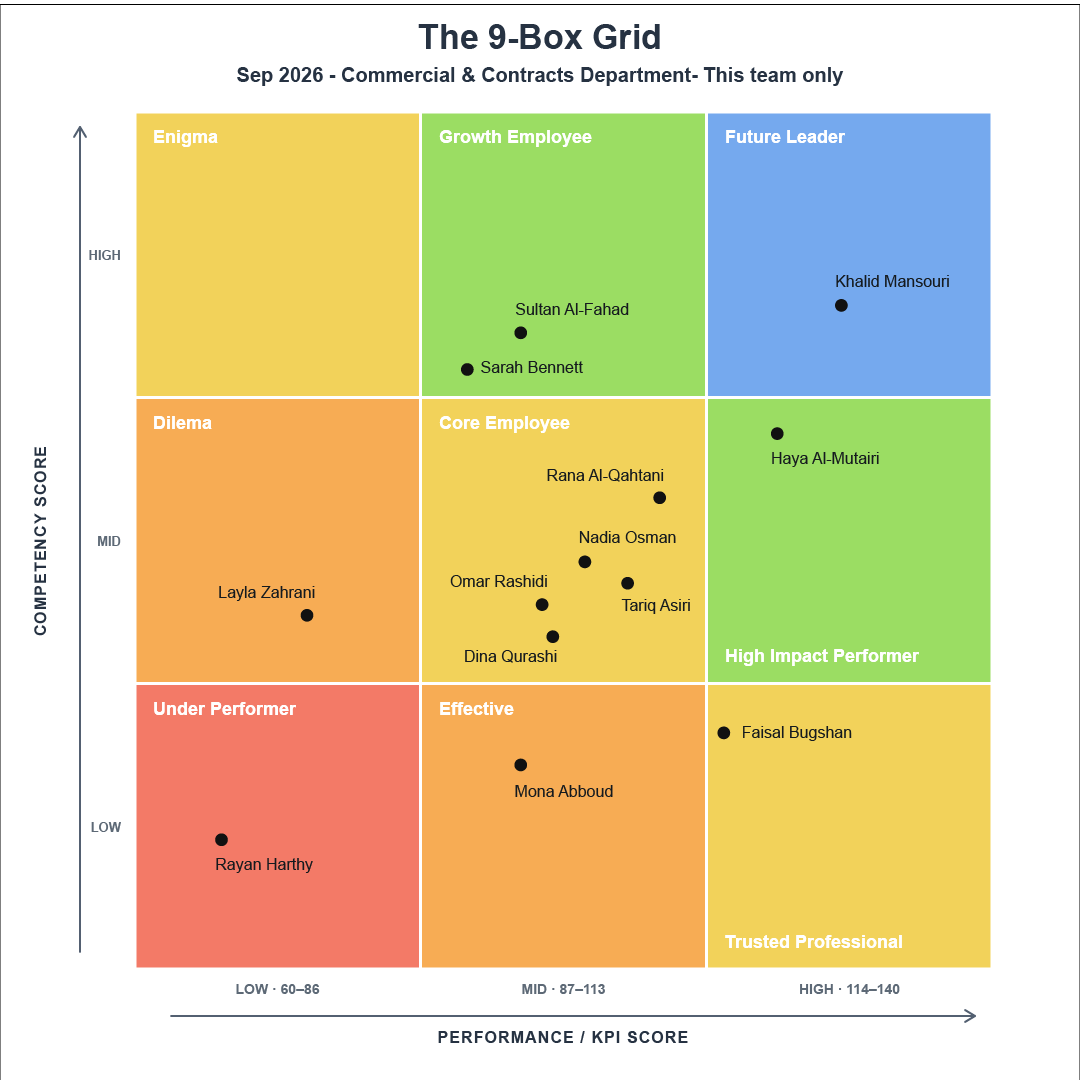
- Talent and Ratings. A competency-performance matrix now assesses senior leaders the same way across all subsidiaries, supporting succession planning.
- Projects. Synergy initiatives are tracked as projects, each with measurable objectives, a named owner and milestones visible at holding level.
The setup works from the top down. The holding strategy sits at the top, each subsidiary’s plan is nested within it and linked to group priorities, and subsidiary CEOs submit their reports through Scheduled Reporting against set deadlines. The board then reviews those reports alongside the portfolio-level analysis from Executive Intelligence.
Our subsidiaries operate in very different industries, so we cannot manage them as if they were the same business. What we needed was consistency in how we govern them — one framework that lets us compare performance, understand how strategy is being executed and identify where the group can create value across the portfolio.
THE RESULTS
Comparable Performance Across Every Subsidiary
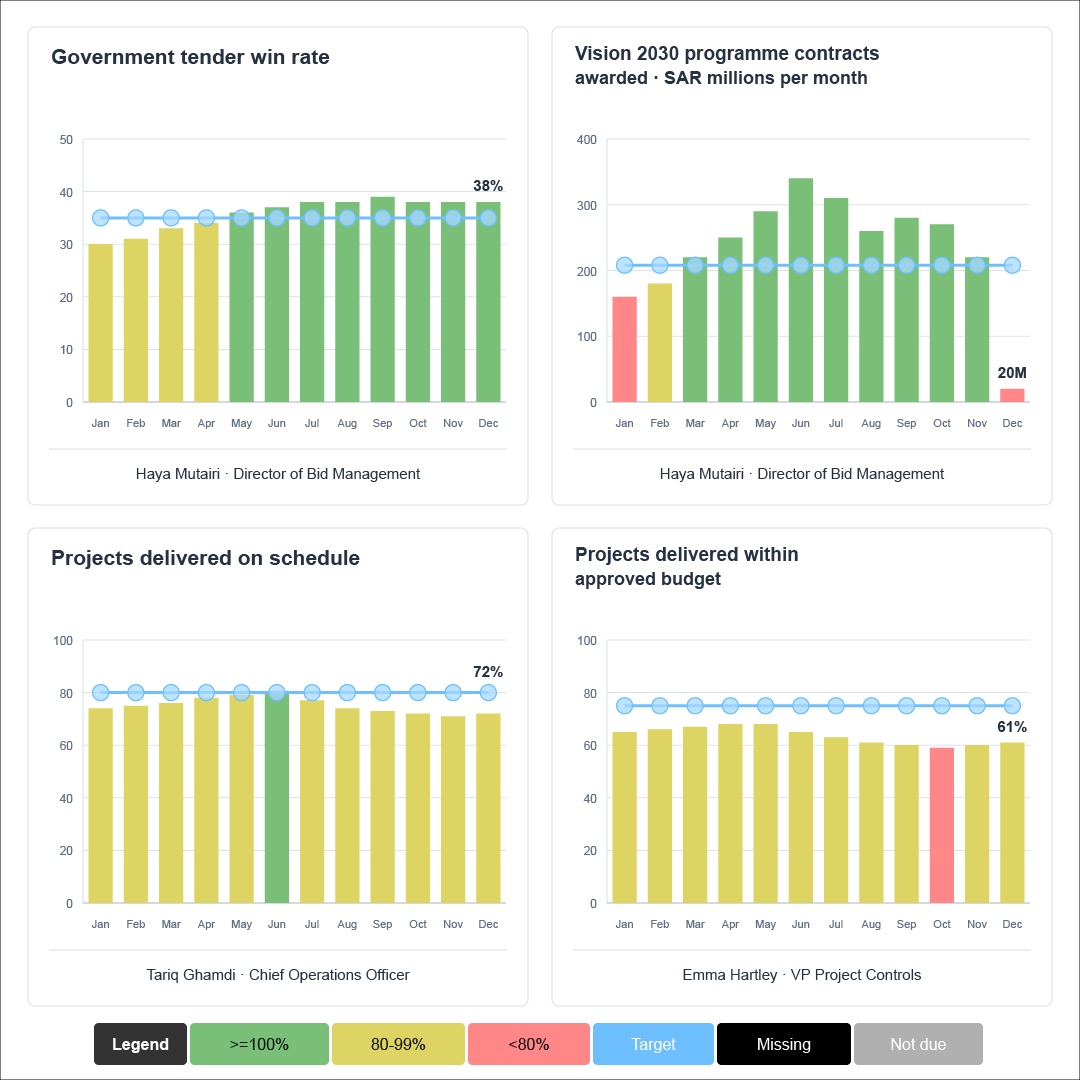
The holding board now reviews all subsidiaries through a standardised scorecard, with each subsidiary’s objectives linked to the group direction it received. Key results include:
-
Direct comparison across sectors.
Automotive, energy, beverages and other businesses are reviewed in the same format, on the same terms.
-
Consistent CEO reporting.
Subsidiary reports share KPI definitions and aligned reporting periods, reducing board preparation time and leaving more meeting time for strategic discussion.
-
Better-informed capital allocation.
Portfolio-level analysis places subsidiary performance within sector trends, so allocation discussions draw on comparable data rather than subsidiary-specific narratives.
-
Traceable strategic translation.
The board can see how each subsidiary turned group priorities into operational plans, creating shared accountability between the holding board and subsidiary leadership.
-
A structured view of succession.
Senior leaders are assessed on one competency-performance framework, giving the board a portfolio-wide view of succession readiness.
-
Synergies with owners and targets.
Initiatives that were once discussed periodically are now tracked as projects with measurable targets, so the board can tell committed programmes from ideas still under discussion.
Together, these changes mean the board spends less time interpreting reports and more time on strategic decisions about the portfolio.
THE IMPACT
From Reviewing Subsidiaries to Governing a Portfolio
The broader shift is from subsidiary-by-subsidiary reporting to portfolio-level governance. Al Jomaih Holding’s businesses remain different in their markets, operating models and priorities, but the board now has one performance language for understanding how each contributes to the direction of the group.
That common framework also strengthens the decisions that sit above individual subsidiaries. Capital allocation can be considered against comparable performance and sector context, succession can be viewed across the leadership portfolio, and potential synergies can be managed as initiatives with defined outcomes rather than ideas revisited from one board meeting to the next.
For a diversified holding company, the value of consistency is not making every subsidiary operate the same way. It is giving the holding board enough structure to understand differences without losing sight of the portfolio as a whole. Strategy, performance, leadership and cross-business initiatives can be reviewed through one connected governance framework.
As the portfolio evolves, Kippy can provide the common performance language that allows Al Jomaih Holding to maintain that connection across new investments, changing subsidiary priorities and future group-level initiatives.
See How Kippy Would Work Across Your Business
In a 30-minute online demo, we’ll show you:
- See your company’s objectives and KPIs in Kippy.
- Discuss your requirements and how Kippy can fit them.
- Review your options for setup, integrations and rollout.