Governing Established and Growth Businesses Under One Framework
A leading Saudi diversified group, built on decades of automotive distribution and now operating in many countries. Alongside mobility, its businesses span renewable energy and water, financial services, healthcare and real estate, each run as an independent company with its own leadership.
In this scenario, the group is growing its established automotive business, adding new brands, electric vehicles and new markets, while building younger businesses in energy and health. Its board needs to govern mature and early-stage companies side by side, across many countries, without forcing them into the same mould. If your organisation manages a diverse portfolio of businesses at different stages, this challenge may feel familiar.
THE CHALLENGE
Mature and Emerging Businesses, One Board
The portfolio combines a mature automotive business with younger ventures in energy and health, and each needs to be measured differently. There is no single governance framework that can hold both. Operations in many countries also produce performance data in different currencies, regulatory settings and reporting standards, which makes consolidated group reporting slow.
The board wants to track how the portfolio’s balance is shifting over time, as newer businesses grow alongside mobility. But there is no consistent way to measure each business’s contribution to that strategy. Regional managing directors run their businesses with a high degree of autonomy, so it is hard for the board to tell local adaptation from strategic drift when targets change.
Sustainability commitments made at group level are not translated into KPIs for each business, so environmental and social performance stays a reporting exercise. The group’s philanthropic foundation contributes to the group’s social impact, but sits outside the performance framework, which makes combined impact reporting difficult.
The underlying problem is the lack of one framework that respects each business’s stage and autonomy while connecting them all to the group’s strategy.
THE SOLUTION
One Governance Framework, Room for Every Stage
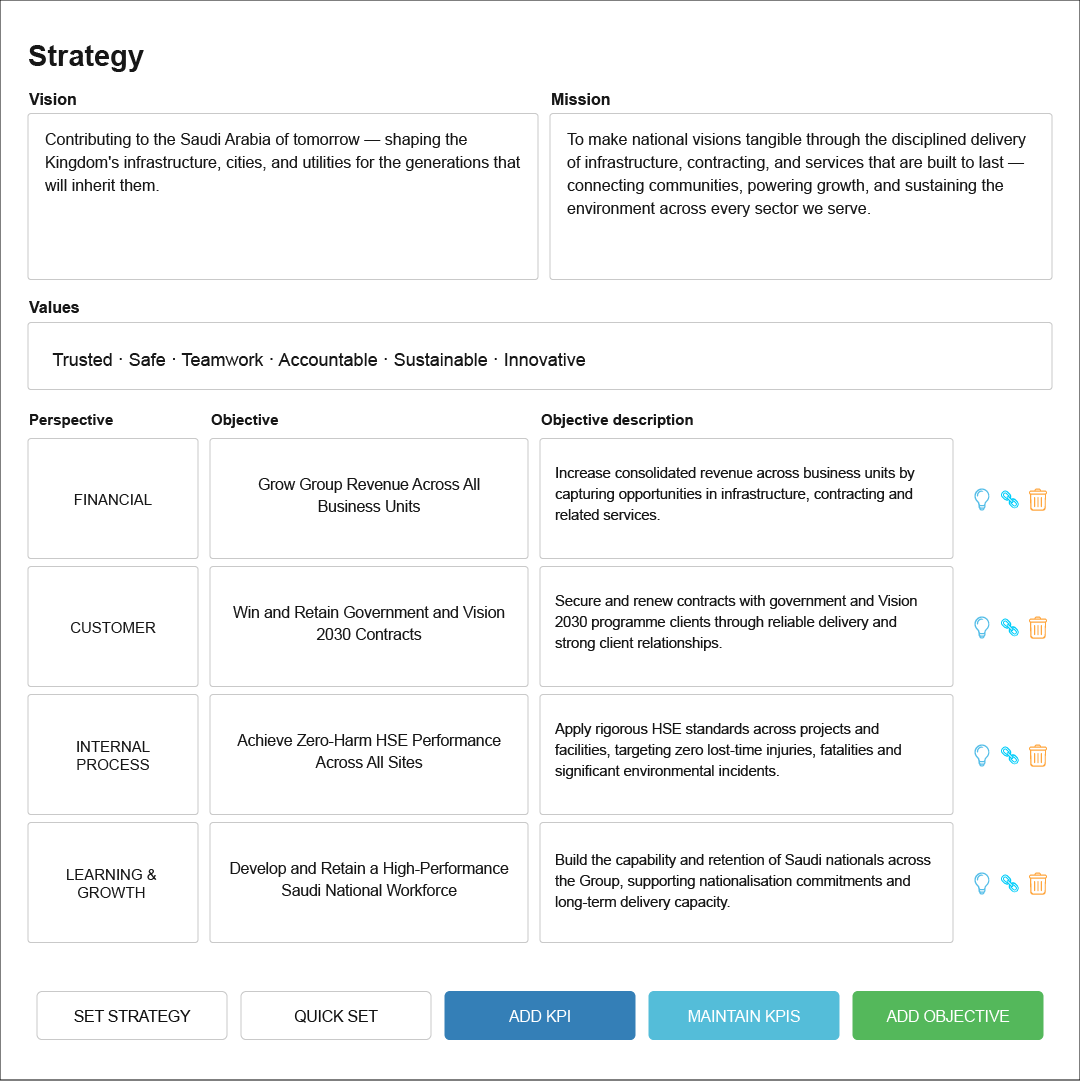
The group needs more than a consolidated report. It needs a framework that measures mature and growing businesses differently, yet connects them all to the same group strategy.
- Different measures, one framework. Mature and growth businesses each have strategic measures suited to their stage, all sitting under one common governance structure.
- Comparable data across countries. Performance from every market is converted to a common currency and tagged by regulatory context, so the group can consolidate without manual rework.
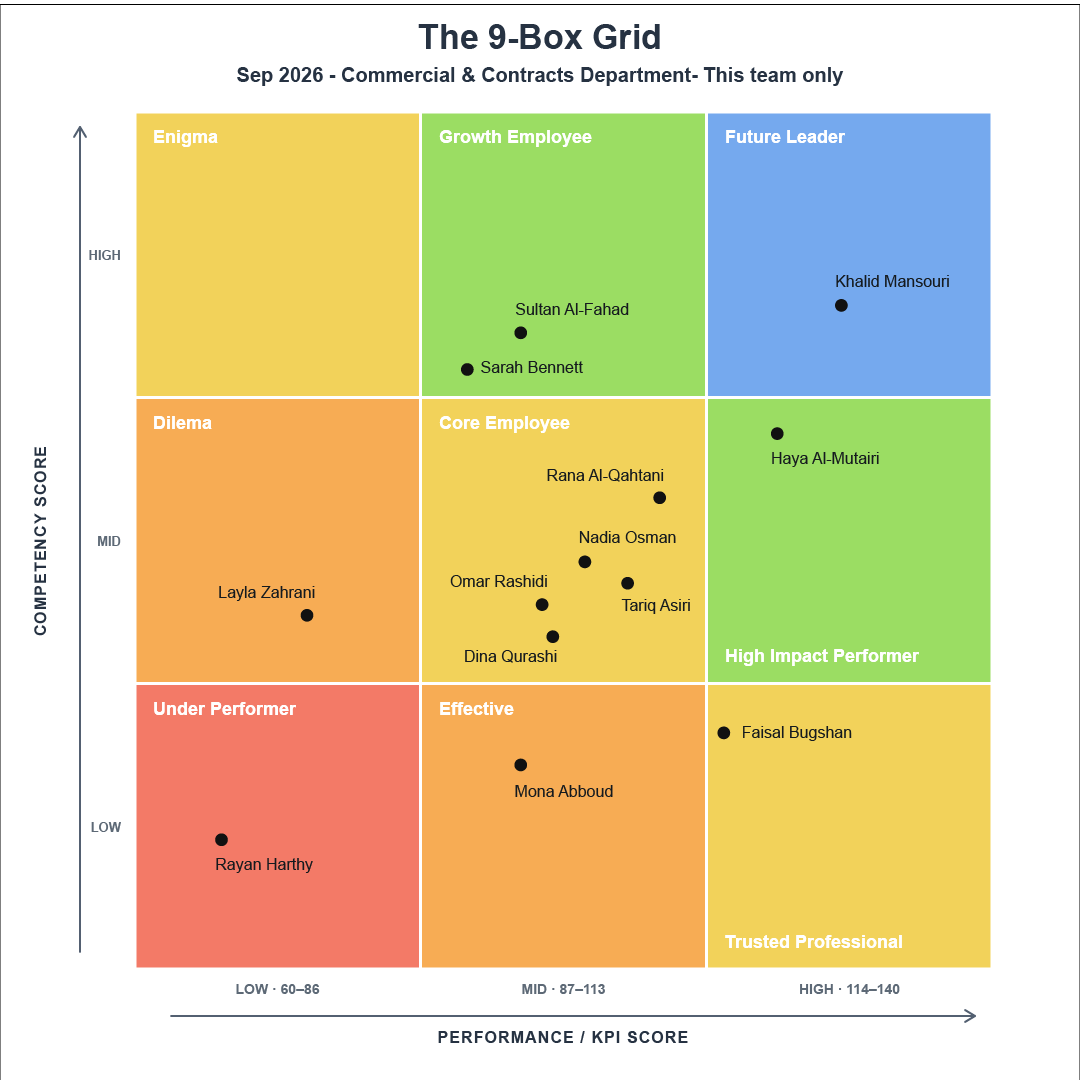
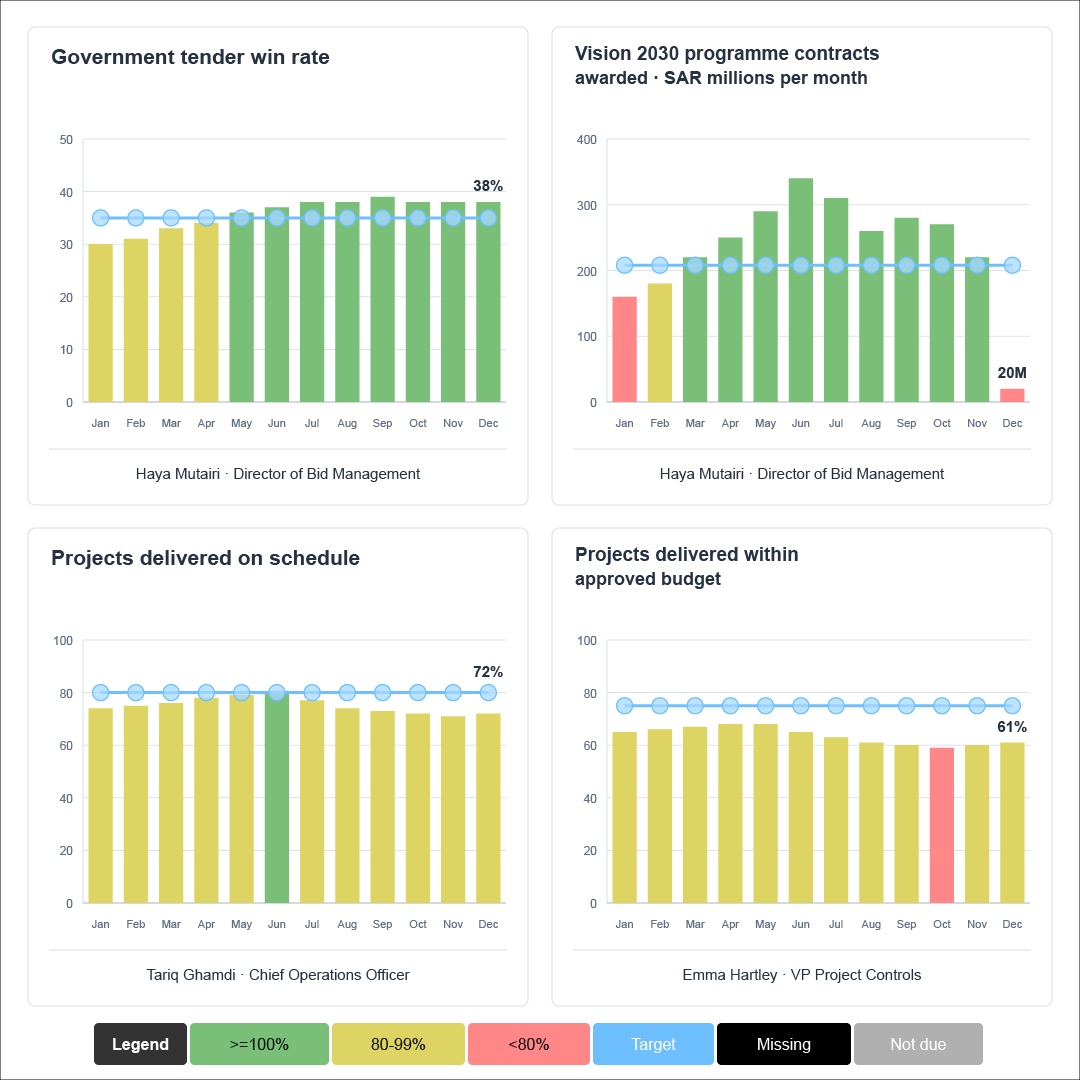
- A clear view of portfolio balance. Dashboards track each business's contribution against the group's diversification goals over time.
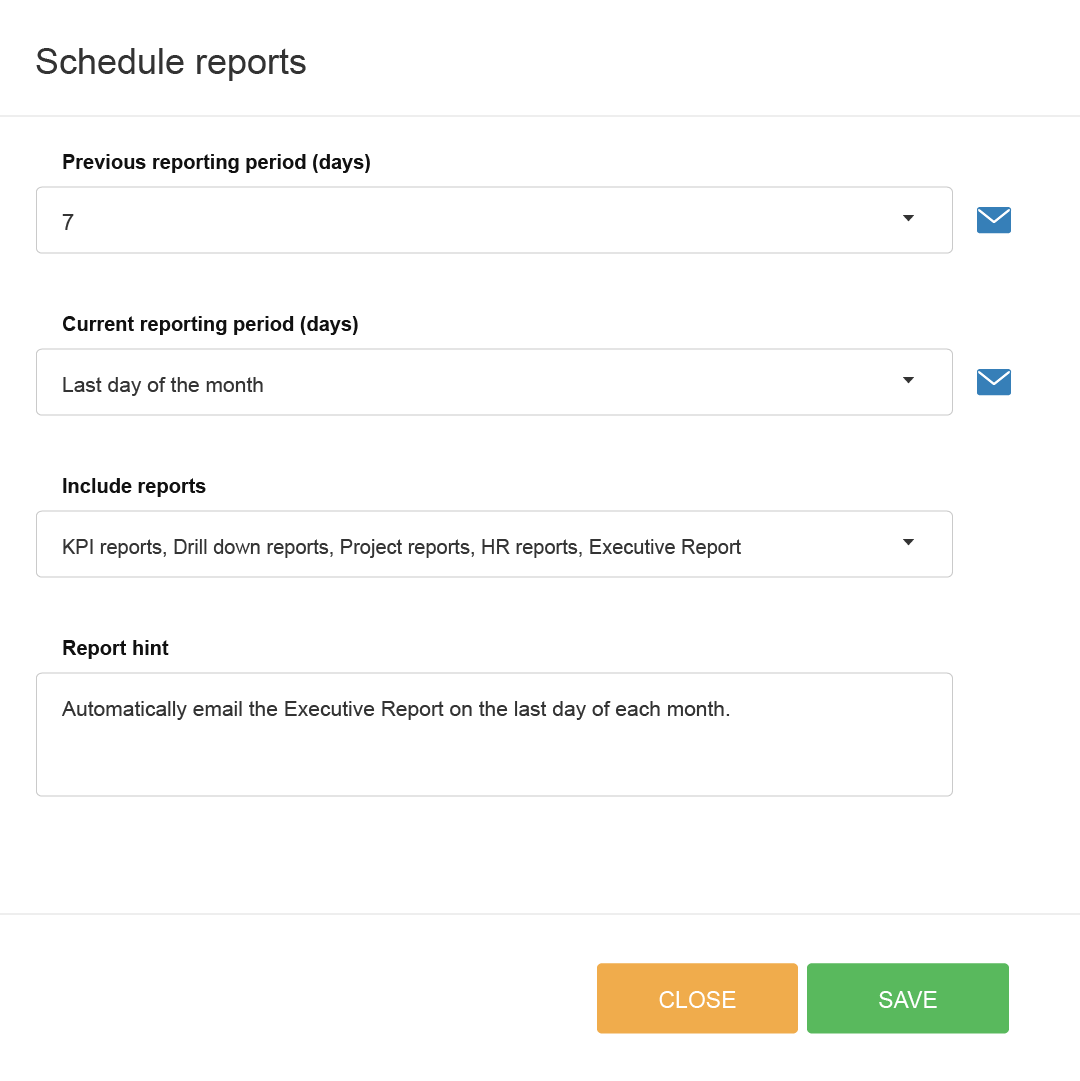
- Flexibility with accountability. Quarterly reviews ask regional managing directors to explain any target changes against the documented strategy, separating local adaptation from drift.
- Sustainability built into operations. Group sustainability commitments become business-specific KPIs, with baselines and improvement targets that fit each business.
- Philanthropy in the same picture. Impact data from the group's foundation feeds into group reporting alongside commercial results.
Mature businesses can continue to be managed through established performance measures, while younger businesses can be assessed against the milestones that matter at their stage of development.
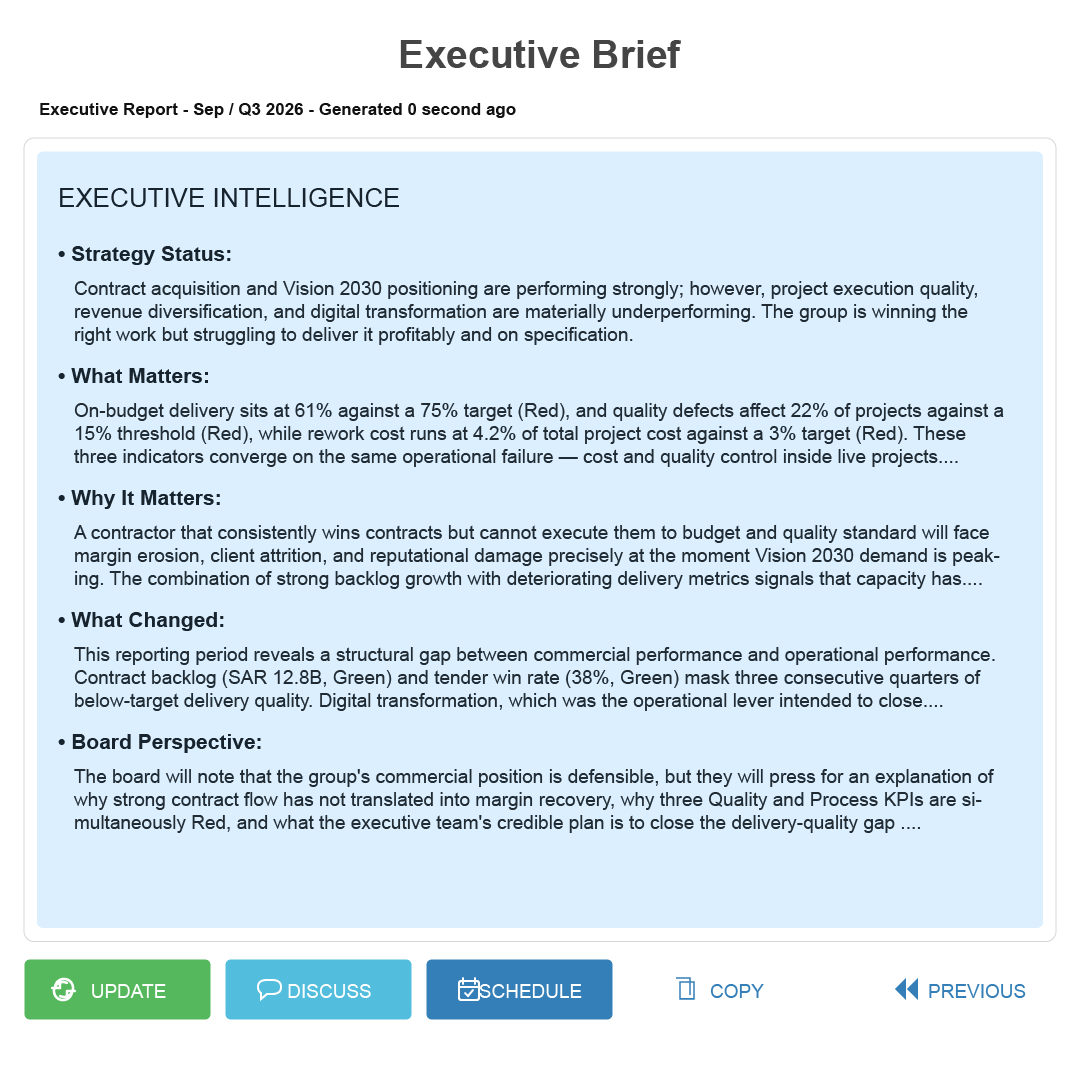
The framework also makes the relationships between commercial performance, sustainability and social impact more visible. Group-level commitments can be translated into business-specific measures, while the foundation’s contribution can be considered alongside the wider portfolio. The board therefore has one place to understand not only how the businesses are performing, but how the portfolio is progressing against the group’s broader ambitions.
Our businesses are not at the same stage, and we do not want to manage them as though they are. What we need is consistency in governance, not uniformity in operations, a framework that gives each company the right measures while keeping the board connected to the direction of the group.
THE RESULTS
A Portfolio Governed as One
With Kippy in place, the board governs mature and early-stage businesses through one framework that respects their different needs while keeping them comparable. This setup enables:
-
Faster group reporting.
Data from every country consolidates automatically, freeing analysts from producing comparable figures by hand.
-
Evidence for rebalancing decisions.
The board can see how each business's contribution is changing, rather than relying on qualitative judgement.
-
Confidence in local flexibility.
Documented, reviewed target changes give the board assurance that regional autonomy still serves group strategy.
-
Sustainability measured like performance.
Business-level sustainability KPIs are governed with the same rigour as financial and operational measures.
-
One story for stakeholders.
Social impact and commercial results can be reported together.
We can now look at the portfolio as a whole without losing the context of individual businesses. A growth company can be measured on the milestones appropriate to its stage, while an established business can continue to be managed on mature operating measures. What matters is that both remain connected to the same group direction.
THE IMPACT
Growth Without Losing the Group View
diversification becomes easier to govern as the portfolio evolves. The board can see how established and emerging businesses are contributing to the group’s changing balance, while retaining enough context to distinguish healthy local adaptation from movement away from strategy.
That matters particularly as new markets, technologies and business models are added. Electric vehicles, renewable energy, healthcare and other growth areas do not need to inherit the exact measures of the established automotive business. Instead, each can have a performance structure suited to its own maturity while remaining visible within the same group framework.
The same principle extends beyond commercial performance. Sustainability commitments can move from group-level statements into operational targets, and philanthropic activity can be considered alongside commercial performance when the group assesses its overall contribution and impact.
For a diversified group operating across countries and business stages, governance does not require every company to look the same. It requires the board to have a reliable way to understand the differences, connect them to strategy and make decisions across the portfolio.
As the group continues to expand into new markets and sectors, Kippy could provide that common governance layer, giving each business room to operate while maintaining one connected view of group performance, strategic progress and wider impact.
See How Kippy Would Work Across Your Business
In a 30-minute online demo, we’ll show you:
- See your company’s objectives and KPIs in Kippy.
- Discuss your requirements and how Kippy can fit them.
- Review your options for setup, integrations and rollout.