From Factory Floor to Global Strategy: How GRI Tires Built One Performance Framework Across Its International Operations
A specialty tyre manufacturer producing agriculture, construction and material handling tyres from pure natural rubber. GRI Tires is based in Sri Lanka and the USA, with offices across Europe and Australia and a growing international distribution network. Sustainable growth is central to its strategy.
GRI Tires supplies farmers, construction firms and material handling operators around the world. As it grew, its plants, sales regions and support functions each built their own ways of tracking performance. Group leadership needed one framework that linked global objectives to what happened on the factory floor, in every market. If your organisation runs production and sales across several countries, this challenge may feel familiar.
THE CHALLENGE
Global Targets, Local Measures
Each GRI manufacturing facility kept its own performance tracking, so leadership could not see production efficiency against strategic targets in one consolidated view. Plants also classified defects differently, which made quality comparisons between them unreliable.
On the commercial side, sales from international distribution channels arrived in regional spreadsheets, at different times and in different formats. The link between R&D milestones and product launch dates relied on informal coordination, with no structured view of how one affected the other.
Two group priorities faced the same gap. Sustainability targets were set at group level but not broken down into plant-level KPIs, so they stayed a corporate reporting topic rather than a factory floor priority. Talent visibility stopped at country-level HR reports, making it hard to spot high-potential employees across the wider business.
The issue was not a lack of strategy. It was the lack of a shared framework connecting group objectives to plants, markets and people.
THE SOLUTION
One Framework From Group Objective to Plant KPI
GRI Tires needed more than a shared dashboard. It needed to connect group objectives to plant operations, sales regions, product launches and people, with clear ownership at each level. Kippy was set up to do that in six ways:
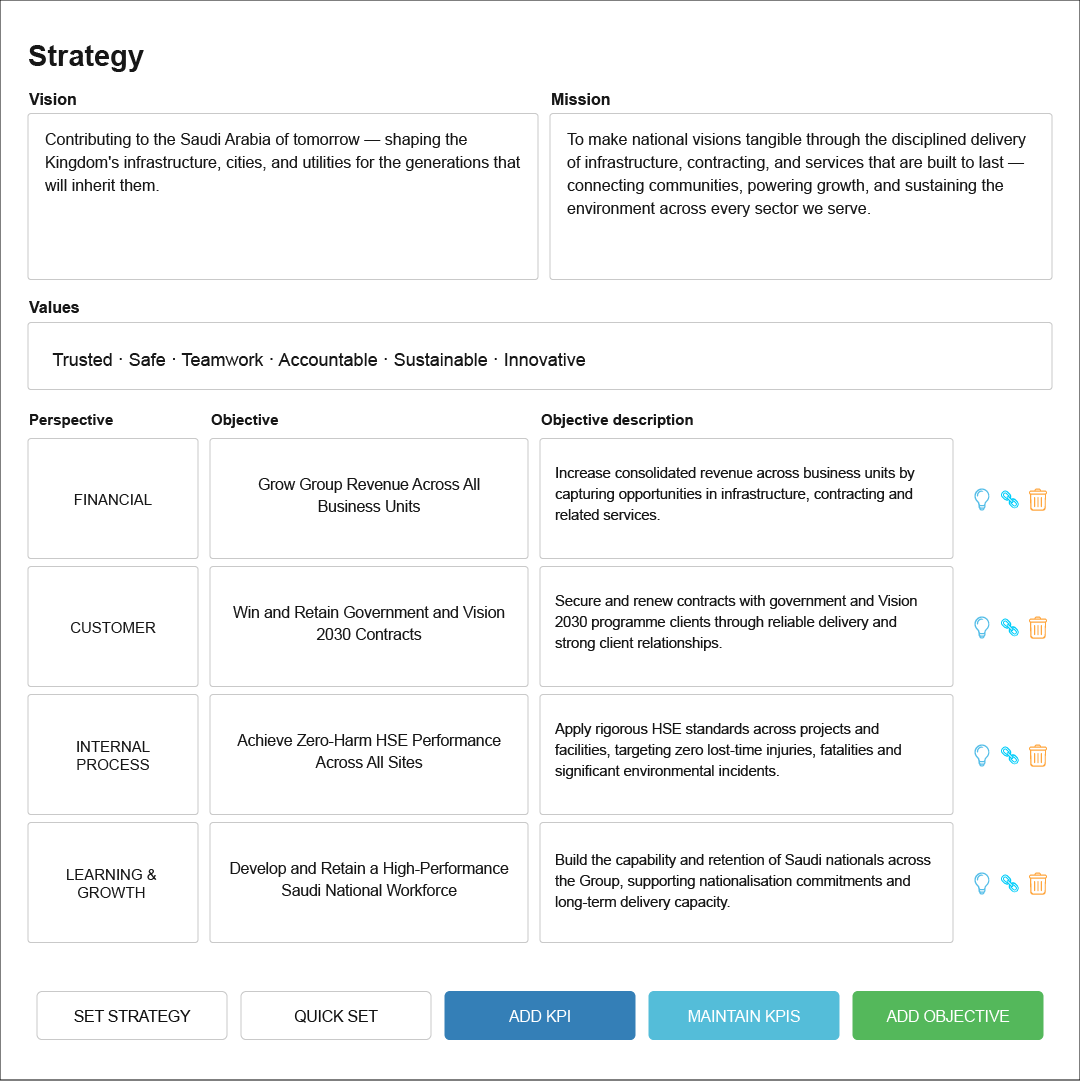
- Organisation and Cascading. GRI's multi-country structure was mapped in Kippy, and group objectives were cascaded to plant-level KPIs, each with a named owner.
- KPI Definition. Defect classification and quality measurement were standardised across all manufacturing facilities.
- Actuals and Check-ins.Sales regions moved to one global reporting cycle, using structured check-in templates to keep data consistent.
- Programmes. R&D projects and commercial launch timelines now sit in one programme, with shared milestones and visible dependencies.
- Objectives and OKRs. Group sustainability commitments became plant-level KPIs, with targets for energy consumption, waste reduction and emissions intensity.
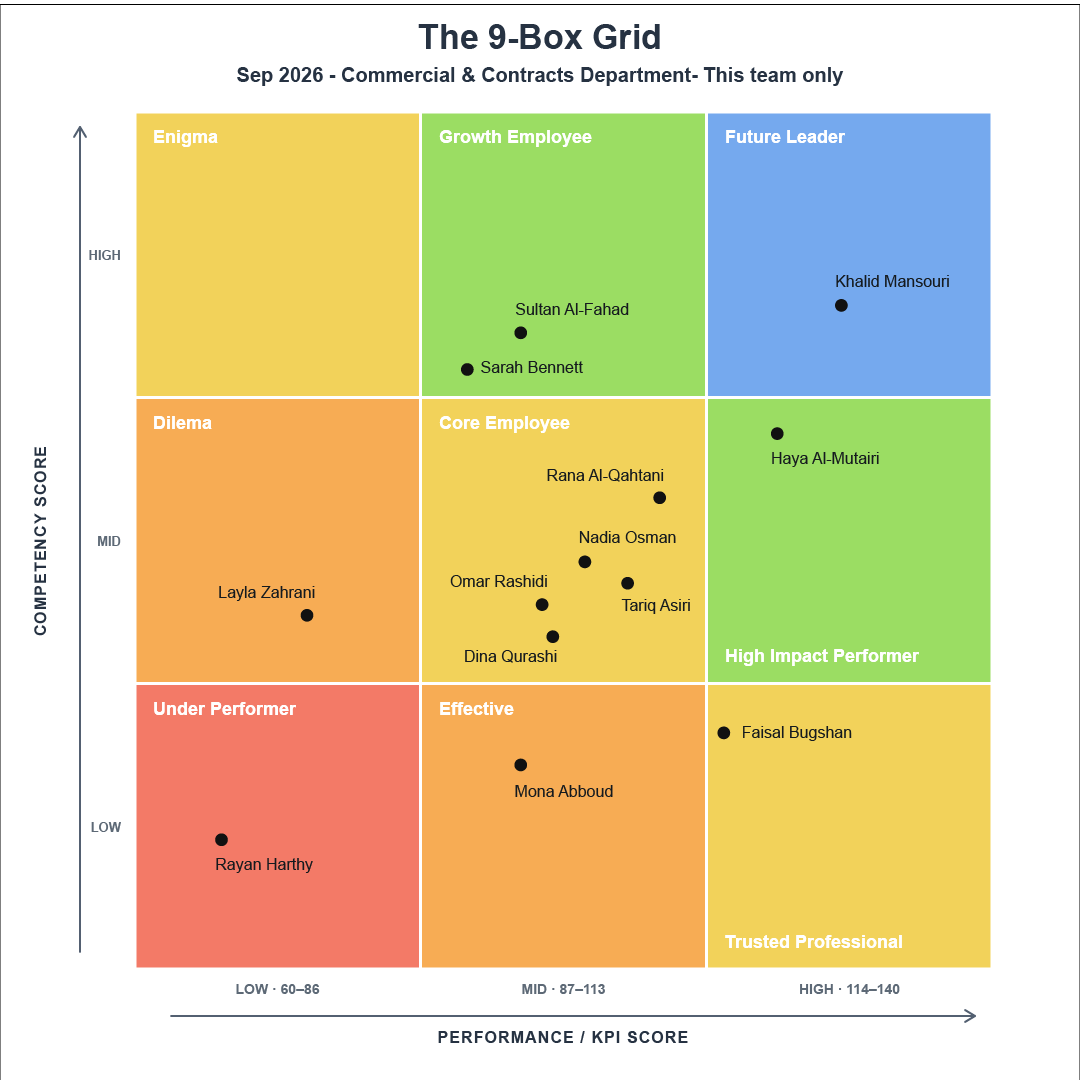
- Talent and Ratings. High-potential employees are assessed the same way in every country, using one competency and performance method.
The rollout was led by GRI’s Group Head of Human Resources and Administration as system owner. Kippy’s performance management and OKR modules were introduced across five locations, covering around 1,200 employees. Managers set objectives and KPIs for their teams, employees update progress against each KPI, and managers review and approve those updates.
THE RESULTS
Every Plant Measured Against the Same Strategy
Group leadership now sees production efficiency, quality and commercial performance across all manufacturing facilities, updated on the same reporting cycle. Key results include:
-
Reliable quality benchmarking.
Every plant uses the same defect classification, so quality can be compared between plants and used to target improvement.
-
Sales reports on one schedule.
Regional sales reports arrive at the same time in a common format, allowing comparison without manual reconciliation.
-
Launch risks seen earlier.
R&D milestones and launch timelines share one view, so dependency risks show up before they affect go-to-market dates.
-
Sustainability on the factory floor.
Plant-level energy, waste and emissions KPIs are reviewed with the same check-ins and trend analysis as production and quality.
-
Talent visible across countries.
A common assessment framework identifies high-potential employees across the global footprint, informing development and deployment decisions.
"The corporate objective alignment with divisional objectives and KRI is perfect, and all data analysis with XMR charts and trendlines can be done easily."
Udayapriya Imbulpitiyalage, Group Head of Human Resources and Administration
SUMMARY
One Strategy, From Sri Lanka to Every Market
With production, quality, sales, sustainability and talent measured in one framework, GRI Tires can allocate production using comparable plant data, respond to market trends with a global view, and treat sustainability as part of daily operations. The next step is embedding Kippy further into GRI’s ways of working and enterprise systems.
See How Kippy Would Work Across Your Business
In a 30-minute online demo, we’ll show you:
- See your company’s objectives and KPIs in Kippy.
- Discuss your requirements and how Kippy can fit them.
- Review your options for setup, integrations and rollout.