How AL-AYUNI Connected Group Objectives to Business-Unit Performance
AL-AYUNI has built Saudi Arabia’s roads, expressways, and cities for 65 years. Today it operates a $2 billion group spanning ten distinct business units: civil infrastructure, energy, marble, IT, manpower, glass manufacturing, and more. Active across some of the Kingdom’s most significant Vision 2030 developments, AL-AYUNI is not a company pausing for growth. It is delivering it.
Across the Kingdom of Saudi Arabia, AL-AYUNI’s work shapes the infrastructure that connects cities, delivers utilities, and enables the development programmes that define Vision 2030. Founded in 1960 and classified as a First Class Contractor since 2006, the group today spans far beyond its civil contracting origins. Energy, IT, marble, manpower, automotive, glass manufacturing, and real estate sit alongside the core construction business, each operating as a distinct entity with its own leadership, its own targets, and its own reporting cycle. Coordinating simultaneously with government commissions, sovereign-backed developers, and municipal utilities across multiple concurrent programmes, AL-AYUNI is, in practice, not one company. It is ten companies aligned by name, by ownership, and, until recently, by little else.
THE CHALLENGE
Strategy Invisible Across 14 Business Units
Running a group of this complexity requires more than operational discipline. It requires knowing, at any moment, whether every part of the business is moving in the same direction.
For AL-AYUNI, that clarity was hard to come by. Corporate strategy was set annually at the executive level. But translating those objectives and targets across ten business units, each operating in a different sector under different conditions and different reporting rhythms, meant the view reaching senior leadership was always partial and always late.
Division heads compiled updates independently. Performance on major infrastructure contracts ran in a separate track from quarterly targets in energy or marble operations. Joint venture performance on large government programmes was tracked separately from the parent group scorecard. When leadership needed a consolidated picture, someone had to build it by hand, across multiple sources, over several days.
Meanwhile, landmark Vision 2030 contracts with major government and sovereign-backed clients carried formal reporting obligations. Those reports required the same information, assembled the same way, under time pressure that never eased.
THE SOLUTION
One Connected System For The Entire Group
AL-AYUNI evaluated its options against three criteria that any platform would need to meet before it could work at group level.
- Accessible at the executive level. The Chairman and CEO needed to engage directly, not delegate reporting to analysts or planning teams. The platform had to surface insight in a form that worked for senior leadership without requiring a specialist to operate it. A tool that only planners can use solves little when the decisions that matter are made in the boardroom.
- Arabic throughout. Reporting obligations to government clients in Saudi Arabia run in Arabic. An Executive Brief delivered in Arabic, without a manual translation step, removed a standing bottleneck from every review cycle. This was not a localisation feature. It was an operational requirement.
- Built for a group structure, not a single company. AL-AYUNI needed more than KPI tracking. It needed a platform that could take a single corporate strategy and cascade it coherently across ten separate business entities, each at a different stage of operational maturity, so that performance at every level connected back to the same set of group objectives.
Kippy met all three.
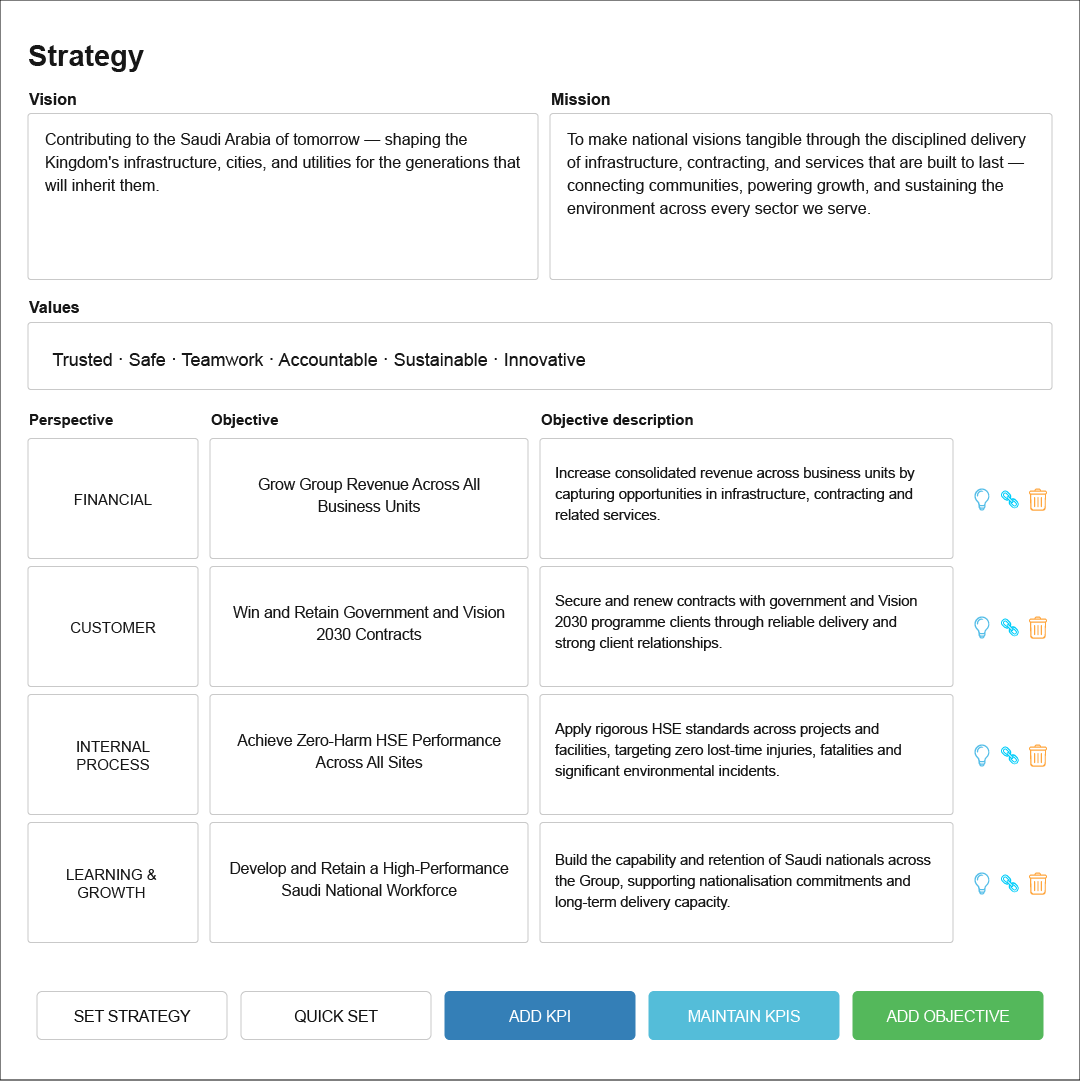
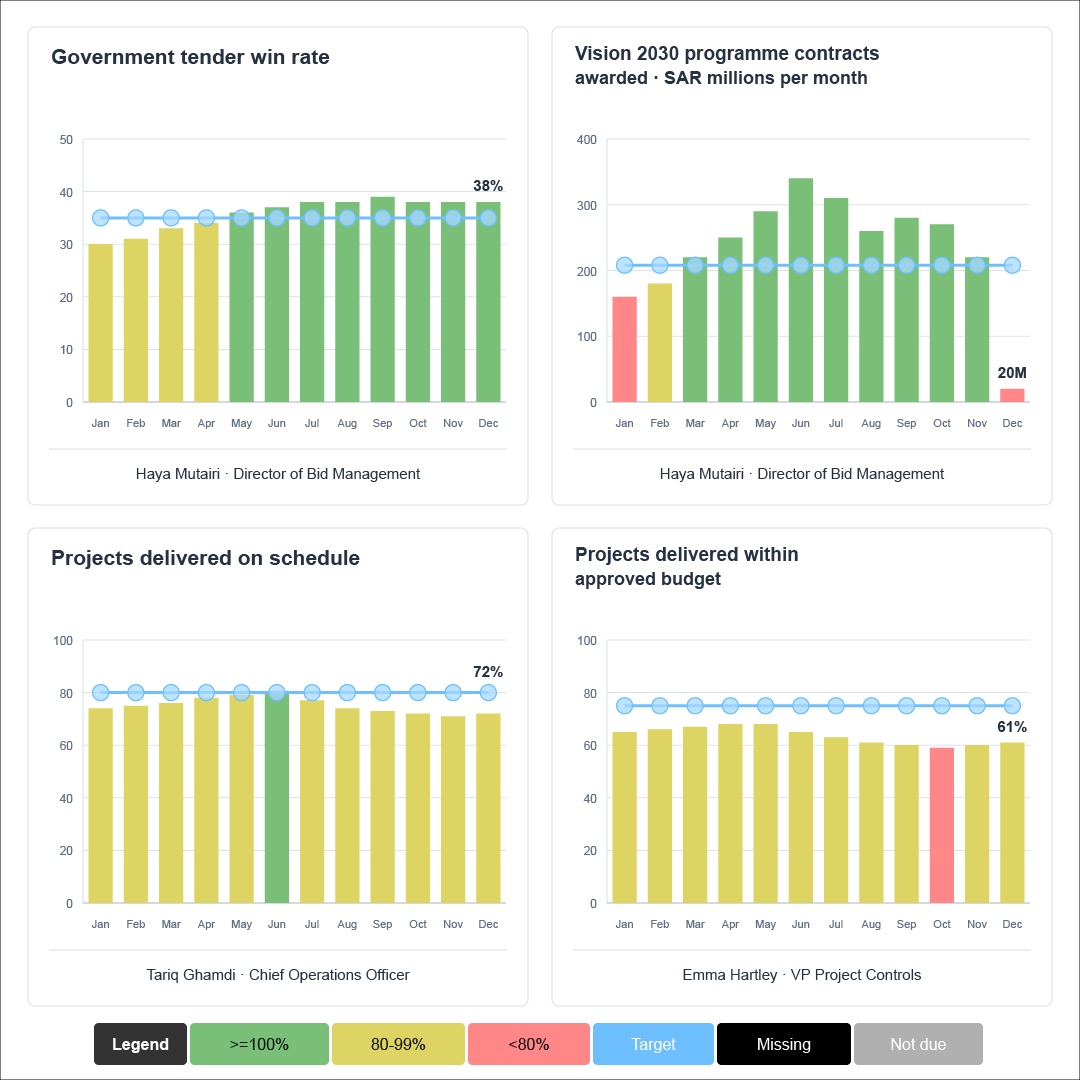
The rollout began at the corporate level, with AL-AYUNI’s group strategy mapped into Kippy’s platform. Each business unit received a cascaded scorecard connected to that corporate map. Performance targets for major infrastructure contracts were linked to the relevant divisional objectives, bringing project-level progress into the same view as group strategy for the first time.
The result was a single connected system: corporate strategy at the top, divisional performance in the middle, and project milestones at the base, all visible in one place and updated without manual intervention.
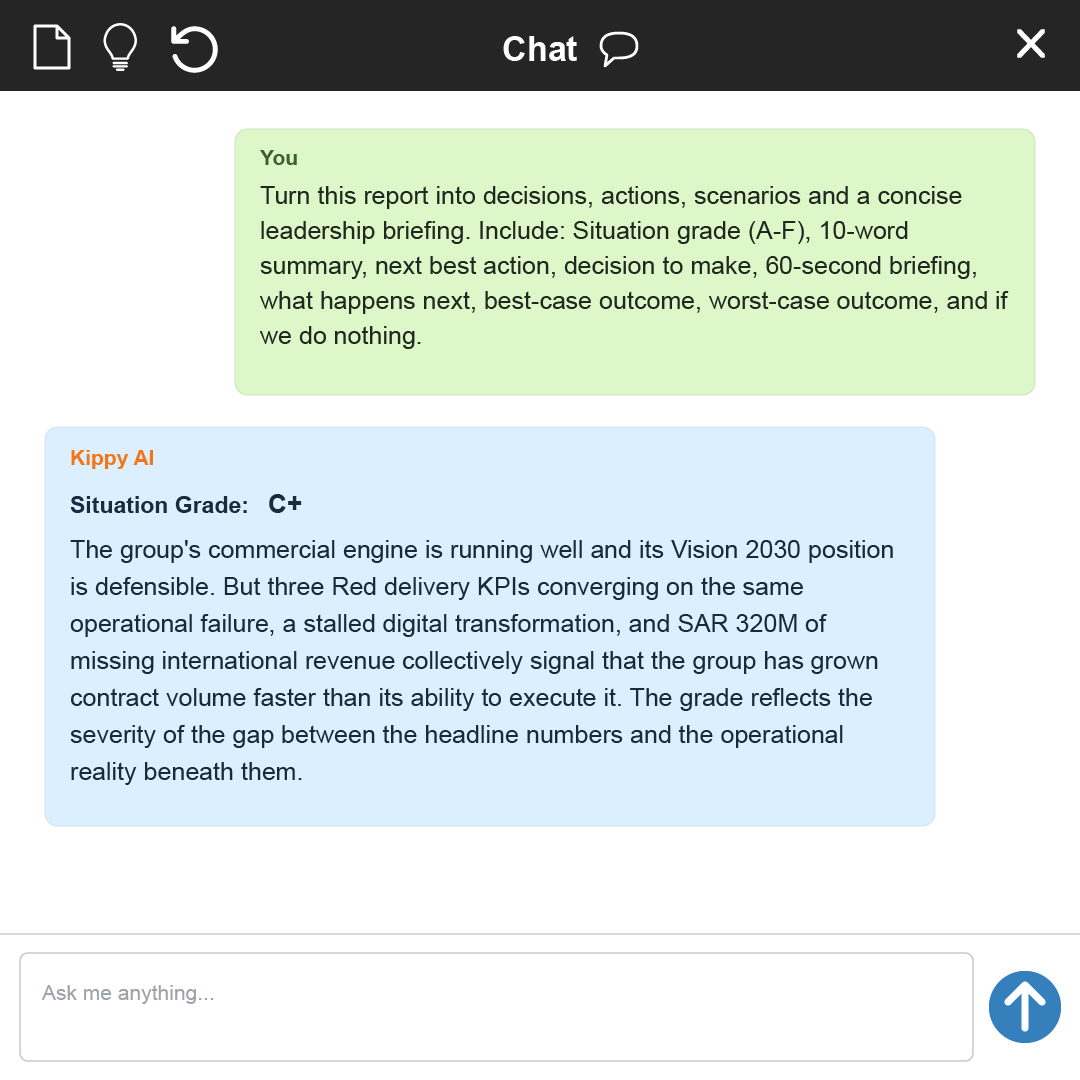
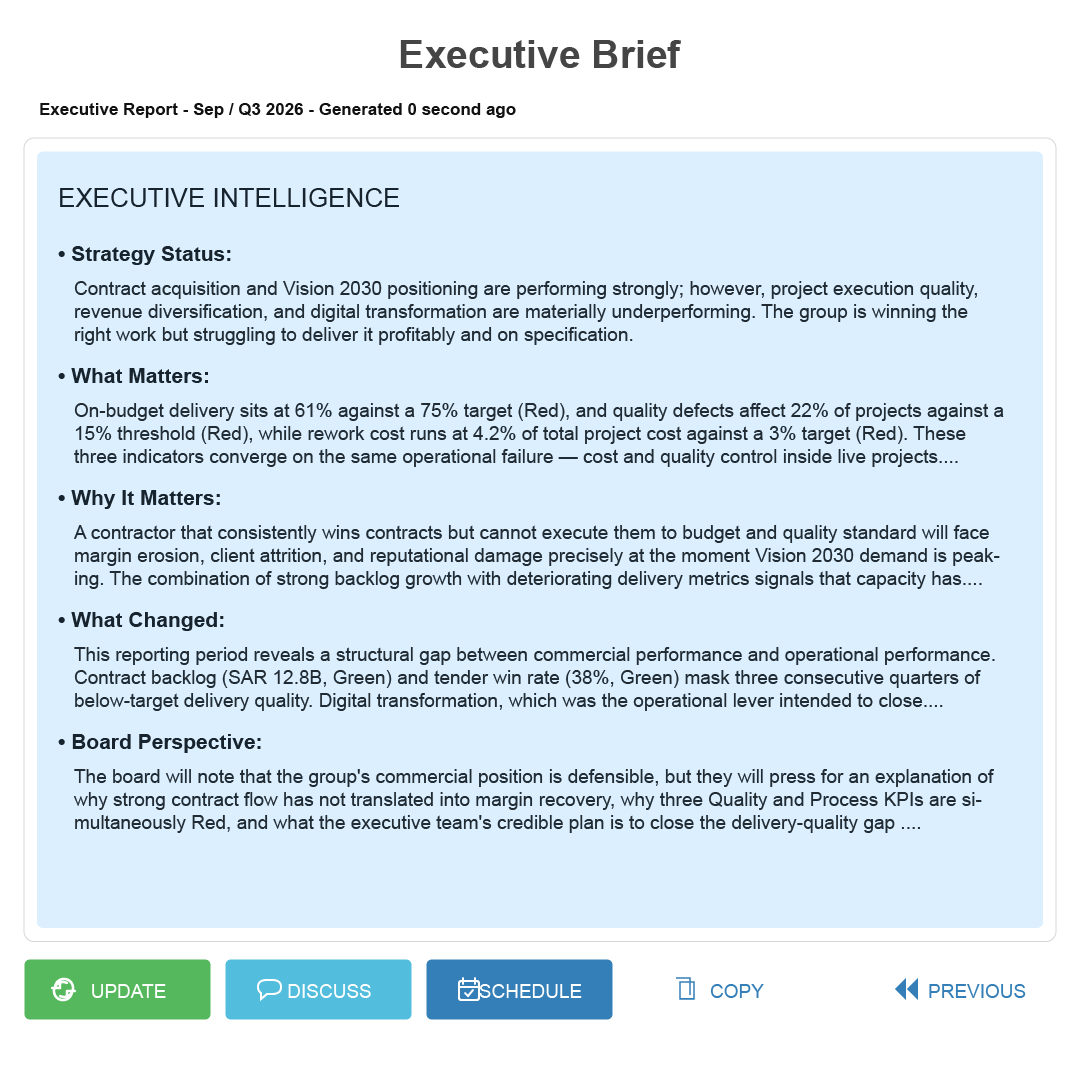
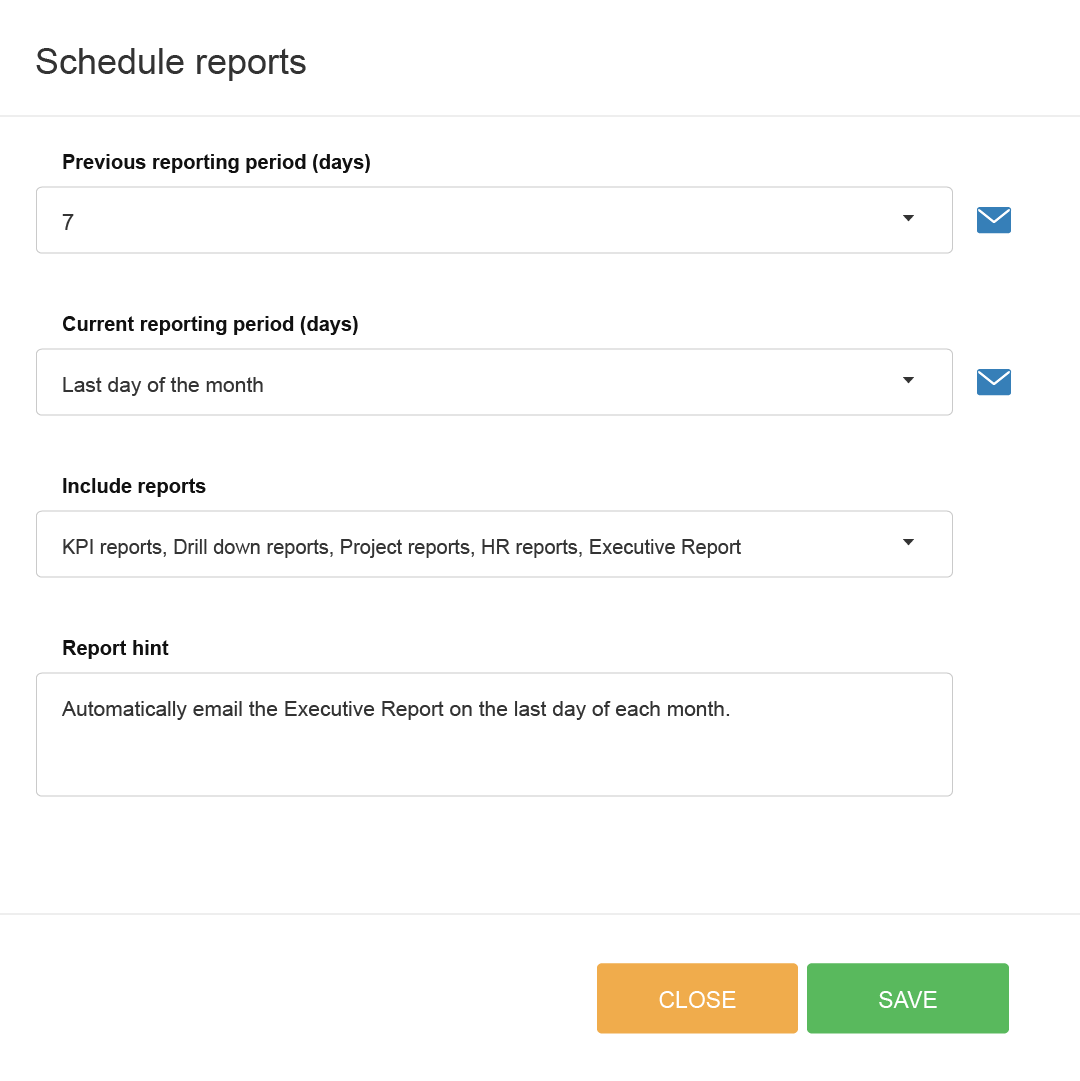
The Executive Brief, delivered in Arabic, gave the group’s senior leadership a synthesised view of group performance each week, without scheduling a meeting or waiting for a report to be compiled.
A group of our scale cannot operate effectively on periodic updates. By the time a consolidated report reached us, the situation across the business had already moved. We were always managing from the past, not from where we actually were. That needed to change.
THE RESULTS
Numbers That Reflect A Business In Control
AL-AYUNI evaluated its options against three criteria that any platform would need to meet before it could work at group level.
-
120+ KPIs. One system.
More than 120 performance indicators across nine business units now feed into a single view — replacing a process that previously produced no consolidated picture at all.
-
From five days to the same day.
Executive reports that once required days of manual assembly are now available to leadership the moment they are needed.
-
Government reporting cut from three weeks to three days.
Reporting obligations to major Vision 2030 programme clients that previously stretched across three weeks now close in three days.
The Executive Brief in Arabic changed how I prepare for board meetings and government reviews. The summary is already there, current to the day, across every business unit we operate. I no longer wait for someone to compile it, and I no longer wonder whether the numbers I am looking at reflect what is happening right now.
THE IMPACT
Alignment That Holds Across Every Contract
The shift that AL-AYUNI’s leadership did not fully anticipate was not the speed of reporting. It was what became visible when all ten business units were finally connected to the same strategy.
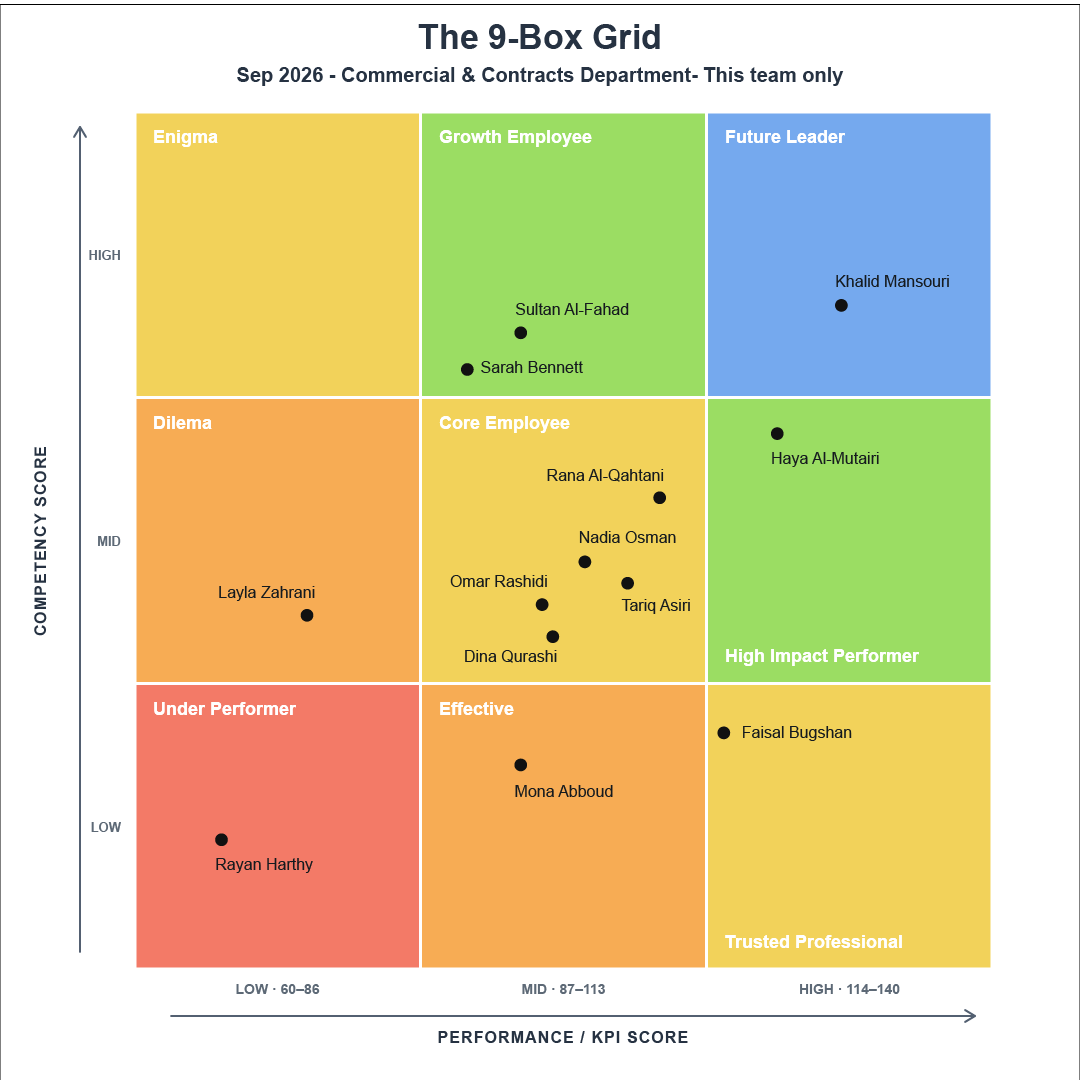
Major infrastructure contract milestones sat alongside energy division quarterly targets in the same executive view. Government programme phases were tracked against corporate strategy goals for the first time. Business units that had never held formal KPIs now reported against targets every week.
For a group delivering some of Saudi Arabia’s most scrutinised Vision 2030 programmes, under direct reporting obligations to government and sovereign-backed clients, that alignment is not administrative. It is operational infrastructure.
AL-AYUNI continues to expand Kippy’s reach across the group. The next phase focuses on deeper integration of project-level milestones across the portfolios, bringing contracts into the same performance view as the wider group.

“Cascading and alignment across 14 business units, with onboarding completed in one month.”
Dr. Yahya Shakweh
Strategy Director, Al-Ayuni

“Visibility and accountability to every level of our performance management.”
Paul Poungpetch
General Manager, Thaiwattana Metalsheet

“The reporting tools helped me to analyze data efficiently, saving me countless hours of manual work.”
Pinky Lama
VP, Planate Management Group

“It helps project managers identify and fix project deviations early.”
Eyad Zamel
Consulting PMO Manager, Deloitte

Kippy gives leaders a comprehensive view of organisational performance.
Abdulrazak Tello
Director, PwC

Kippy offers a customisable platform for strengthening governance and supporting data-driven decisions.
Dr Ahmad Fayez
Manager, Palladium
- Canada
- United States
- Mexico
- Chile
- Brazil
- United Kingdom
- Netherlands
- Finland
- Italy
- Türkiye
- Ghana
- Zimbabwe
- Saudi Arabia
- Oman
- United Arab Emirates
- India
- Thailand
- Malaysia
- Philippines
See How Kippy Would Work Across Your Business
In a 30-minute online demo, we’ll show you:
- See your company’s objectives and KPIs in Kippy.
- Discuss your requirements and how Kippy can fit them.
- Review your options for setup, integrations and rollout.