EMPLOYEE PERFORMANCE MANAGEMENT
Appraise People on the Performance You Manage All Year
Kippy brings individual results, competencies and feedback into one performance record, giving managers a clearer basis for appraisal, development and follow-up.
-
Set expectations relevant to each employee’s role.
-
Assess results alongside demonstrated competencies.
-
Record evidence and commentary behind ratings.
-
Review employees against appropriate criteria.
-
Agree development actions and review progress.
Base Subjective Appraisals on the Objective Performance You Already Track
Connect individual goals to Group priorities. Review results and agree progress throughout the year. At appraisal time, assess what people delivered and how they delivered it, using your own competencies, weightings and approval process.
Follow One Group Goal into an Employee Appraisal
One distribution manager, one Group priority and one year of reviews, through to an approved rating with the evidence on record.
Goal setting
Agreed with the manager in January
KPI: On-time dispatch rate · monthly · source: warehouse system
KPI history · On-time dispatch
Quarterly results against the 95% target
“Late courier pick-ups cost us two points in Q1. New cut-off times are in place and Q2 is back to 94%.”
Manager agrees the recovery plan. Action: supervisors to own daily exception checks. Agreed
Year-end appraisal
Review period Jan – Dec 2026 · 4 quarterly reviews on record
Evidence: KPI history and the year’s four agreed reviews.
Feedback shows supervisors still rely on the manager to resolve exceptions.
Illustrative example using sample data
See the screens HR and managers use
Top 5 Employee Performance
Management Principles
The design choices behind Kippy’s approach—and why they matter.
Set role-relevant objectives, KPIs and targets so employees and managers share clear performance expectations.
Explore individual objectives and KPIs →Review KPI results alongside competencies to identify delivery gaps and the skills employees need to develop.
Explore competency appraisals →Use self-assessments and feedback to discuss achievements, concerns and differences in performance assessments.
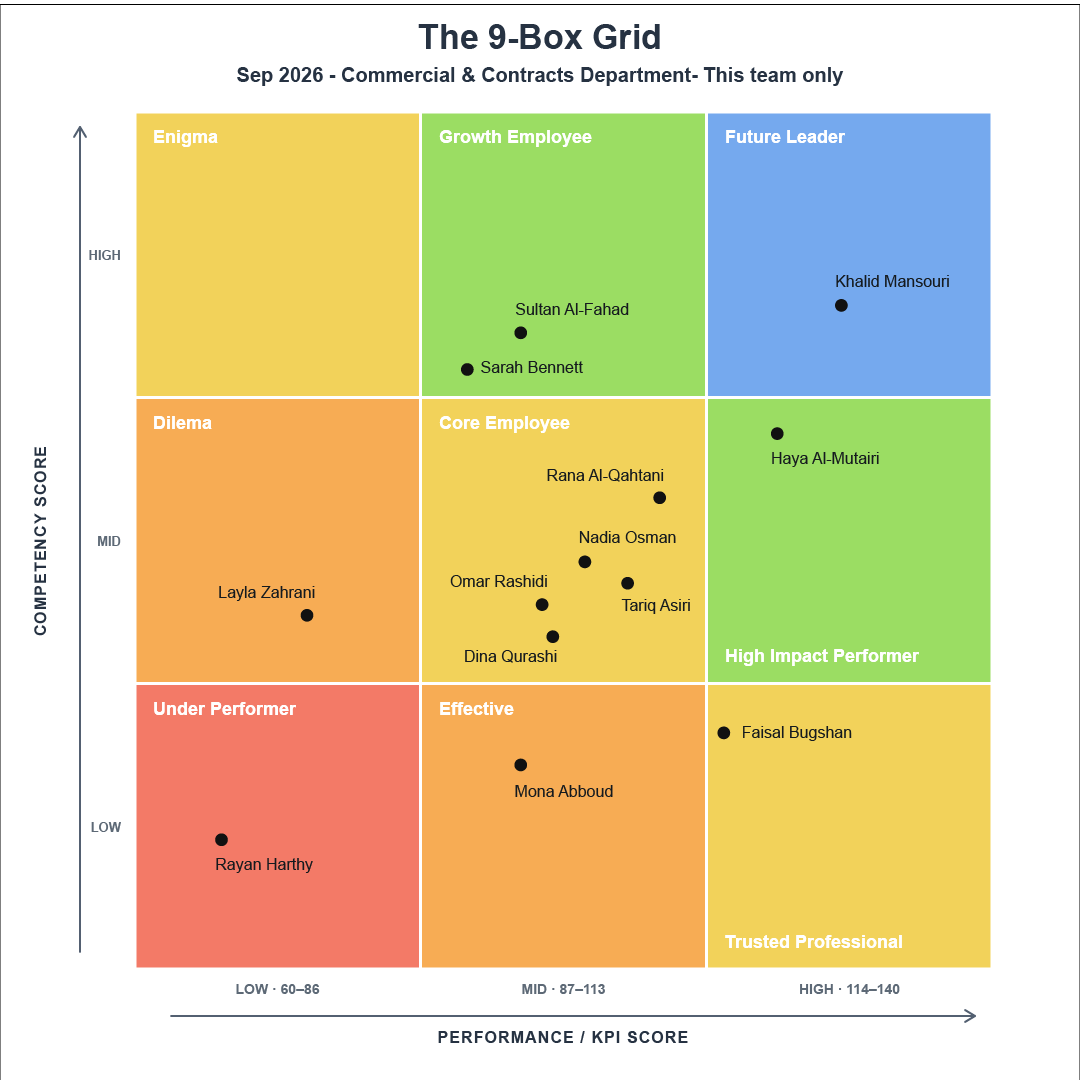
Explore self-appraisals and 360 feedback →Use ratings, competency matrices and 9-box reports to identify capability gaps and guide development decisions.
Explore employee ratings and 9-box →Keep ratings, commentary and appraisal history with approval and locking controls for traceable review decisions.
Explore appraisal approvals and history →Clear Expectations
Informed Reviews. Accountable Follow-Up.
How employees, managers and HR contribute to a consistent performance cycle.
… performance updates, self-assessments and supporting context for the review.
… results, competencies and feedback, then agree development priorities and follow-up.
… competency frameworks, appraisal cycles and rating patterns across the organisation.
ONBOARD ALL EMPLOYESS WITH EASE
Full Product and Methodology Training Included
Enterprise and Groupwide rollouts include product and methodology training for all organisational users.
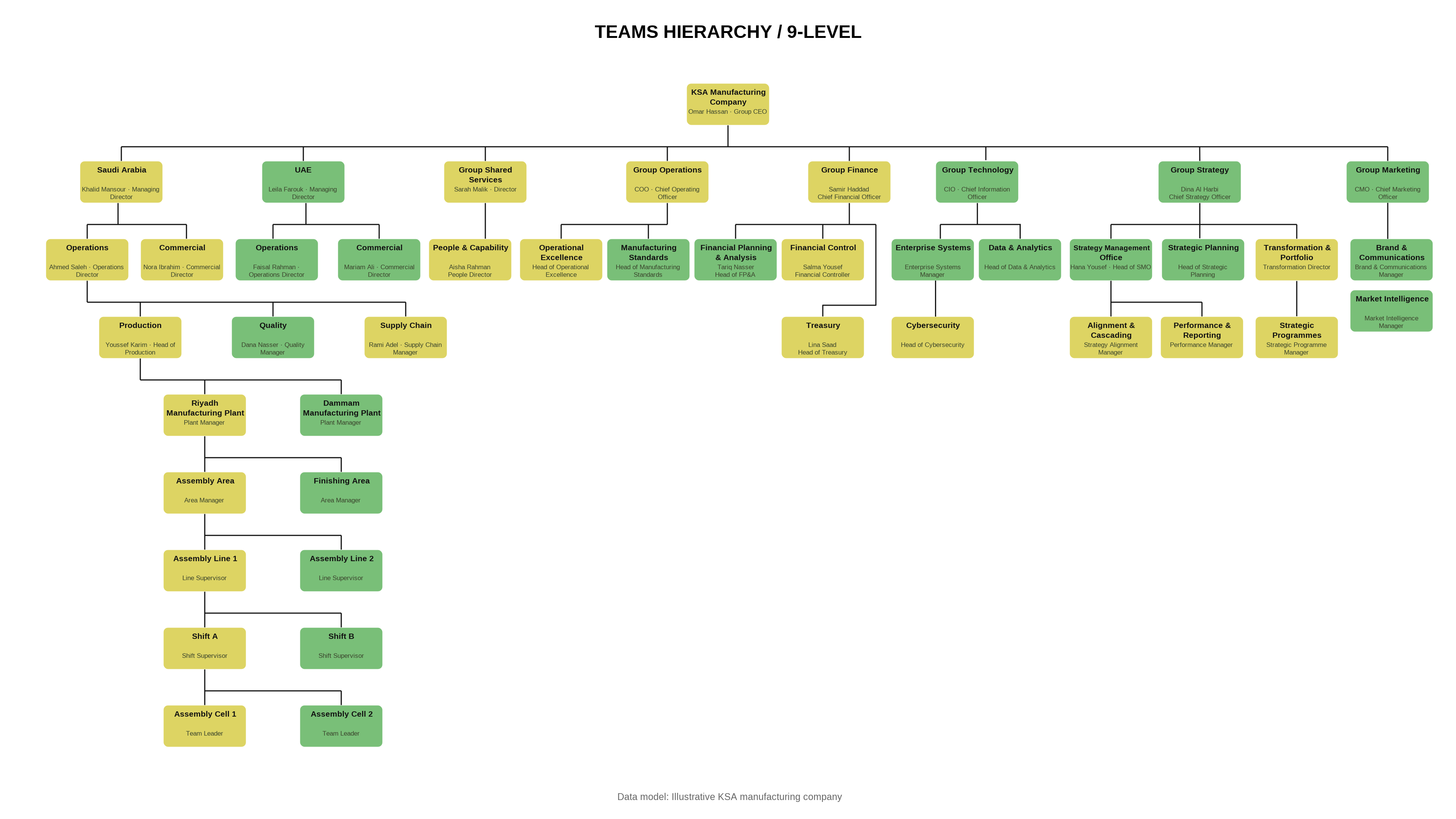
Teams learn how to use Kippy and apply the cascading approach, starting with the top corporate priorities and business units, then expanding as the practice becomes established.
See How Your Group’s Cascade Would Work in Kippy
Follow one of your own Group priorities through different businesses and teams.
See how local objectives, KPIs and initiatives connect.
Identify gaps in the cascade and what they mean to your business.
Discuss how your teams could start to adopt the approach.
CUSTOMER SUCCESS STORY
From Scattered Appraisals to Stronger Compliance and Delivery
Kippy gave leaders visibility of employee performance, helping them detect gaps and design targeted improvements through evidence-based reviews and a disciplined management rhythm. Employees are now better equipped to meet compliance requirements and delivery commitments across national and international operations.
Monitoring performance was difficult, with scattered forms and multiple stakeholders to coordinate. Kippy provided the technology we needed, backed by hands-on support from integration through onboarding. We are now seeing improvements in compliance and delivery as managers gain clearer visibility and follow through on performance gaps. readiness to deliver.
See how employee performance management principles work in Kippy
Explore how each principle works through a connected manufacturing example, from local objectives to performance review.
Give controlled local flexibility Makes teams accountable for outcomes they can influence.
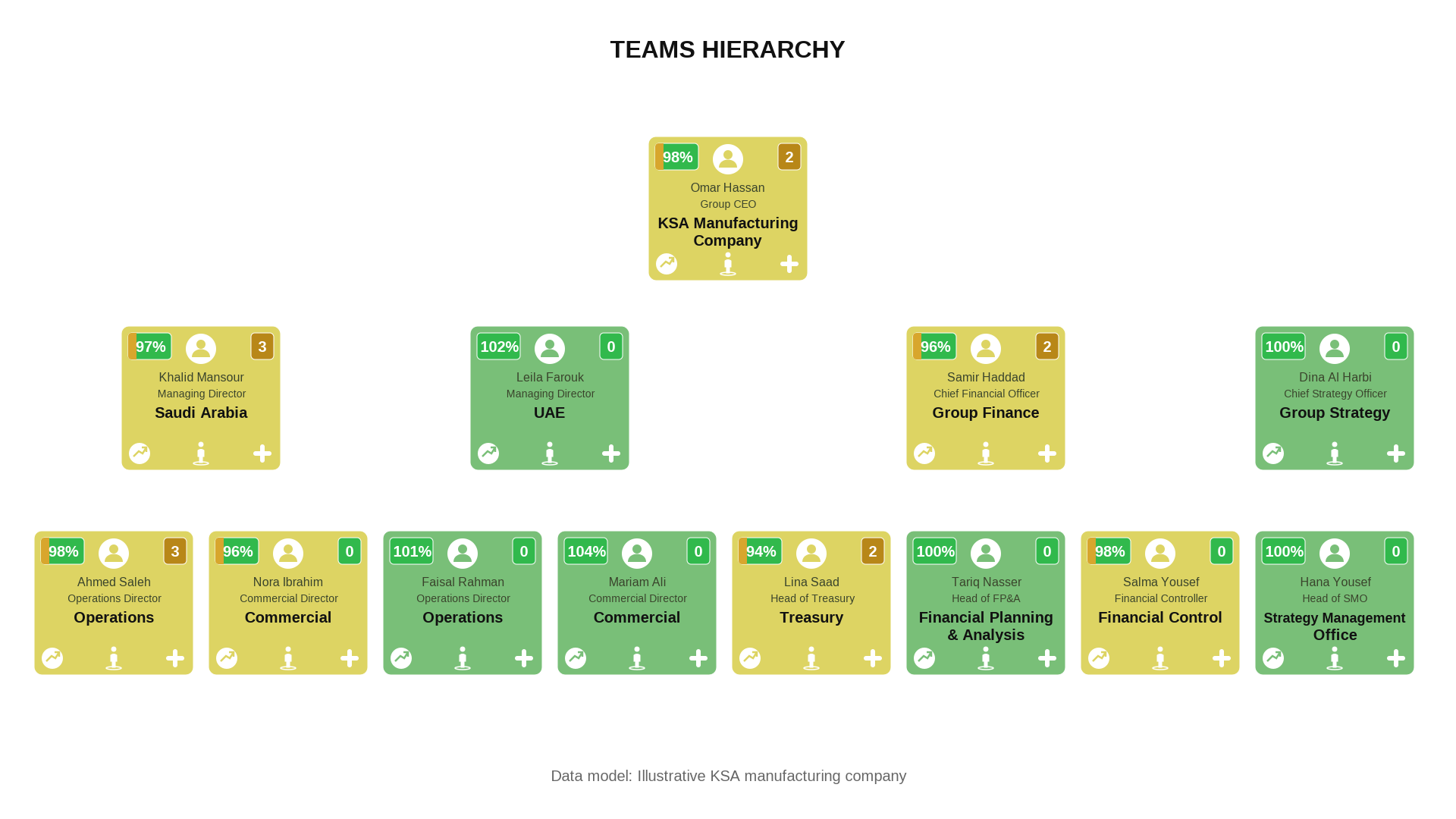
- Trace a team priority to the objectives assigned to individuals.
- Review the measures attached to those commitments.
- Identify where accountability for a strategic outcome becomes unclear below the unit level.
Show where delivery depends on other teams. The hierarchy establishes accountability. Strategy Links capture cross-functional contributions and dependencies.
- Follow an individual objective across successive performance updates.
- Read managers’ feedback alongside changes in the employee’s results.
- See whether delivery issues receive attention early enough to protect the team’s commitments.
See what sits behind each Group result. Named KPI owners, agreed reporting frequencies and appropriate aggregation make results easier to interpret and act on.
- Read the appraisal alongside KPI history and feedback from earlier reviews.
- Check which observations support the rating.
- Use that evidence to challenge judgements based mainly on the most recent result.
Trace each local objective back to a Group priority. Creates a traceable route from local contribution to Group priority.
- Read achievement against targets alongside the assessment of role competencies.
- Identify where strong results coexist with capability gaps.
- Consider what those gaps mean for the team’s ability to sustain performance.
Review results and project delivery by objective. Brings the intended outcome, evidence of progress and delivery work together.
- Trace a capability gap from the appraisal to an agreed development action.
- Review progress at the next check-in.
- Prioritise development that strengthens the capabilities needed to deliver the team’s commitments.
Frequently Asked Questions
What can Kippy add to our existing HR system?
Kippy connects employee appraisals with the KPI results, delivery milestones and organisational priorities that employees contribute to, giving HR and business leaders a common basis for reviewing performance. It can work alongside your existing HR system, with responsibilities and any data integrations agreed for your rollout, so adopting Kippy does not require a wholesale replacement of your HR platform.
Can we avoid rebuilding evidence at appraisal time?
Yes, appraisals can use the KPI results, delivery milestones and performance history already recorded against an employee throughout the review period. Managers can bring that evidence into the assessment alongside competencies and feedback, reducing repeated preparation and helping them discuss sustained performance, changes over time and specific delivery gaps with the employee.
Can we keep our own appraisal criteria and weightings?
Yes, competencies can be configured by role or grade, and you can set the weighting between measurable performance and competency assessments to reflect your methodology. Kippy calculates these components separately before combining them, giving HR and managers a clear basis for interpreting the overall result while assessing employees against expectations relevant to their role.
What if an employee disagrees with their rating?
Employees can complete a self-appraisal before the manager’s assessment, and managers can consider this alongside recorded results, competencies and 360-degree feedback when discussing differences of view. Completed appraisals preserve the relevant evidence and history, giving managers a traceable basis for explaining the rating and reviewing concerns within your organisation’s appraisal process.
What happens after an appraisal is completed?
Appraisal findings can feed individual development plans and managed follow-up actions, so agreed development needs become work that managers can track. HR and leadership can also review performance and capability patterns across individuals, teams and the wider organisation through talent analysis and 9-box views, helping them prioritise development investment and inform talent discussions. Finalised appraisals can be pushed to your HR/HCM systems to continue processes like remuneration reviews in them.
Can we make appraisals fairer and easier to explain?
Yes, you can configure competencies by role or grade and set the weighting between results and competencies, while employees can complete self-appraisals before their manager’s formal assessment. Managers can use KPI results, milestone delivery and performance history from across the year, and completed appraisals retain the relevant evidence used at the time, helping you explain ratings and revisit the basis for decisions later.
TRUSTED BY HUNDREDS OF ORGANISATIONS ALL OVER THE WORLD

“Cascading and alignment across 14 business units, with onboarding completed in one month.”
Dr. Yahya Shakweh

Strategy Director, Al-Ayuni

“Visibility and accountability to every level of our performance management.”
Paul Poungpetch
General Manager, Thaiwattana Metalsheet

“The reporting tools helped me to analyze data efficiently, saving me countless hours of manual work.”
Pinky Lama
VP, Planate Management Group

“It helps project managers identify and fix project deviations early.”
Eyad Zamel
Consulting PMO Manager, Deloitte

Kippy gives leaders a comprehensive view of organisational performance.

Abdulrazak Tello
Director, PwC

Kippy offers a customisable platform for strengthening governance and supporting data-driven decisions.
Dr Ahmad Fayez
Manager, Palladium
- Canada
- United States
- Mexico
- Chile
- Brazil
- United Kingdom
- Netherlands
- Finland
- Italy
- Türkiye
- Ghana
- Zimbabwe
- Saudi Arabia
- Oman
- United Arab Emirates
- India
- Thailand
- Malaysia
- Philippines
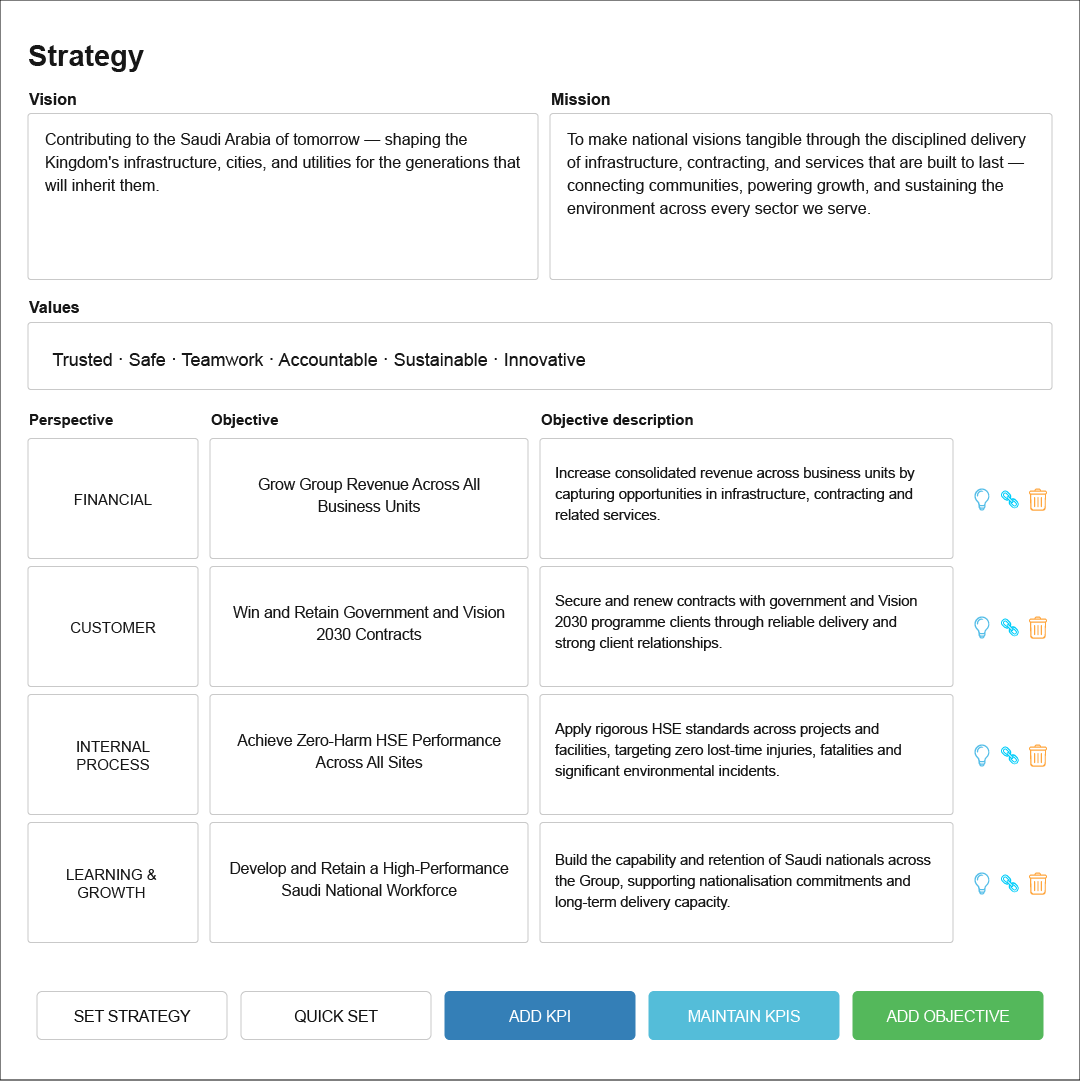
See How Kippy Would Work Across Your Business
In a 30-minute online demo, we’ll show you:
- See your company’s objectives and KPIs in Kippy.
- Discuss your requirements and how Kippy can fit them.
- Review your options for setup, integrations and rollout.